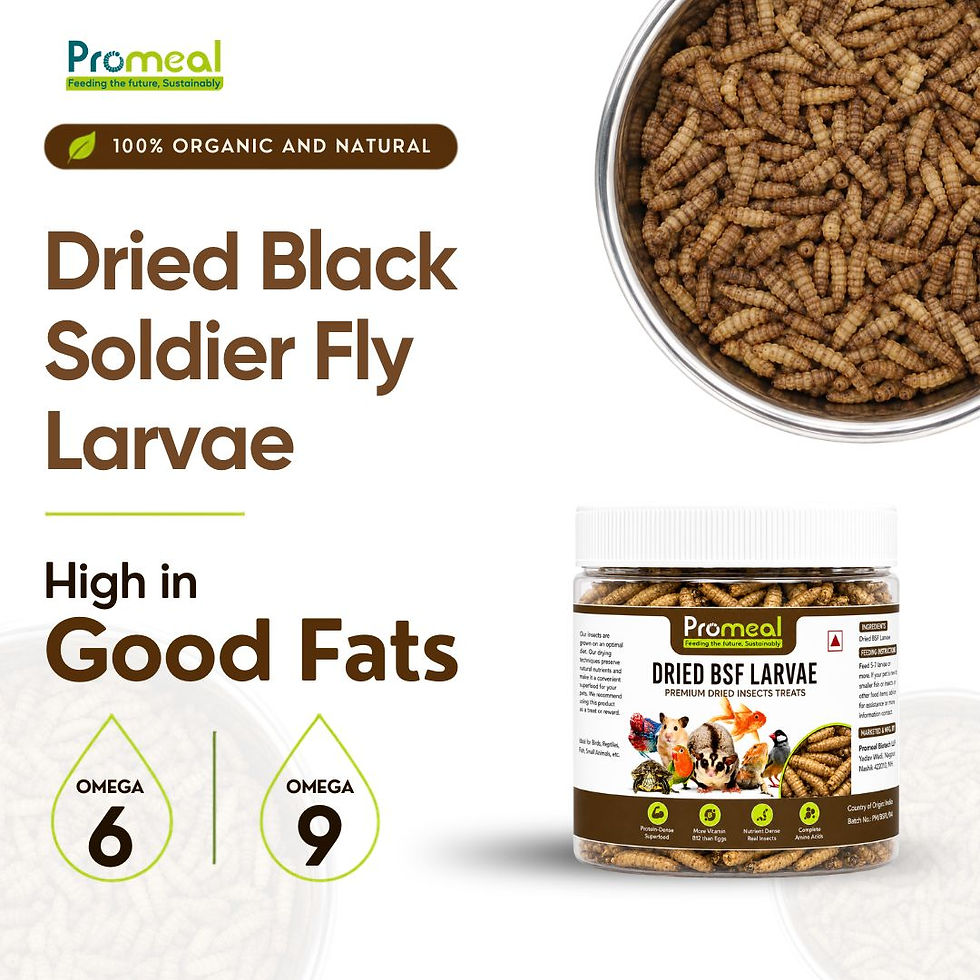
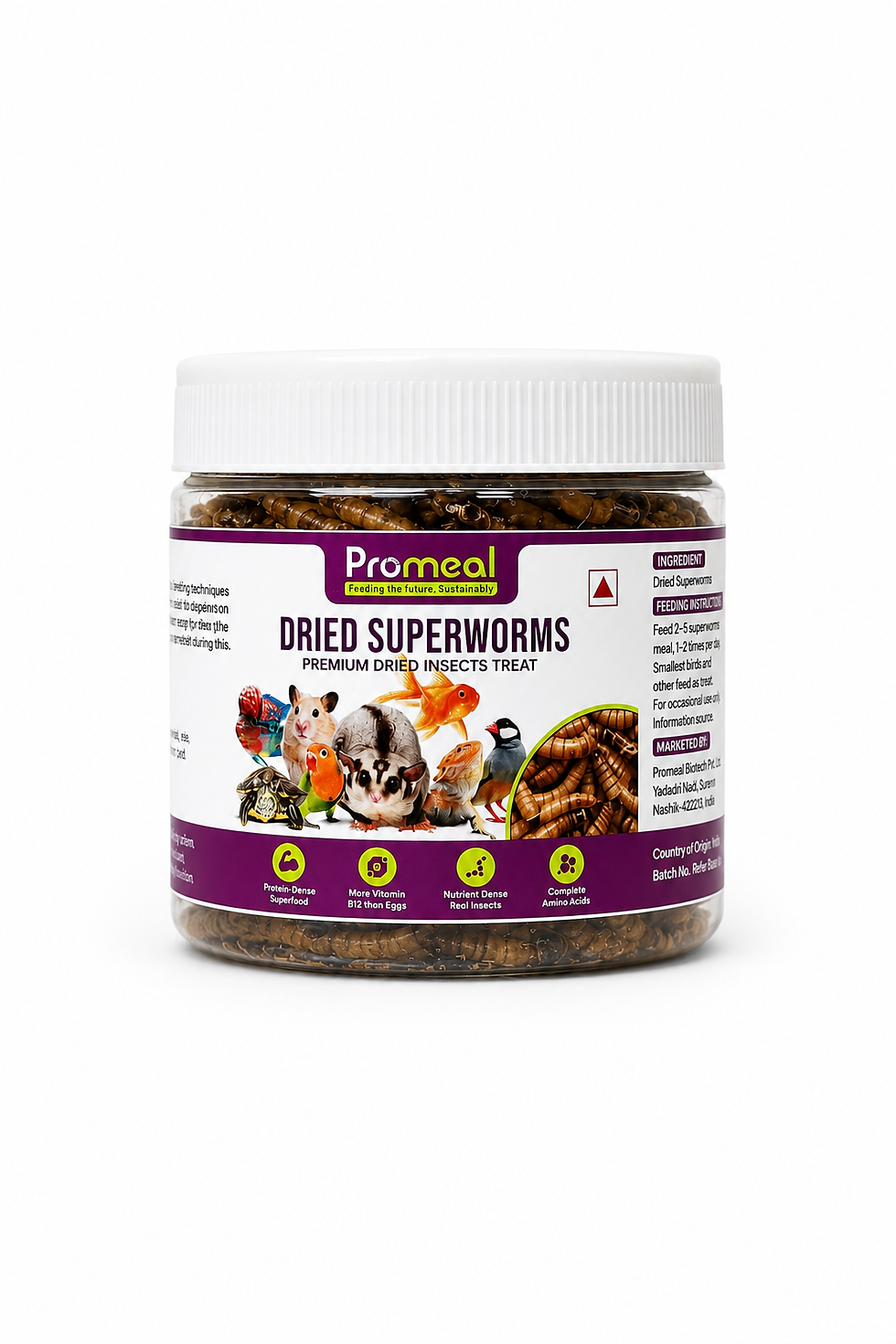
Dried Superworms
Large dried superworms — over 50% protein, one of the highest of any feeder insect
More Vitamin B12 than eggs, with Omega 6 and 9 fatty acids
For arowana, flowerhorn, turtles, adult bearded dragons and large birds
100% organic and all-natural — no additives, no preservatives
Energy-rich: well suited to growth, conditioning and recovery
15g (35+ worms) to 150g (500+ worms)
Superworms are the larvae of the darkling beetle Zophobas morio — a different species from mealworms, not just a larger version.
Size: 2–3 inches. Substantially bigger than a dried mealworm, so one worm delivers considerably more.
Carefully farmed and gently dried so the nutrition survives the process, with a long shelf life and no refrigeration needed.
Lower in chitin than mealworms, which makes them easier to digest — useful for pets that struggle with harder-shelled feeders.
Richer in fat than mealworms, which makes them excellent for conditioning, recovery and cold-season feeding, and better as a treat than a daily ration.
100% superworm. No additives, preservatives or fillers.
Suitable for: arowana, flowerhorn, oscars and other large aquarium fish; adult bearded dragons, monitors and larger lizards; turtles and tortoises; mynas, large parrots and other big birds; hedgehogs and larger small mammals.
Too large for small pets. For finches, bettas, small cichlids or juveniles, use our Dried Mealworms or Dried Tiny Mealworms.
Not a complete diet. A protein and energy supplement alongside the regular feed.
Pack sizes: 15g (35+ worms), 30g (100+), 60g (200+), 150g (500+).
Feed dry, or soften in warm water for 3–5 minutes — recommended for turtles and birds.
Large fish: 2–4 worms per feed, two or three times a week. Soaking first stops them floating on the surface.
Turtles: soften first and offer in shallow water or a feeding dish. Remove uneaten worms so the water stays clean.
Adult reptiles: 2–3 worms a couple of times a week, dusted with calcium. Not daily — the fat adds up.
Large birds: one or two as a treat, not a regular ration.
Only feed to pets that can comfortably handle a 2–3 inch insect.
Use a dry spoon each time.
Are superworms the same as mealworms? No. Superworms are Zophobas morio, mealworms are Tenebrio molitor — two different species of darkling beetle. Superworms are larger, richer in fat, and lower in chitin so they digest more easily. They look similar, which is why the two get confused.
Why does the live product list about 20% protein and this one over 50%? Same insect, different basis. Live superworms are roughly 58% water, so protein reads lower. Remove the water and the same worm is over 50% protein. Both figures are correct — they're just measured differently.
Is my pet big enough? If it comfortably handles a 2–3 inch insect, yes — arowana, flowerhorn, adult bearded dragons, turtles and large birds all manage them. For finches, bettas and juveniles, use dried mealworms instead.
Should I soak them first? For turtles and birds, yes — 3–5 minutes in warm water. For large fish, soaking stops them floating. Reptiles usually take them dry.
How often can I feed them? Two or three times a week for most pets. They're richer than mealworms, so they work better as a conditioning treat than a daily feed.
Dried or live superworms? Live for the hunting response and the strongest reaction from a reluctant eater. Dried for shelf life and zero upkeep — and dried avoids the one drawback of live superworms, which is that they can bite.
How long do they keep? Months in a sealed jar in a cool, dry place, with no refrigeration. Best used within 12 months of opening.