
Wood Turtle Enclosure Setup Guide for a Safe Natural Habitat

Updated: Apr 8

Wood turtle enclosure design is one of the most important parts of keeping this unique freshwater turtle healthy in captivity. A proper habitat allows the turtle to behave naturally, stay active, and avoid stress or disease. Wood turtles are semi-aquatic reptiles, which means they spend time both in water and on land. Because of this behavior, their enclosure must include a balanced land and water environment that closely resembles the streams and forests where they live in the wild.
Wood turtles are known for their beautiful sculpted shells, active daytime behavior, and curious personalities. In nature they often live near forest streams and rivers, where they move between water and nearby land to find food, bask in sunlight, and explore their surroundings. If their enclosure does not recreate these natural conditions, they may become inactive, stressed, or unhealthy.
This detailed wood turtle enclosure setup guide explains everything beginners need to know about creating the ideal habitat. It covers enclosure size, wood turtle tank setup, land and water design, substrate choices, basking areas, lighting, temperature, and humidity. With the right setup, your turtle can live comfortably and show natural behaviors for many years. If you are new to keeping this species, Wood Turtle Care Guide for Beginners and Everyday Maintenance Tips explains the basic care practices every owner should understand.
Understanding the Natural Wood Turtle Habitat

Before setting up a wood turtle tank, it is helpful to understand how these turtles live in the wild. Wood turtles are native to northeastern regions of North America and are commonly found near clean streams, rivers, and forest edges. Their natural habitat includes shallow flowing water, sandy banks, forest soil, and areas where sunlight reaches the ground.
These turtles move frequently between land and water. During warm months they spend time walking through forests or fields looking for insects, worms, berries, and plants. They return to the water for swimming, resting, and protection. Because of this lifestyle, the best enclosure design must provide both aquatic and terrestrial areas.
In captivity, a habitat that mimics natural streamside environments helps wood turtles remain active and healthy. When their environment includes water, soil, hiding places, and basking areas, they can display their natural behaviors such as exploring, digging, and basking.
Minimum Wood Turtle Enclosure Size
The first step in building a proper wood turtle enclosure is choosing the right size habitat. Wood turtles are active reptiles that enjoy walking and exploring, so a small tank will not provide enough space.
For indoor housing, a single adult turtle should have a tank that is at least 120 × 60 × 60 cm or 48 × 24 × 24 inches. Larger enclosures are always better because they allow the turtle to move around freely and explore different areas of the habitat.
A larger wood turtle tank setup also makes it easier to create separate land and water zones. This is important because wood turtles spend significant time walking on land, unlike many aquatic turtles that stay mostly in water.
Some experienced keepers prefer very large indoor enclosures such as custom reptile terrariums or indoor ponds. These provide more natural movement space and help maintain stable temperatures.
Outdoor enclosures can be an excellent option in suitable climates. A fenced outdoor habitat allows the turtle to experience natural sunlight, fresh air, and seasonal changes. Outdoor habitats should include secure fencing, shaded areas, shallow water, and hiding places to protect the turtle from predators and extreme weather. Providing enough space is one of the most important parts of proper turtle care, which is also explained in Wood Turtle Ki Care Guide Beginners Ke Liye Aur Everyday Maintenance Tips.
Land and Water Setup

A proper wood turtle tank setup must create a semi-aquatic environment. This means the enclosure should contain both water and dry land areas where the turtle can rest and explore.
The water section should allow the turtle to swim comfortably but should not be extremely deep. In most indoor enclosures, a water depth of 20 to 30 cm or 8 to 12 inches works well. This depth allows swimming while still making it easy for the turtle to reach the surface.
Clean water is extremely important because turtles often eat and drink in the water. A good filtration system helps maintain water quality and prevents bacteria from building up.
The land area should take up a significant portion of the enclosure because wood turtles spend a lot of time walking on land. Many keepers use a land to water ratio of about 50 percent land and 50 percent water. This allows the turtle to choose where it wants to spend time.
The land section should include natural materials such as soil, bark, or leaves. These materials allow the turtle to dig and explore just like it would in a forest environment.
Providing hiding areas such as logs, plants, or small shelters helps reduce stress and gives the turtle a place to rest.
Substrate Options for Wood Turtle Enclosures
The substrate is the material used on the floor of the enclosure. Choosing the right substrate is important because it affects cleanliness, humidity, and the turtle’s comfort.
One of the best options is natural soil, which closely mimics the forest ground where wood turtles live. Soil allows the turtle to dig and provides a natural look to the enclosure. Another good choice is sand mixed with soil. This mixture improves drainage and helps create a stable surface for walking.
Many keepers also use leaf litter, which consists of dried leaves placed on top of the soil. Leaf litter creates a natural forest floor and provides hiding places for the turtle.
Substrate layers should be deep enough for digging and should remain slightly moist but not wet. Keeping the substrate too dry may reduce humidity, while overly wet soil can cause bacterial growth. Regular cleaning and replacing dirty substrate is necessary to maintain a healthy habitat. Improper substrate or poor hygiene may lead to infections or other health issues described in Wood Turtle Diseases and Treatment Guide for Common Health Issues.
Basking Area Setup
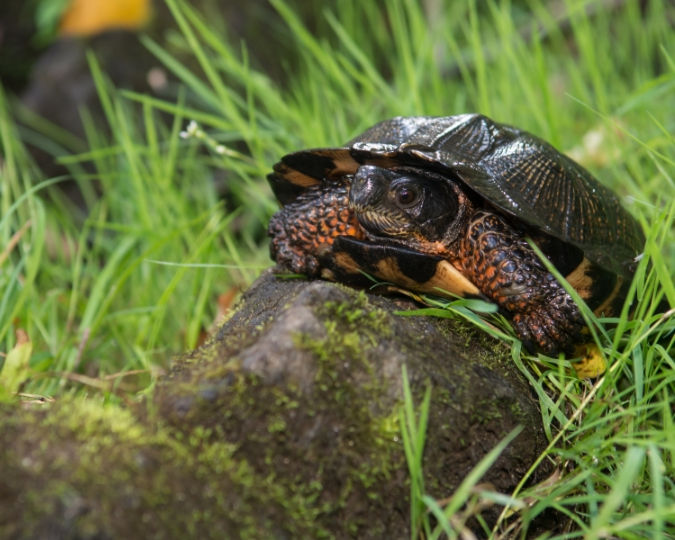
A proper basking area is essential for turtle health. Basking allows turtles to warm their bodies, dry their shells, and maintain proper metabolism.
The basking area should be placed on the land section of the enclosure. It can be created using rocks, wooden platforms, or commercial turtle basking docks. The platform should be stable and easy for the turtle to climb.
Above the basking platform, a heat lamp should be installed to create a warm spot. The recommended basking temperature for wood turtles is 29 to 32 °C or 84 to 90 °F.
The basking area should remain dry so the turtle can fully warm up and dry its shell. Regular basking helps prevent shell infections and supports digestion. Because wood turtles are active during the day, they often use the basking platform multiple times throughout the day.
Lighting and UVB Requirements
Proper lighting is critical in any wood turtle enclosure setup. Reptiles require special lighting that provides ultraviolet radiation known as UVB.
UVB lighting allows turtles to produce vitamin D3, which helps their bodies absorb calcium. Without UVB light, turtles may develop weak bones and shell deformities. A high-quality UVB bulb should be installed above the basking area. The bulb should be replaced regularly according to the manufacturer’s instructions because UVB output decreases over time.
The enclosure should also follow a natural day and night cycle. Most keepers provide 12 hours of light and 12 hours of darkness each day. Natural sunlight is always the best source of UVB, which is why outdoor enclosures can be beneficial when climate conditions allow safe housing. Proper UVB lighting also supports calcium absorption, which works together with correct nutrition discussed in Wood Turtle Diet and Feeding Guide for Balanced Nutrition and Health.
Temperature and Humidity

Maintaining the correct climate is very important for wood turtle health. These turtles prefer moderate temperatures rather than tropical heat.
The general daytime temperature inside the enclosure should remain between 22 and 26 °C or 72 and 79 °F. This range allows normal activity and digestion.
The basking spot should be warmer, reaching 29 to 32 °C or 84 to 90 °F. The turtle will move to this area when it needs extra warmth.
Humidity should remain moderate to replicate forest environments. Slightly moist substrate and a water area help maintain natural humidity levels. At night, temperatures can drop slightly but should remain safe and stable. Using digital thermometers and humidity gauges helps ensure the enclosure stays within the correct range.
Enrichment and Environmental Features
A well-designed wood turtle tank should include enrichment features that encourage natural behaviors. Turtles become healthier and more active when their environment provides opportunities to explore.
Natural decorations such as driftwood, rocks, and plants help recreate forest stream habitats. These items also provide hiding places and climbing surfaces.
Live plants can improve enclosure appearance and increase humidity, but they must be safe for turtles. Some turtles may eat plants, so sturdy species are usually recommended. Changing the layout of the enclosure occasionally can also provide mental stimulation for the turtle. Providing enrichment helps prevent boredom and encourages normal activity patterns. Providing a natural and stimulating habitat can also support reproductive behavior explained in Wood Turtle Breeding Guide Covering Mating, Eggs, and Hatchling Care.
Water Filtration and Maintenance

Because turtles produce waste in water, proper filtration is necessary in any wood turtle tank setup. Dirty water can quickly lead to bacteria growth and health problems.
A strong aquarium filter helps remove waste and keeps the water clean. Filters designed for turtle tanks are often more powerful than standard fish tank filters.
Even with filtration, regular water changes are important. Partial water changes help maintain water quality and reduce harmful bacteria. The water should always remain clear and odor-free. Clean water supports healthy skin, shell condition, and overall turtle health.
Common Enclosure Setup Mistakes
Many beginners make mistakes when designing a wood turtle enclosure. One common problem is using tanks that are too small. Small tanks restrict movement and make it difficult to create proper land and water sections.
Another mistake is providing water that is too deep. Wood turtles are not strong swimmers like some aquatic turtles, so shallow water is safer and more natural.
Some enclosures also lack proper UVB lighting, which can lead to serious health problems.
Poor filtration and dirty substrate can cause shell infections or bacterial growth. Maintaining cleanliness is one of the most important aspects of turtle care. Avoiding these mistakes helps create a safe and healthy environment for your turtle. Avoiding these setup mistakes is an important part of responsible turtle ownership explained in Wood Turtle Care Guide for Beginners and Everyday Maintenance Tips.
By providing clean water, UVB lighting, a warm basking area, and a balanced semi-aquatic habitat, keepers can create a comfortable home for their turtle. If you want your turtle to thrive for many years, invest time in building a well-designe enclosure that supports natural behavior, proper health, and long lifespan.
At Promeal, we know how important it is to give your pets a healthy and varied diet. That’s why we create high-quality, natural pet food to keep them happy and healthy. Our speciality is premium live and dried insect-based feeds like mealworms, superworms, crickets, roaches, waxworms, and hornworms. These insects are grown on an organic diet, making them a nutritious and tasty treat for your pets.
Check out our "Shop" section to find the perfect food for your pets!


Comments