
Duck Care During Continuous Rains: Managing Hygiene & Preventing Waterborne Diseases


Continuous rain can create serious health problems for ducks when hygiene and shelter management are ignored. Ducks naturally enjoy water, but excessive moisture, muddy surroundings, dirty ponds, and wet bedding can quickly increase the spread of bacteria, parasites, and fungal infections. During monsoon season, ducks are more likely to suffer from waterborne diseases, respiratory problems, foot infections, and stress caused by cold and damp conditions.
Proper duck care during continuous rains is very important for maintaining healthy birds, strong immunity, better egg production, and safe breeding conditions. A clean shelter, balanced nutrition, dry bedding, and fresh water can greatly reduce disease risk during rainy weather. This complete duck monsoon care guide explains how to manage hygiene, feeding, health precautions, enclosure setup, disease prevention, and breeding care during long periods of rain. Creating a dry, well-ventilated shelter is essential during monsoon season. For a complete enclosure planning guide, read How to Build the Perfect Duck Habitat.
Why Continuous Rain Can Be Dangerous for Ducks?

Many people believe ducks can stay in water all day without health problems, but this is not completely true. Ducks are stronger in wet conditions than many other poultry birds, yet continuous exposure to dirty water and muddy environments can still damage their health. Wet litter and standing water allow harmful bacteria and fungi to grow rapidly. Rainwater mixed with droppings can contaminate ponds and feeding areas, increasing the risk of infections.
Cold winds and excessive moisture also place stress on the duck’s body. Stress weakens immunity and makes ducks more vulnerable to disease outbreaks. When shelters remain wet for long periods, ducks may develop breathing difficulties, digestive infections, and foot injuries. Young ducklings and breeding ducks are especially sensitive during monsoon season because they need warmer and cleaner conditions for healthy growth and egg production.
Proper hygiene management becomes one of the most important parts of rainy season duck care because prevention is always easier and safer than treatment.
Common Waterborne Diseases in Ducks During Monsoon
Continuous rain increases the spread of many dangerous diseases in ducks. Dirty water, poor drainage, wet feed, and overcrowding can quickly create unhealthy conditions inside duck shelters and ponds.
Duck cholera is one of the most common bacterial infections seen during wet weather. This disease spreads through contaminated water and infected droppings. Ducks suffering from duck cholera may show weakness, fever, diarrhea, reduced appetite, and sudden death in severe cases. Regular cleaning and fresh water management are extremely important for prevention.
Botulism is another serious waterborne disease that develops in stagnant water containing rotting plants, insects, or organic waste. Ducks may become weak, unable to walk properly, or show paralysis in the neck and wings. Removing dirty standing water and keeping ponds clean helps reduce this risk.
Aspergillosis is a fungal infection caused by moldy bedding and damp feed storage conditions. Ducks with this disease often show breathing problems, sneezing, weight loss, and tiredness. Dry bedding and proper ventilation are essential to prevent fungal growth inside the enclosure.
Coccidiosis also becomes more common during monsoon because wet litter supports parasite growth. Infected ducks may develop diarrhea, weakness, poor growth, and reduced feeding activity. Good sanitation and dry flooring are necessary to control the spread of this disease.
Rainy weather can also increase the risk of E. coli infections, foot infections, and respiratory illnesses when hygiene standards are poor for long periods. Balanced nutrition is especially important during rainy weather. You can also explore Apne Ducks Ke Liye Perfect Diet Plan Kaise Banaye: Ek Comprehensive Guide for detailed feeding recommendations.
Best Duck Shelter Setup During Continuous Rains
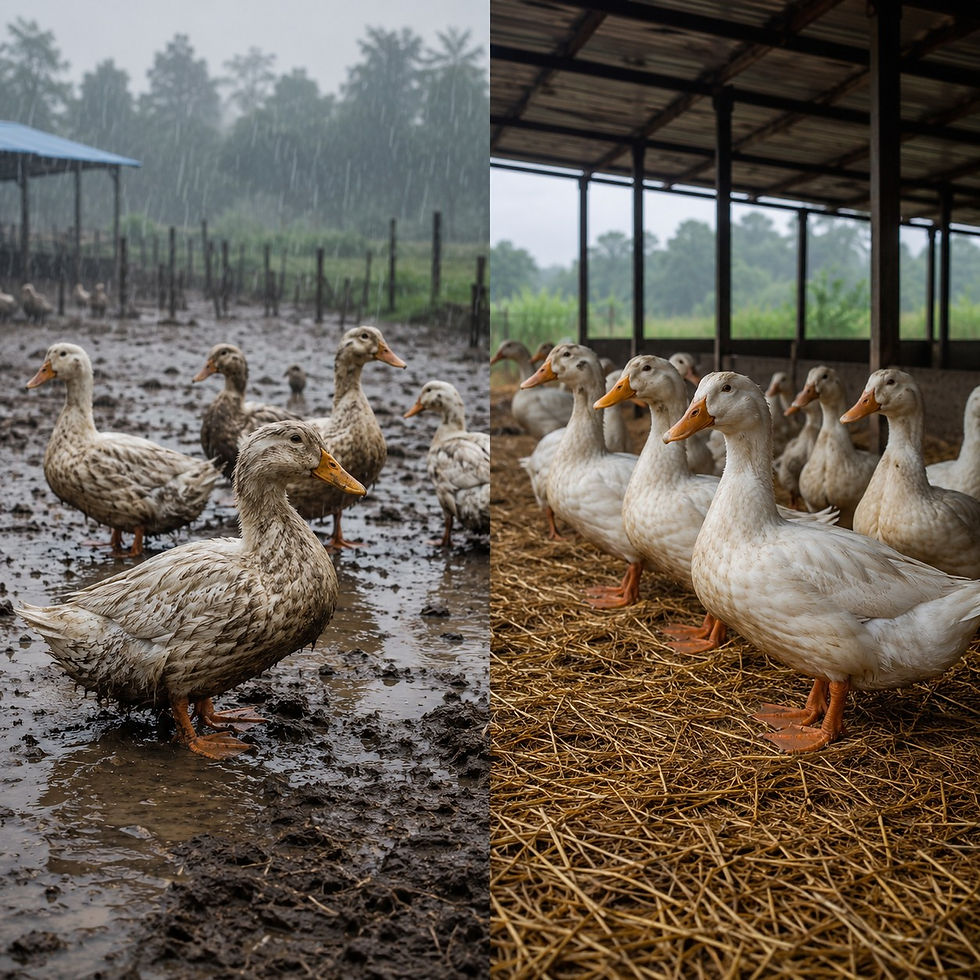
A proper shelter is one of the most important factors for protecting ducks during heavy rains. Even though ducks enjoy swimming and wet environments, they still need a clean and dry resting area where they can recover and stay protected from harmful moisture buildup.
The duck shelter should always be built on slightly raised ground to prevent flooding and water accumulation. Proper drainage around the enclosure helps rainwater move away quickly instead of creating muddy conditions. Muddy flooring increases bacterial growth and can cause foot injuries and infections in ducks.
A strong waterproof roof is necessary during monsoon season because constant rainfall and cold wind can stress the flock. The shelter should also have good airflow because poor ventilation traps moisture and increases fungal growth inside the enclosure. Fresh air helps keep bedding dry and reduces respiratory problems.
Dry bedding plays a major role in maintaining duck hygiene during rainy weather. Rice husk, straw, and wood shavings are commonly used because they absorb moisture well. Wet bedding should never remain inside the shelter for long periods because damp conditions support bacteria, fungi, and parasites. Replacing wet bedding regularly is one of the easiest ways to reduce disease risk during monsoon season.
Duck Hygiene Management During Rainy Season
Good hygiene management is the best protection against waterborne diseases in ducks. During continuous rains, ponds, drinkers, feeders, and resting areas become dirty much faster than usual. Without regular cleaning, bacteria and parasites can spread throughout the flock very quickly.
Fresh drinking water should always be available because dirty water is one of the biggest causes of bacterial infections in ducks. Feeders and water containers should be cleaned regularly to stop contamination from mud and droppings. Wet feed should never remain inside the enclosure because mold growth can develop rapidly during humid weather.
The shelter floor should also be cleaned frequently to reduce the buildup of harmful waste. Standing water near the duck enclosure should be removed because mosquitoes and insects breed in these areas and increase infection risks. Sick ducks should be separated immediately from healthy birds to prevent disease spread.
Maintaining proper hygiene during monsoon not only prevents disease outbreaks but also supports better feeding activity, stronger immunity, and healthier egg production. Maintaining cleanliness becomes much easier when ducks are housed in a well-planned environment. Explore Apne Ducks Ke Liye Ideal Habitat Kaise Banaye? for additional habitat tips.
Best Feeding Guide for Ducks During Monsoon

Balanced nutrition is extremely important during rainy weather because ducks need extra energy and stronger immunity to handle wet and stressful conditions. Poor nutrition weakens the body and increases the chances of infections and slow recovery from illness.
A high-quality duck feed containing proper protein, vitamins, minerals, and calcium helps maintain healthy feathers, body condition, and egg production. Protein is especially important because it supports muscle maintenance, feather quality, and immune strength during stressful weather conditions.
Many duck owners also provide natural protein supplements during monsoon season. Live mealworms are considered one of the best insect-based protein sources for ducks because they are rich in protein, healthy fats, and important nutrients. Mealworms are easy to digest and are widely accepted by ducks of all ages. They also help encourage feeding activity during cold and rainy days when appetite may decrease.
Superworms are another good live insect option because they contain higher fat levels that provide extra energy during cooler weather. However, they should only be given in moderate amounts because excessive fat intake is not healthy for regular feeding.
Crickets are also excellent for ducks because they provide lean protein and support natural hunting behavior. Ducks enjoy chasing crickets, which helps improve activity and mental stimulation. Crickets also contain useful minerals that support overall health.
Dubia roaches are high in protein and calcium and can support stronger growth and egg production. They are usually fed as an occasional supplement instead of a primary feed source.
Among all live insect options, live mealworms are generally considered the best overall choice for ducks during monsoon season because they provide balanced nutrition, good digestibility, strong protein levels, and easy feeding management. However, live insects should always be used as supplements and not as replacements for a balanced commercial duck feed. Mealworms are a popular supplemental food because they provide high-quality protein and essential nutrients. Learn more in Mealworms as a Treat for Swans, Geese, and Ducks: Nutritional Benefits and Feeding Tips.
How to Prevent Parasites and Infections in Ducks?

Parasites become much more active during rainy weather because moisture creates ideal breeding conditions. Flies, mosquitoes, worms, mites, and other parasites can quickly spread around wet shelters and ponds.
Keeping the enclosure clean and dry is one of the most effective ways to prevent parasite problems. Overcrowding should always be avoided because tightly packed shelters increase stress and disease spread. Ducks should also receive regular deworming as recommended by poultry health professionals.
Mosquito control is important because mosquitoes can spread infections and create stress in ducks. Dirty standing water should never remain near the shelter for long periods. Checking duck feet regularly is also important because wet mud can cause cuts, swelling, and bacterial infections.
Healthy ducks with strong immunity are naturally more resistant to many parasite-related health problems.
Duck Breeding Care During Rainy Season
Breeding ducks require extra attention during continuous rains because wet nesting conditions can damage eggs and increase disease risk for both hens and ducklings. Nesting boxes should always remain dry, clean, and protected from cold winds and rainwater leakage.
Calcium-rich nutrition is important for breeding ducks because it supports stronger eggshell formation and healthy egg production. Fresh water and balanced protein intake also help maintain proper breeding condition during stressful weather.
Ducklings are highly sensitive to cold and damp conditions during monsoon. They should always have access to warm resting areas and clean bedding because wet environments can quickly weaken their immunity. Proper hygiene and nutrition greatly improve duckling survival and healthy development during rainy season breeding. Breeding management practices can differ slightly between duck species. For species-specific guidance, see Mandarin Ducks ki Care Kaise Karein?.
Signs Your Duck May Be Sick

Early disease detection is very important because infections can spread rapidly during wet weather. Ducks showing unusual behavior should always be monitored carefully.
Common warning signs include reduced appetite, weakness, sneezing, breathing difficulty, swollen eyes, diarrhea, limping, weight loss, and reduced movement. Some ducks may isolate themselves from the flock when they are sick.
Any duck showing severe symptoms should be separated immediately from healthy birds for observation and proper treatment. Quick action helps reduce the spread of infections inside the flock.

Duck care during continuous rains requires proper hygiene, balanced nutrition, dry shelter management, and regular health monitoring. Although ducks naturally enjoy wet conditions, excessive moisture and poor sanitation can quickly increase the risk of dangerous waterborne diseases, parasites, fungal infections, and respiratory problems.
Providing clean water, dry bedding, strong ventilation, and high-quality nutrition helps ducks remain healthy and active during monsoon season. Natural protein supplements like live mealworms, crickets, superworms, and dubia roaches can also support immunity and feeding activity when used properly.
With good shelter management, disease prevention, and daily hygiene practices, duck owners can safely protect their flock and maintain healthy growth, breeding performance, and egg production even during long periods of continuous rain. Seasonal care requirements change throughout the year, and warm-weather management is equally important for duck health. Continue reading Ducks Summer Care Guide: Heat Relief Aur Clean Water Access.
At Promeal, we know how important it is to give your pets a healthy and varied diet. That’s why we create high-quality, natural pet food to keep them happy and healthy. Our speciality is premium live and dried insect-based feeds like mealworms, superworms, crickets, roaches, waxworms, and hornworms. These insects are grown on an organic diet, making them a nutritious and tasty treat for your pets.
Check out our "Shop" section to find the perfect food for your pets!


Comments