
How to Attract Sparrows Back to Your Balcony?


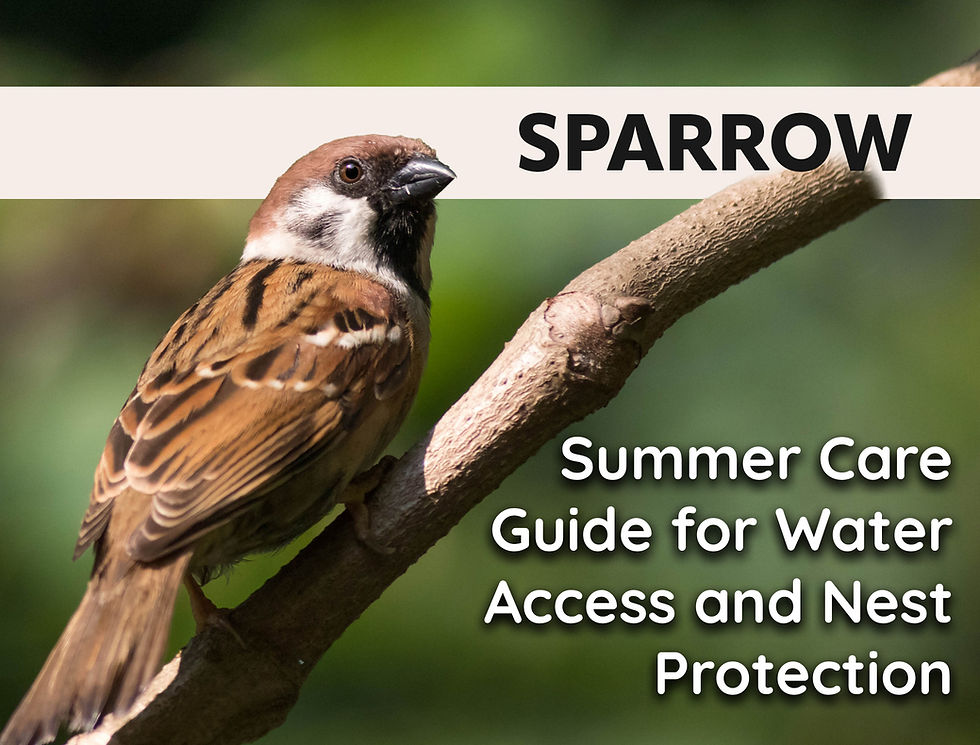
Sparrows were once an inseparable part of our daily lives, filling our mornings with cheerful chirps. Sadly, with the rise of concrete homes, fewer green spaces, and increasing pollution, sparrows have slowly disappeared from many urban areas. But the good news is—you can still invite them back! With a few thoughtful changes, your balcony can become a safe and welcoming spot for sparrows. Let’s explore step by step how to make it happen. Once sparrows return to your home, seasonal care becomes equally important. Sparrow Summer Care Guide for Water Access and Nest Protection explains how to help them stay safe during hot weather.
Why Are Sparrows Disappearing?
Before creating a sparrow-friendly balcony, it’s important to know why they’re vanishing:
Modern homes lack crevices or spaces for nesting.
Decline in natural food sources like insects and grains.
Widespread use of pesticides and chemical sprays.
Limited access to clean water in urban areas.
Noise, pollution, and unsafe environments.
By addressing these problems, even on a small scale, you can play a big role in sparrow conservation.
1. Provide Nutritious Food for Sparrows
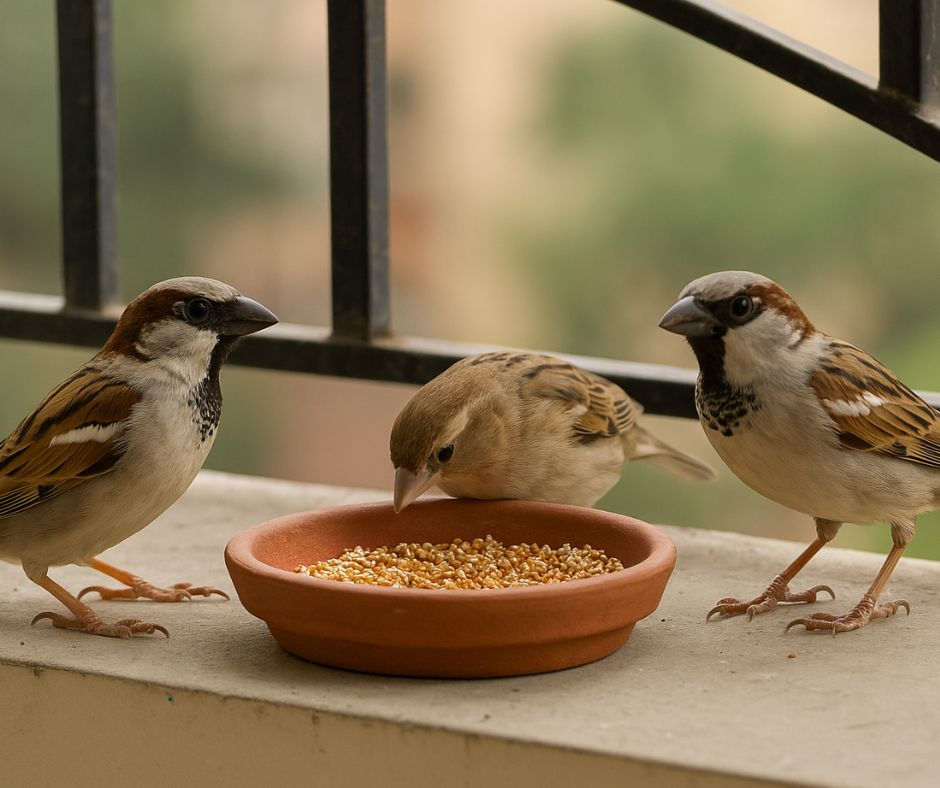
Sparrows are primarily grain-eating birds, which makes offering them the right food the simplest and most effective way to attract them to your balcony. Traditional grains such as wheat, bajra (pearl millet), oats, rice, and cracked corn are excellent choices. These grains provide sparrows with the energy they need for flying, chirping, and nesting. Millet and bajra, in particular, are favorites because they are easy to digest and mimic the natural diet sparrows find in the wild.
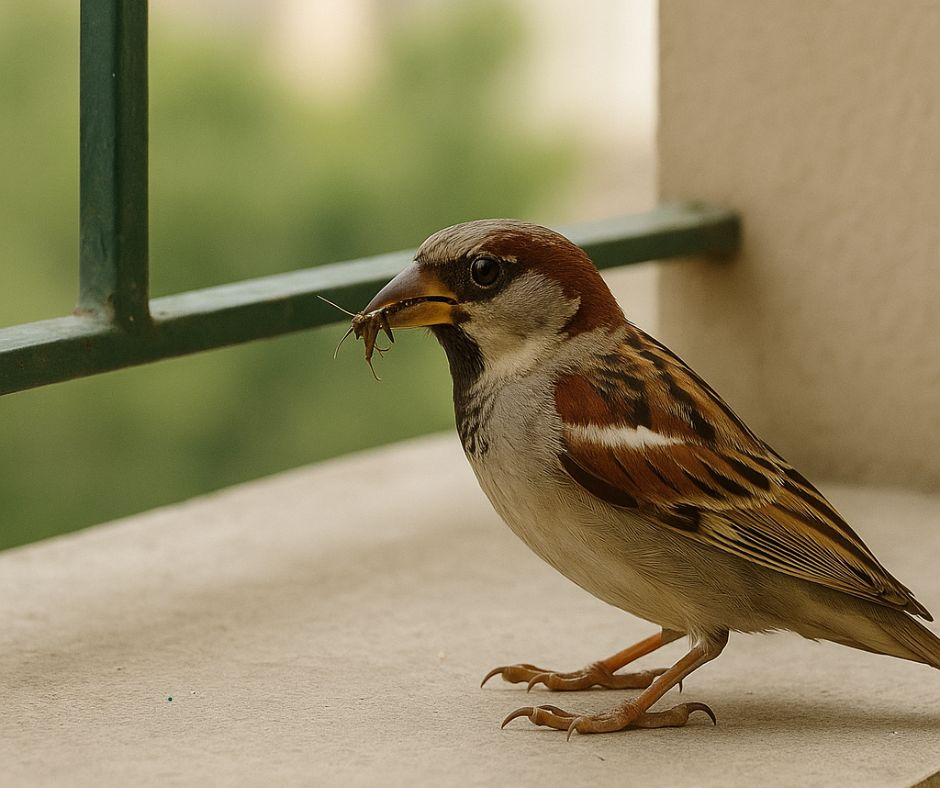
While grains are their staple food, sparrows also require protein-rich foods, especially during breeding seasons and when raising chicks. This is where insects like dried mealworms, crickets, or small worms play an important role. Protein supports growth, feather strength, and chick development. If sparrows find such high-quality food on your balcony, they are more likely to visit regularly and even consider nesting nearby. If you rescue a young sparrow, Baby Sparrow Ko Ghar Par Kaise Sambhalein aur Khilaye? explains the right feeding schedule and daily care in detail.
It is equally important to know what not to feed sparrows. Processed foods such as bread, chips, biscuits, or leftovers may seem harmless, but they lack nutrition and can cause long-term harm to the birds’ health. Oily, salty, or spicy foods can upset their digestion and should be strictly avoided.
For serving, use a flat feeder, shallow tray, or clay bowl placed in a shaded and quiet spot. Clay or terracotta containers are better than metal ones, as they stay cooler and feel natural to the birds. Make sure to clean the feeder regularly to avoid mold or bacteria, which can be harmful. Consistency is key—if sparrows find fresh and safe food available every day, they will quickly begin to see your balcony as a reliable feeding station.
Expert Tip: Mix different grains together in small quantities to create a nutritious variety for sparrows. Adding a handful of dried mealworms once or twice a week will not only attract sparrows faster but also improve their overall health and encourage them to return with more frequency.
2. Keep Fresh Water Available
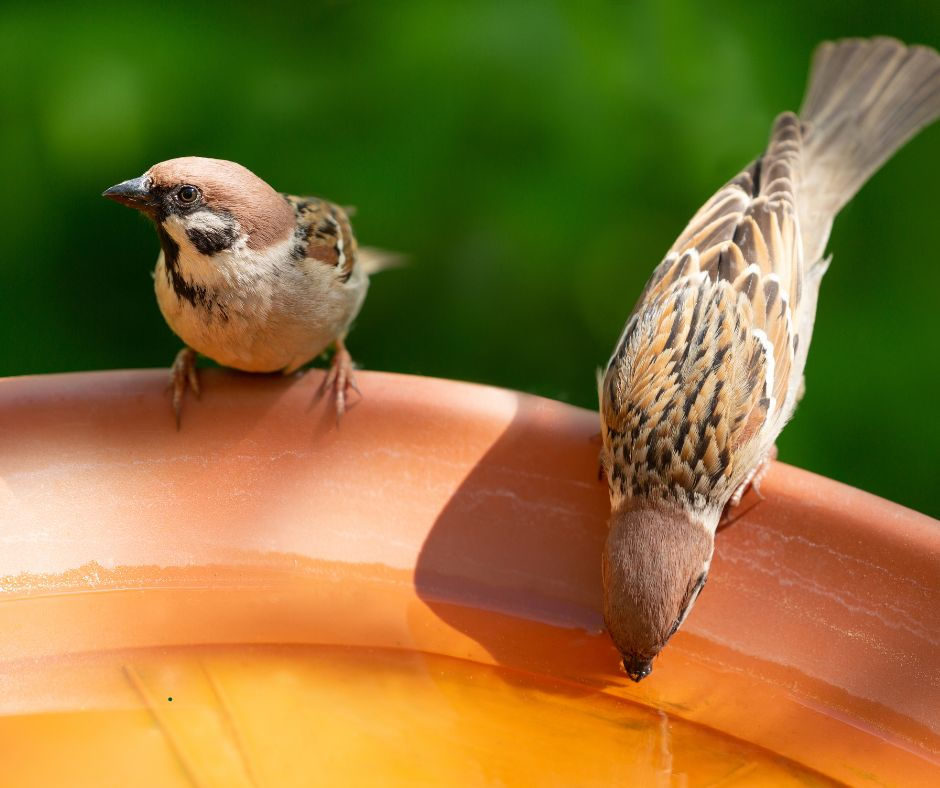
Just like food, sparrows need access to clean water for both drinking and bathing. A small earthen pot, clay dish, or even a wide bowl works perfectly. Change the water daily to ensure freshness and prevent mosquito breeding. In summers, sparrows love to cool themselves with a splash, so providing a slightly wider container can double as a birdbath. Place it in a shaded area so that the water stays cool throughout the day. Providing cool, clean water is especially important during hot weather. Sparrow Summer Care Guide for Water Access and Nest Protection shares more summer care tips for sparrows.
Expert Tip: Use clay or terracotta bowls instead of plastic or metal—they stay naturally cool and are safer for sparrows’ delicate beaks.
3. Create Safe Nesting Spaces
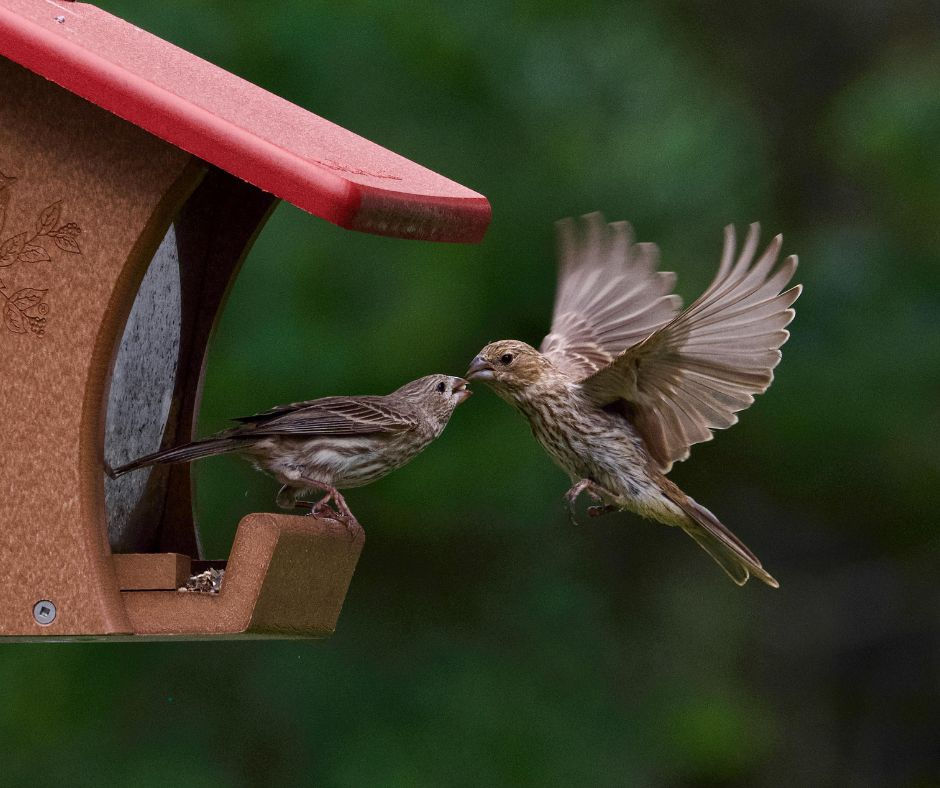
One of the main reasons sparrows are declining is the lack of natural nesting spots. Modern apartments don’t provide the nooks and crannies sparrows once used. To solve this, install a wooden birdhouse or eco-friendly nest box on your balcony. Place it at least 7–8 feet high, in a quiet and shaded corner, safe from predators and direct sunlight. Avoid painting or polishing the birdhouse with chemicals, as sparrows prefer natural textures and smells.
Expert Tip: Open-fronted nest boxes attract sparrows more quickly than closed ones. Install multiple boxes if you have space, as sparrows like to live in small groups.
4. Add Greenery to Your Balcony
Plants not only beautify your balcony but also make sparrows feel more at home. Native herbs like tulsi, mint, and coriander are excellent because they attract small insects that sparrows naturally feed on. Flowering plants such as hibiscus, marigold, and sunflower provide nectar and seeds, while climbers like ivy or money plants give sparrows perching and hiding spots. Potted shrubs and leafy plants also create a sense of safety and mimic natural habitats. The right plants can make a huge difference. How to Get Sparrows Back? Balcony and Garden explains how to build a natural habitat for sparrows.
Expert Tip: Choose a mix of flowering and leafy plants—this attracts both insects for food and gives sparrows shaded resting spots.
5. Ensure Safety and Peace
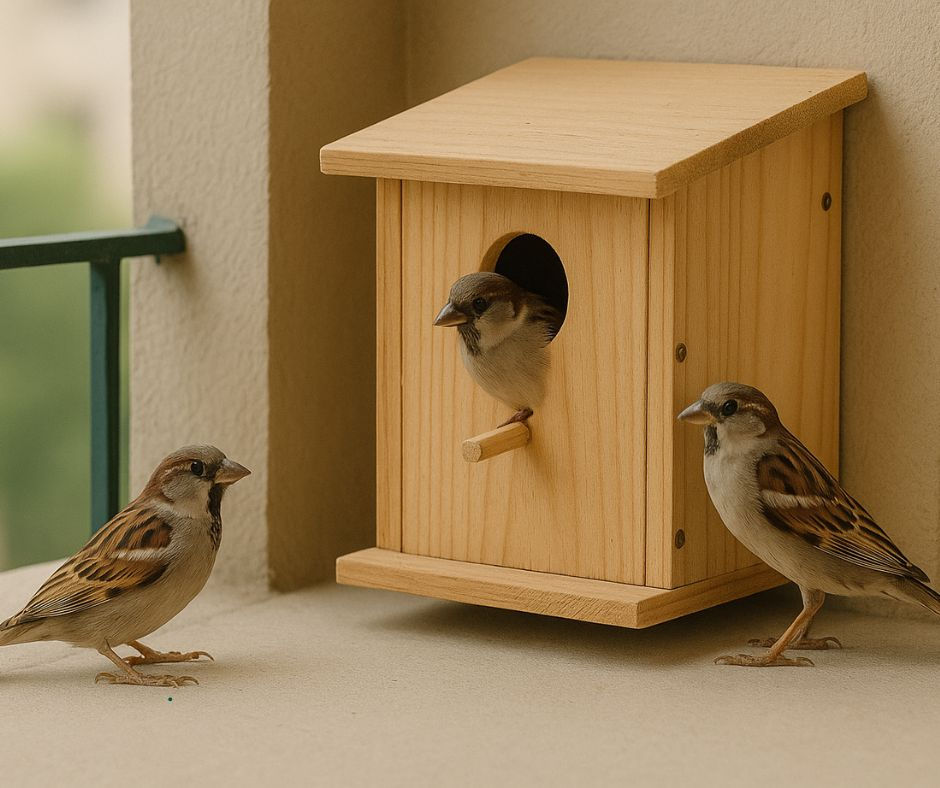
Sparrows are shy and sensitive to disturbances. If your balcony is noisy or frequently disturbed, they may hesitate to visit. Choose a quiet corner for food and nesting, away from constant human activity. Keep cats, dogs, or other pets away from sparrow-friendly areas, as their presence can scare the birds. Avoid chemical pesticides and strong cleaners in your balcony garden, as these can be harmful. Once sparrows feel safe, they’ll visit more often and may even begin nesting.
Expert Tip: Observe sparrows from a distance without approaching too closely. The less they feel disturbed, the faster they’ll trust your balcony.
6. Be Consistent and Patient
Attracting sparrows is not an overnight task. Birds are cautious by nature, and it may take several weeks—or even months—before they begin visiting regularly. Keep providing food and water every day, even if sparrows don’t show up immediately. Clean the feeders and water bowls to avoid contamination. Once a few sparrows start coming, others will soon follow, and your balcony may turn into a regular sparrow hub. Consistency is one of the biggest factors in attracting sparrows. Balcony aur Garden mein Sparrows Ko Wapas Kaise Attract Karein? includes more proven techniques for long-term success.
Expert Tip: Start small with just a feeder and water bowl. Don’t rush to add everything at once—sparrows trust gradual, consistent efforts more than sudden changes.
7. Community and Environmental Benefits

By welcoming sparrows, you’re not just helping birds—you’re helping the environment. Sparrows naturally eat insects, which reduces the need for pesticides. Their presence boosts urban biodiversity, creating a healthier ecosystem. In many cultures, sparrows symbolize simplicity, joy, and prosperity. If you encourage neighbors and friends to do the same, entire neighborhoods can benefit from the return of sparrows.
Expert Tip: Talk to your neighbors and inspire them to place feeders too. When multiple balconies in a building provide food and shelter, sparrows feel safer and thrive faster.
Bringing sparrows back to your balcony is simple but deeply rewarding. By offering them nutritious food, clean water, safe nesting spaces, greenery, and a peaceful environment, you can recreate the natural habitat they miss in urban areas. It may take patience, but once sparrows arrive, they’ll brighten your mornings with their cheerful songs.
So, why wait? Start with a small bowl of grains and water today—and soon, you’ll enjoy the delightful company of sparrows right outside your window. Helping sparrows is a year-round responsibility. During the monsoon, Saving Baby Sparrows in Rain: Emergency Care, Warmth & Proper Feeding Steps explains how to protect rescued chicks from rain and cold.
Do sparrows eat rice?
Yes, both raw and boiled plain rice are safe, but balance with millet, wheat, or oats for better nutrition.
Is bread good for sparrows?
No, bread has little nutrition. Instead, feed natural grains or protein foods like dried mealworms.
Can sparrows be kept as pets?
No, sparrows are wild and protected by law. Support them by creating sparrow-friendly balconies.
Should I feed sparrows daily?
Yes, daily feeding with grains and fresh water helps sparrows trust and return regularly.
What grains do sparrows like?
Millet (bajra), wheat, oats, rice, and corn are sparrows’ favorite healthy grains.
Do sparrows eat insects?
Yes, they love mealworms and small insects, especially for feeding chicks.
How to attract sparrows quickly?
Keep a grain feeder, water bowl, and nest box in a quiet, green balcony space.
What food should be avoided?
Avoid salty, oily, or spicy scraps—stick to clean grains and insects only.
At Promeal, we know how important it is to give your pets a healthy and varied diet. That’s why we create high-quality, natural pet food to keep them happy and healthy.
Our speciality is premium live and dried insect-based feeds like mealworms, superworms, crickets, roaches, waxworms, and hornworms. These insects are grown on an organic diet, making them a nutritious and tasty treat for your pets.
Check out our "Shop" section to find the perfect food for your pets!


I started leaving small trays of millet and water on my balcony, and over the weeks, sparrows began visiting more often. It reminded me how delicate patterns, whether in nature or technology, need careful attention. Learning about nonce in blockchain helped me appreciate the small but crucial details, just like the tiny seeds that attract birds. You can explore this concept further here: https://paybis.com/blog/glossary/what-is-a-blockchain-nonce/. A quiet corner with a small nest box makes your balcony a safe haven for sparrows, combining care and consistency.