
Koi Fish in Monsoon Ponds: Controlling Overflow, Debris & Sudden pH Changes


Monsoon can make a koi pond look fresh, full, and beautiful. Rainwater cools the surroundings, plants look greener, and koi fish often become more active. But monsoon also brings some hidden risks for koi fish. Heavy rain can cause pond overflow, dirty runoff, fallen leaves, mud, low oxygen, and sudden pH changes. These problems may not look serious in the beginning, but they can slowly stress koi and make them weak.
Koi fish monsoon care is mainly about keeping the pond stable. Koi do not like sudden changes. They need clean water, steady pH, good oxygen, proper filtration, and safe feeding. A pond may look clear from outside, but that does not always mean the water is safe. During rainy season, koi owners should focus more on testing water and watching fish behavior instead of only checking water clarity. If you are new to keeping koi, Basics About Koi Fish explains their natural behavior, needs, and why stable water conditions are so important for long-term health.
Why Monsoon Is Risky for Koi Fish?

During normal weather, a koi pond stays more stable because water level, temperature, oxygen, and waste load do not change too quickly. In monsoon, everything can change within a few hours. Heavy rain can fill the pond too fast. Muddy water from the garden can enter the pond. Leaves, flowers, dead insects, and dust can fall into the water. These materials slowly rot and reduce water quality.
The biggest monsoon risks for koi fish are overflow, debris, low oxygen, and sudden pH change. When these problems happen together, koi may become stressed. Stress can reduce appetite, weaken immunity, and make koi more open to parasites, fungal problems, ulcers, and bacterial infections. That is why prevention is much better than waiting for disease symptoms.
Controlling Koi Pond Overflow During Heavy Rain

Pond overflow is one of the most common rainy season problems. If the pond water rises too much, koi may jump out or wash out from low edges. Small koi are at higher risk, but even large koi can move toward strong water flow and escape from an unsafe overflow area. Dirty outside water can also enter the pond and bring soil, fertilizer, pesticide, or animal waste. Many of these overflow-prevention principles are also covered in Koi Fish Tank Setup Karne Ka Complete Guide, especially when planning safe water movement and filtration systems.
A safe koi pond should have a proper overflow outlet. This outlet should allow extra water to leave the pond without allowing koi to escape. A strong mesh guard can be fitted near the overflow opening. The mesh should be large enough to allow water to pass but small enough to stop fish. The outlet should also be cleaned before and during monsoon because leaves and mud can block it.
The pond edge should be slightly raised above the garden level. This helps stop muddy runoff from entering the pond. Roof water should not directly fall into the koi pond unless it is properly filtered and controlled. Garden slopes should also be checked. If rainwater is flowing from soil, compost, or plant beds into the pond, it should be redirected away.
Keeping Debris Out of the Koi Pond

Debris means unwanted material such as leaves, flowers, grass, dead insects, mud, and uneaten food. In monsoon, debris enters the pond faster because of wind and rain. At first, it may only float on the surface. Later, it sinks and starts rotting at the bottom. This increases organic waste and can reduce oxygen in the water.
Remove floating debris before it sinks. This is one of the easiest and most useful koi pond maintenance habits during rainy season. A simple pond net can remove leaves and flowers every morning. If the pond is near trees, a pond net cover can also help reduce leaf fall. The filter should be checked more often because rainy water can carry fine dirt that clogs filter pads quickly.
Do not suddenly disturb deep black sludge at the bottom of an old pond. Old sludge may contain trapped gases and heavy organic waste. If you stir it all at once, the water can become dirty and oxygen can drop. If sludge cleaning is needed, do it slowly in small sections or take expert help. Slow cleaning is safer than aggressive cleaning in koi ponds.
Understanding Sudden pH Changes After Rain

pH tells whether water is acidic, neutral, or alkaline. Koi fish can live in a reasonable pH range, but sudden changes are dangerous. Heavy rain can dilute minerals in pond water and disturb the natural buffering capacity. If the pond has low alkalinity, pH can swing more easily after rain. Water quality fluctuations can increase disease risks, which is why Koi Fish Health Issues and Diseases: Symptoms, Causes, and Treatments is useful for recognizing early warning signs.
For koi fish, stable pH is more important than chasing a perfect number. Many pond fish do well when pH stays in a safe and stable range, but they become stressed when pH changes quickly. Rainwater, algae activity, low alkalinity, and dirty runoff can all affect pH. This is why pH should be tested after heavy rain, especially if the koi are acting dull or staying near the surface.
Alkalinity, also called KH in pond keeping, works like a safety buffer. It helps protect the pond from sudden pH swings. If KH is too low, the pond becomes unstable. During monsoon, testing pH without checking KH gives only half information. pH tells what is happening now, while KH tells how stable the pond may remain.
Water Testing After Heavy Rain

Koi pond water should be tested more often during monsoon. Important tests include pH, KH or alkalinity, ammonia, nitrite, nitrate, dissolved oxygen, and temperature. These tests help you understand whether the pond is safe or slowly becoming risky.
Ammonia and nitrite should stay as close to zero as possible. These two are dangerous for fish and often rise when filtration is weak, feeding is heavy, or organic waste is high. After heavy rain, filters may slow down due to clogging, and extra waste may enter the pond. This can increase the risk of ammonia and nitrite stress.
Testing should be done at a similar time of day whenever possible because pH and oxygen naturally change between morning, afternoon, and night. Early morning is very important for oxygen observation because oxygen is usually lowest before sunrise. If koi are gasping early in the morning, treat it as a serious warning sign.
Maintaining Oxygen During Monsoon

Oxygen is one of the most important parts of koi fish health. Koi breathe dissolved oxygen from water through their gills. During cloudy and rainy days, aquatic plants and algae may produce less oxygen. At night, plants, algae, bacteria, and fish all use oxygen. This can make oxygen drop, especially in ponds with too much waste.
Low oxygen can kill koi faster than many other water-quality problems. Warning signs include koi gasping at the surface, gathering near a waterfall, staying close to air stones, swimming slowly, or not eating. Large koi usually suffer first because they need more oxygen than small fish.
During monsoon, air pumps, waterfalls, and fountains should run properly. Do not switch off aeration at night. Clean clogged air stones and check that water is circulating well. If the filter flow becomes weak, clean the mechanical filter pad gently. Do not wash all biological filter media with tap water because chlorine can damage useful bacteria.
Feeding Koi Fish During Monsoon
Feeding should be controlled during rainy season. Koi may come to the surface and look hungry, but feeding too much can quickly spoil water quality. Uneaten food breaks down, increases waste, and puts pressure on the filter. When oxygen is low or pH is unstable, heavy feeding can make stress worse.
During monsoon, feed koi only what they finish quickly. If the water is muddy, fish are inactive, rain is very heavy, or oxygen seems low, reduce feeding or skip feeding for that day. Koi can handle short feeding gaps better than they can handle polluted water. Good-quality koi pellets should remain the main diet because they are balanced for regular nutrition. For a detailed breakdown of safe foods and ingredients to avoid, see Best Foods for Koi Fish: What to Feed and What to Avoid?.
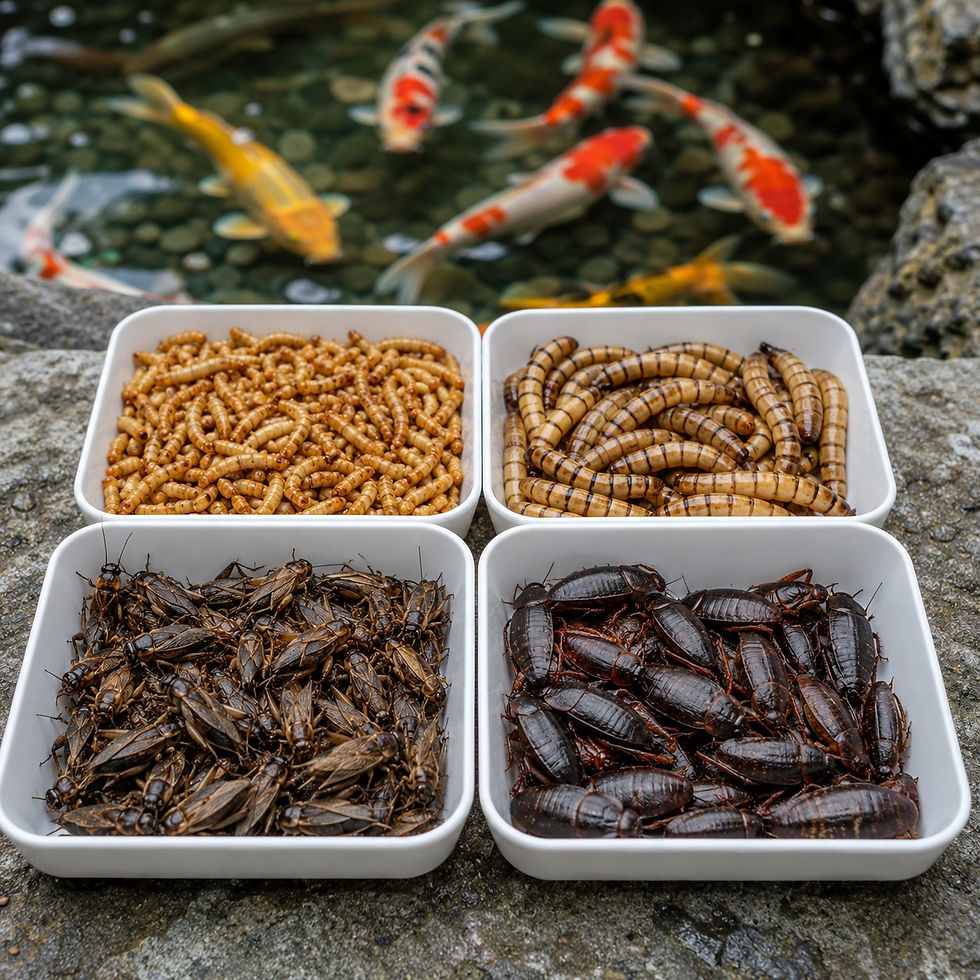
Live insects can be given as protein-rich treats for medium and large koi. Clean, farm-raised live mealworms, superworms, crickets, and feeder roaches can be used in small amounts. Do not feed wild insects collected from the garden because they may carry pesticide, parasites, or harmful chemicals. Among these options, live mealworms are the best practical treat for koi fish because they are easy to portion, easy for koi to catch, and less messy than jumping insects like crickets. Superworms are bigger and richer, so they should be used only for larger koi and in smaller quantity. Crickets can be nutritious, but they may escape or float away if not eaten quickly. Roaches should be used only if they are clean feeder roaches and suitable in size. Live insects should be treats, not the main food.
Health Precautions During Rainy Season

Monsoon does not directly mean disease, but poor water conditions during monsoon can create disease pressure. Koi under stress may become more likely to develop parasite, fungal, or bacterial issues. Dirty water, sudden pH change, low oxygen, and high organic waste can all weaken fish.
Watch koi behavior every day during monsoon. Healthy koi swim smoothly, respond to food, and move naturally around the pond. Warning signs include clamped fins, rubbing against pond walls, jumping, red patches, white spots, cotton-like growth, ulcers, swollen body, gasping, hiding, or sudden loss of appetite.
If only one koi looks weak, separate observation may be needed. If many koi show symptoms together, the first step should be water testing. Many fish-health problems start with poor water quality. Do not add medicine blindly. Wrong treatment can stress fish more and damage pond balance. If symptoms are serious, contact an aquatic veterinarian or experienced koi health expert.
Emergency Steps After Heavy Rain
After heavy rain, first check the water level and overflow area. Make sure koi are not trapped near the outlet and no fish has escaped. Then remove leaves, flowers, and floating waste. Check filter flow and aeration. If koi are gasping or staying at the surface, increase aeration immediately.
Do not make sudden chemical changes without testing water. Many owners try to quickly adjust pH after rain, but sudden correction can be more harmful than the original change. Test pH and KH first. If ammonia or nitrite is present, reduce feeding and improve filtration and aeration. Partial water changes may help in some cases, but replacement water must be dechlorinated, and temperature shock should be avoided.
A calm, step-by-step approach is safest. Remove waste, increase oxygen, test water, feed less, and observe koi closely. Monsoon pond care is not about doing one big action. It is about doing small correct actions regularly.
Common Monsoon Mistakes Koi Owners Should Avoid

One common mistake is allowing garden runoff to enter the pond. This can bring mud, fertilizer, and harmful chemicals. Another mistake is overfeeding during cloudy weather. Extra food may look harmless, but it can quickly turn into ammonia and sludge. Some owners also clean the filter too aggressively and remove useful bacteria.
Never judge koi pond safety only by clear water. Clear water can still have ammonia, nitrite, low oxygen, or unstable pH. Another mistake is adding new koi during monsoon without quarantine. New fish can bring disease, and stressed pond conditions can make the problem worse.
Koi fish can stay healthy in monsoon ponds if the pond is stable, clean, and well managed. Heavy rain is not always bad, but overflow, dirty runoff, debris, low oxygen, and sudden pH changes can create serious stress. The best koi fish monsoon care plan is simple: control overflow, keep debris out, test water, maintain oxygen, and feed carefully.
Koi pellets should remain the main food during the rainy season. Live mealworms can be added as the best practical insect treat in small quantities, while superworms, crickets, and roaches should be used occasionally and only when they are clean and eaten quickly. With proper pond care, regular observation, and safe feeding, your koi fish can remain active, colorful, and healthy throughout the monsoon. Once your koi are thriving in a stable pond environment, How To Breed Koi Fish? can help you understand the next steps involved in successful koi breeding.
At Promeal, we know how important it is to give your pets a healthy and varied diet. That’s why we create high-quality, natural pet food to keep them happy and healthy. Our specialty is premium live and dried insect-based feeds like mealworms, superworms, crickets, roaches, waxworms, and hornworms. These insects are grown on an organic diet, making them a nutritious and tasty treat for your pets.
Check out our "Shop" section to find the perfect food for your pets!


Comments