
Monsoon Aquarium Checklist: 10 Water Quality Fixes for Healthy Fish Tanks


A monsoon aquarium checklist is very important for every aquarium owner because the rainy season can quietly change the condition of a fish tank. Many fish keepers notice that their fish suddenly become slow, hide in corners, breathe fast, stop eating, or come near the surface for air during monsoon. Sometimes the water also becomes cloudy or starts smelling bad. These problems may look sudden, but most of the time they are linked to poor or unstable water quality.
Fish live inside water all the time, so water is their home, their breathing space, and their protection. If the water becomes unsafe, fish can become stressed very quickly. Clean-looking water is not always safe water. Aquarium water can look clear but still have ammonia, nitrite, low oxygen, or unstable pH. That is why a proper monsoon aquarium checklist helps you protect your fish before small problems become serious. During rainy season, aquarium care should not depend only on feeding and cleaning. You need to check oxygen, ammonia, nitrite, nitrate, pH, temperature, filter flow, and fish behavior. This simple guide will help you understand 10 important water quality fixes that can keep your aquarium fish healthy during monsoon.
Why Monsoon Aquarium Care Is Important?

Monsoon weather brings humidity, sudden temperature changes, cloudy days, and sometimes power cuts. These things can affect your aquarium indirectly. If the room temperature drops, fish may become less active. If the power goes off, the filter and air pump stop working. If feeding continues normally while fish are less active, leftover food can rot and increase ammonia.
In some places, tap water quality can also change during rainy season. Water may contain more impurities, chlorine, or different pH levels depending on local supply conditions. This does not mean you should panic, but it does mean you should be more careful. The safest aquarium during monsoon is a stable aquarium. Fish do not like sudden changes in water quality.
What Water Quality Means in a Fish Tank?
Aquarium water quality means the condition of the water your fish live in. It includes ammonia, nitrite, nitrate, oxygen, pH, temperature, chlorine, hardness, and water clarity. Every aquarium owner should understand these basic points because most fish health problems start from water.
Ammonia and nitrite should always be zero. These are harmful waste chemicals that can stress or even kill fish. Nitrate should stay low through regular water changes. Oxygen should be enough so fish can breathe normally. pH and temperature should stay stable because sudden changes can shock fish. Good aquarium care means keeping the water stable, not just making the tank look clean.
1. Test Aquarium Water Regularly

The first step in this monsoon aquarium checklist is water testing. Many fish owners only test water after fish become sick, but that can be too late. During monsoon, you should test ammonia, nitrite, nitrate, pH, and temperature at least once a week. If fish are gasping, hiding, rubbing their body, eating less, or swimming strangely, test the water immediately.
Water testing helps you find the real problem. Sometimes fish look sick because of ammonia. Sometimes they breathe fast because of low oxygen. Sometimes cloudy water happens because of overfeeding or weak filtration. Without testing, you may add medicines when the real problem is water quality. Never guess water quality by looking at the tank only.
2. Keep Ammonia at Zero
Ammonia is one of the most dangerous problems in a fish tank. It comes from fish waste, leftover food, dead plants, dead feeder insects, and dirty substrate. In monsoon, ammonia can rise when fish eat less but food quantity remains the same. If the filter is weak or the tank is overcrowded, ammonia can increase faster.
Fish exposed to ammonia may become dull, breathe fast, stay near the surface, develop red gills, or stop eating. The safest ammonia level is zero. To control ammonia, remove uneaten food, avoid overfeeding, do regular partial water changes, keep the filter healthy, and do not add too many fish in one tank. If ammonia is present, stop adding new fish and fix the water first.
3. Keep Nitrite at Zero

Nitrite is another harmful chemical in aquarium water. It usually appears when the biological filter is not working properly. In a healthy tank, good bacteria convert ammonia into nitrite and then nitrite into nitrate. But if the tank is new, overcleaned, overloaded, or oxygen is low, this process can become weak.
Nitrite can affect fish breathing and make them look stressed even when oxygen seems available. Fish may gasp near the surface, breathe rapidly, or become weak. Like ammonia, nitrite should also be zero. To reduce nitrite, keep the filter running, protect the good bacteria, reduce feeding, and do small water changes. A strong biological filter is one of the best protections against monsoon fish deaths.
4. Control Nitrate with Water Changes
Nitrate is less dangerous than ammonia and nitrite, but it should not be ignored. High nitrate can slowly stress fish, reduce immunity, increase algae, and make the tank unhealthy. During monsoon, if feeding is heavy and water changes are delayed, nitrate can rise.
The best way to control nitrate is by doing regular partial water changes. Do not wait until water smells bad or fish become sick. Small weekly water changes are safer than one sudden large water change. Live plants can also help use some nitrate, but they cannot replace proper maintenance. Low nitrate helps fish stay active, healthy, and less stressed.
5. Improve Oxygen in the Aquarium

Low oxygen is a serious aquarium problem during monsoon, especially during power cuts. Fish may come near the surface and gasp when oxygen is low. This can happen when the filter stops, the tank is overcrowded, water movement is poor, or too much waste is present.
Oxygen enters aquarium water mainly through surface movement. A filter outlet, air pump, air stone, or sponge filter can improve oxygen exchange. During monsoon, check whether the water surface is moving gently. If the surface is completely still, oxygen exchange may be poor. Fish gasping at the surface is an emergency sign and should not be ignored.
6. Avoid Sudden Big Water Changes
Water changes are important, but sudden large water changes can shock fish. During monsoon, tap water temperature, pH, or quality may be different from your aquarium water. If you change too much water at once, fish may become stressed.
It is better to do small and regular water changes. Always treat tap water with a good water conditioner before adding it to the tank. Try to match the new water temperature with the aquarium water. Do not pour cold water directly into the tank. Stable water is safer than sudden correction.
7. Keep the Filter Healthy

Your aquarium filter does much more than remove dirt. It also holds useful bacteria that break down fish waste. These bacteria protect your tank from ammonia and nitrite spikes. During monsoon, your filter should run continuously unless cleaning is required.
Do not wash biological filter media under untreated tap water because chlorine can harm good bacteria. If the filter flow becomes slow, clean the sponge or mechanical media gently using old aquarium water. Do not clean everything at the same time. Overcleaning the filter can damage the good bacteria and make water quality worse.
8. Feed Carefully During Monsoon

Feeding is one of the most important parts of rainy season aquarium care. During monsoon, some fish become less active and may eat less. If you continue feeding the same amount, leftover food can rot and increase ammonia. Feed only what your fish can finish quickly and remove uneaten food.
Pellets or staple fish food should remain the main diet because they provide balanced daily nutrition. Live insects can be added as a protein-rich treat for suitable fish like Arowana, Oscar, Flowerhorn, Cichlids, and other carnivorous or omnivorous aquarium fish. Live mealworms, superworms, crickets, and roaches can encourage natural hunting behavior and active feeding response.
Among these, live crickets are one of the best options for many medium and large predator fish because they move actively, attract attention, and are not as heavy as superworms. Live mealworms are easy to feed and good as a regular treat in controlled quantity. Superworms are richer and better for larger fish, but they should not be overfed. Roaches are also protein-rich and useful for big predator fish, but the size must match the fish’s mouth. Live insects should be used as a supplement, not as the only diet.
9. Watch for Cloudy Water and Bad Smell
Cloudy water is a warning sign during monsoon. It can happen because of overfeeding, weak filtration, dead organic matter, dirty gravel, bacterial bloom, or poor maintenance. Bad smell is also not normal. A healthy aquarium may have a mild earthy smell, but it should not smell rotten.
If your tank becomes cloudy or smelly, do not only add chemicals. First check the cause. Remove leftover food, check for dead fish or dead insects, clean visible waste, test water, and check the filter. Do a partial water change if needed. Cloudy water is not just a visual problem; it can be a sign of poor water quality.
10. Prepare for Power Cuts
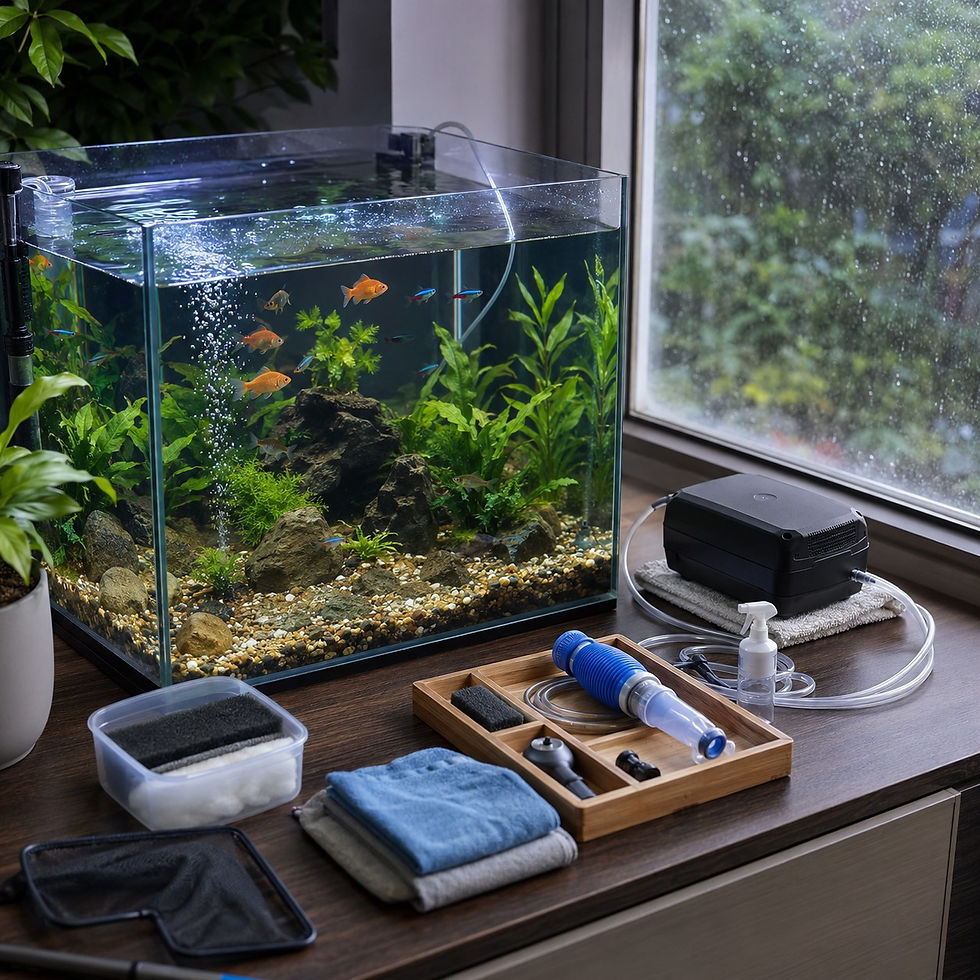
Power cuts are common during monsoon in many areas. When power stops, the filter, air pump, and heater may stop working. Oxygen can drop, and filter bacteria may also suffer if the power cut is long. This can quickly become dangerous in heavily stocked tanks.
Keep a battery-powered air pump ready for emergencies. Avoid heavy feeding before expected power cuts. If the power is off, do not add extra food because waste will increase while filtration is stopped. Keep the tank covered but make sure there is enough air exchange. A battery air pump can save fish during long monsoon power cuts.
Health Precautions During Monsoon
Poor water quality can make fish weak and more likely to get diseases. Common signs include white spots, torn fins, cotton-like patches, red marks, fast breathing, clamped fins, and loss of appetite. Many fish owners start medicine immediately, but this is not always correct.
Before using any treatment, check water quality first. Ammonia, nitrite, low oxygen, and sudden pH changes can create symptoms that look like disease. If one fish looks sick, shift it to a quarantine tank if possible. Quarantine helps protect the main tank and makes treatment easier. Water testing should come before medicine.
Simple Daily Monsoon Aquarium Routine
Check your fish every day. See if they are swimming normally, breathing normally, and eating properly. Look at the filter flow, surface movement, and water clarity. Remove leftover food after feeding. Make sure the tank is not near direct rain splash or unsafe electrical points.
Once a week, test water and do a small water change if needed. Clean only the dirty parts of the filter and protect the biological media. Keep a thermometer, water conditioner, test kit, and battery air pump ready. A simple routine is better than emergency cleaning after fish become sick.
A healthy fish tank during monsoon does not need complicated care. It needs stable water, careful feeding, proper oxygen, strong filtration, and regular observation. Most sudden fish problems during rainy season can be reduced when you follow the right water quality steps.
This monsoon aquarium checklist helps you protect fish from ammonia spikes, nitrite stress, low oxygen, cloudy water, overfeeding, power cuts, and disease risk. Keep your water clean, stable, and tested. Feed wisely, use live insects only as a healthy treat for suitable fish, and never ignore early warning signs.
For more aquarium care tips and natural feeding support, follow Promeal and give your fish a safer, healthier monsoon season.
At Promeal, we know how important it is to give your pets a healthy and varied diet. That’s why we create high-quality, natural pet food to keep them happy and healthy. Our speciality is premium live and dried insect-based feeds like mealworms, superworms, crickets, roaches, waxworms, and hornworms. These insects are grown on an organic diet, making them a nutritious and tasty treat for your pets.
Check out our "Shop" section to find the perfect food for your pets!


Comments