
Pheasants in Wet Conditions: Habitat Management & Nutritional Support Tips


Pheasants in wet conditions need careful habitat management, clean bedding, dry shelter, and balanced nutritional support. Rainy weather, monsoon moisture, muddy ground, and damp bedding can create stress for pheasants if the enclosure is not managed properly. Pheasants are strong and active birds, but they spend a lot of time on the ground. This means wet floors, dirty litter, spoiled feed, and poor drainage can directly affect their health, feathers, appetite, and breeding performance.
Wet weather does not mean pheasants cannot stay healthy. The real problem starts when rainwater stays inside the pen for a long time. When the ground becomes muddy, bedding stays damp, and feed becomes wet, the risk of disease can increase. The main goal of pheasant wet weather care is to keep the bird dry, the bedding clean, the food fresh, and the air moving properly.
Why Wet Conditions Are Risky for Pheasants?

Wet conditions can create many small problems that slowly become serious. Damp bedding can hold germs, parasites, bad smell, and moisture. Muddy areas can make the birds dirty and uncomfortable. Wet feed can spoil quickly and may reduce appetite. Dirty water bowls can become a source of infection. Poor ventilation can trap moisture inside the shelter and make breathing problems worse.
Young pheasant chicks are more sensitive than adult pheasants. Chicks need warmth, dry bedding, and high-protein feed for proper growth. If chicks become wet or cold, they can become weak very quickly. Wet bedding is one of the biggest dangers for pheasant chicks because it can support disease and make the brooding area unhealthy.
Adult pheasants also need protection during long wet weather. If they cannot find a dry resting area, they may sit in damp corners, lose body condition, and become stressed. Stress can affect feeding, feather quality, immunity, and breeding success. This is why pheasant rainy season care should always focus on prevention, not only treatment.
Best Habitat Management for Pheasants in Wet Weather

Good pheasant habitat management starts with drainage. The enclosure should not hold standing water after rain. If water collects in one corner, that area should be raised, sloped, filled, or drained. A dry walking area is very important because pheasants are ground birds. They need space to move, scratch, rest, and feed without standing in mud all day.
A proper pheasant enclosure setup should include a covered shelter, open movement space, shaded areas, dry bedding, and safe fencing. The shelter should protect birds from direct rain, but it should not be fully closed without airflow. A dry shelter with good ventilation is better than a closed shelter that becomes damp from inside. Fresh airflow helps reduce smell, moisture, and respiratory stress.
The feeding area should be under a roof or waterproof cover. Feeders should be raised slightly above the ground so rainwater and mud do not enter them. The water station should also be placed in a clean area where birds cannot easily splash water into the bedding. During wet conditions, even one leaking drinker can make the floor dirty and damp.
Bedding and Floor Care During Wet Conditions
Bedding is one of the most important parts of pheasant wet weather care. Dry bedding keeps birds comfortable and reduces the risk of many health problems. Straw, hay, wood shavings, or other safe bedding materials should be checked daily during rain or monsoon weather. If any bedding becomes wet, remove it quickly instead of covering it with fresh bedding.
Adding dry bedding on top of wet bedding is a common mistake. The top may look clean, but moisture remains below. This can create smell, mold, and disease risk. Always remove wet bedding first, then add fresh dry bedding. This simple habit can protect both adult pheasants and chicks.
The outdoor floor should also be checked after rain. If the pen becomes muddy again and again, the enclosure needs better drainage. A raised dry zone, gravel base, sand layer, or covered resting platform can help in some setups. The material should be safe for the birds and easy to clean. Avoid sharp stones, slippery surfaces, and deep wet mud.
Shelter Design for Rainy and Monsoon Weather

A good shelter protects pheasants from rain, wind, cold drafts, and wet ground. It should have a strong roof, dry sides, and enough space for the birds to rest without overcrowding. During wet weather, pheasants may spend more time inside the shelter, so the shelter should not be too small.
The shelter should have dry corners where birds can sit comfortably. If the rain enters from one side, add side covers, shade netting, plastic sheets, or weather barriers, but keep airflow in mind. Too much covering can trap humidity. The best shelter keeps rain out but still allows fresh air to pass.
For breeding pheasants, the nesting area must stay dry. Wet nests can make eggs dirty and may reduce hatch success. Breeding hens need a calm place where they can lay eggs without stress. Clean and dry nesting material should be changed whenever it becomes damp.
Nutritional Support for Pheasants in Wet Conditions
A balanced pheasant diet is very important during wet weather. Pheasants need proper protein, energy, minerals, vitamins, grit, and clean water. Their main food should be a good-quality game bird feed because it is made to support growth, feathers, body condition, and breeding. Young pheasants need higher protein than adults, especially during their early growth stage.
During rainy weather, feed should always stay dry. Wet feed can spoil fast, especially in humid conditions. Spoiled feed can reduce appetite and may create health issues. Feed small amounts if the weather is very damp, and remove leftover feed before it becomes wet or stale. Fresh, dry feed is safer than a large quantity of feed left open in wet weather.
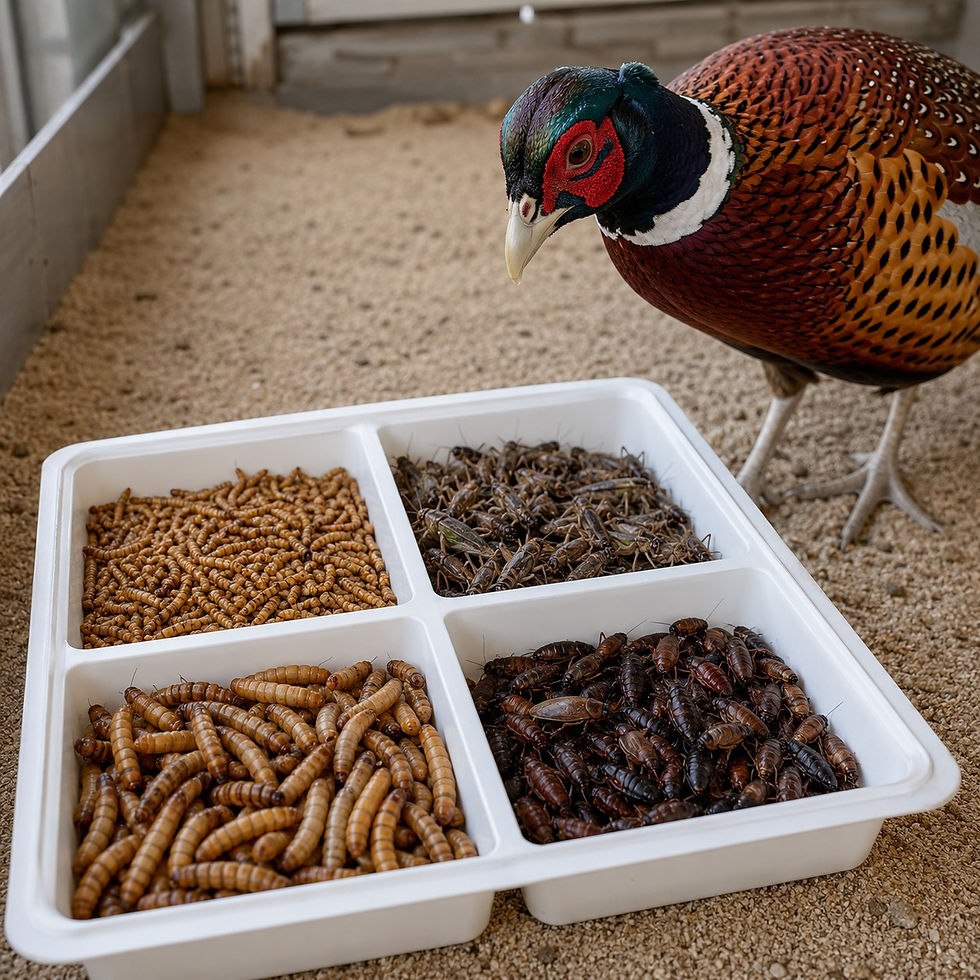
Live insects can be a useful protein-rich add-on for pheasants because pheasants naturally eat insects in the wild. Live mealworms, superworms, crickets, and roaches can support natural feeding behavior and give extra variety. Live mealworms are the best overall option for most pheasants because they are easy to feed, easy to digest in proper amounts, and attractive to birds. Crickets are also very good because they encourage movement, hunting, and natural activity. Superworms are richer and bigger, so they are better for adult pheasants in small amounts. Roaches can also be used for adult pheasants if they are clean, farm-raised, and size-appropriate. The best choice is to use live mealworms as the main insect treat, crickets for activity, and superworms or roaches only as occasional treats for adult birds.
Live insects should never replace the main diet. They are a support food, not a complete feed. Too many insects, especially fatty insects, can unbalance the diet. Use them as a healthy treat during growth, breeding, feather development, or low appetite periods. Clean farm-raised insects are always safer than wild insects because wild insects may carry pesticides, parasites, or harmful chemicals.
Clean Water and Mineral Support
Fresh water is very important in wet conditions. Many people think birds need less water when the weather is rainy, but pheasants still need clean drinking water every day. Water bowls can become dirty quickly in muddy pens, so they should be cleaned often. If possible, place water containers on a raised stand or clean platform.
Laying hens need calcium support for egg production. Grit is also useful when pheasants eat grains, seeds, greens, and natural foods. Calcium, minerals, and grit should be given properly, especially during the breeding season. Good nutrition helps pheasants maintain strength, feather quality, egg quality, and better body condition during stressful wet weather.
Health Precautions and Common Diseases

Wet conditions can increase the risk of pheasant health problems if the enclosure is dirty or overcrowded. One major concern is coccidiosis, especially in chicks and young birds. Signs may include weakness, dullness, poor growth, loose droppings, bloody droppings, reduced appetite, and sudden deaths. If these signs appear, contact an avian vet or poultry expert quickly.
Respiratory problems can also increase when the shelter is damp and poorly ventilated. Birds may show sneezing, open-mouth breathing, nasal discharge, weakness, or low activity. Damp bedding and poor airflow can also support fungal problems. Good ventilation, dry bedding, and clean shelter management are key steps for preventing wet-weather health issues.
Parasites, foot problems, dirty feathers, and stress can also appear when pheasants stay in muddy areas for too long. Check the birds daily. A healthy pheasant should be alert, active, eating well, and moving normally. Any bird sitting alone, looking weak, breathing badly, or refusing food should be separated and checked.
Biosecurity During Wet Weather
Biosecurity means protecting your pheasants from outside diseases. Wet weather can attract rodents, flies, wild birds, and pests near the enclosure. These can carry germs and contaminate feed or water. Keep feed storage dry and closed. Do not allow wild birds to eat from pheasant feeders. Keep visitors, dirty shoes, and outside equipment away from the pen as much as possible.
Do not mix pheasants with chickens or other birds without proper care and disease control. Some poultry diseases can affect game birds too. If you are adding new pheasants, keep them separate first and watch their health before mixing them with the main group. Clean entry, clean tools, and clean feeding areas can reduce many disease risks.
Breeding Care for Pheasants in Wet Conditions

Breeding pheasants need a dry, calm, and safe environment. Wet conditions can disturb breeding if the nesting area becomes dirty or damp. Hens need clean nesting corners, calcium support, balanced feed, and low stress. Males may become more active or aggressive during breeding, so enough space is important.
Eggs should be collected with clean hands and kept away from wet bedding. Dirty eggs should be handled carefully. Wet nests should be cleaned quickly. If eggs are being incubated, follow proper incubation and hygiene practices. Dry nesting areas and strong nutrition are very important for better breeding success.
Chicks need even more careful management. They need warmth, dry bedding, clean water, and high-protein starter feed. Waterers should be chick-safe so chicks do not fall in or make the bedding wet. Brooder temperature, bedding, and feed should be checked many times a day during the first few weeks.
Common Mistakes to Avoid
One common mistake is leaving wet bedding for too long. Another mistake is feeding wet or spoiled feed. Some keepers also close the shelter too much during rain, which reduces airflow and increases humidity inside. Overcrowding is another serious mistake because crowded birds are more stressed and the bedding becomes dirty faster.
Overfeeding live insects is also a mistake. Mealworms, crickets, superworms, and roaches are helpful, but they should be used wisely. A balanced pheasant diet should always come first. Live insects are best used as a protein-rich supplement, not as the full diet.
Ignoring early disease signs is also dangerous. If one bird looks weak, check the full group. Wet-weather disease can spread fast, especially among chicks. Quick cleaning, separation of sick birds, and vet support can prevent bigger losses.
Simple Daily Care Routine

During wet conditions, start the day by checking the bedding, shelter, feed, water, and bird behavior. Remove wet bedding, clean dirty bowls, and replace spoiled feed. Check if water is entering the pen from any side. Look for muddy corners and fix them early.
In the evening, check if all birds are active and eating. Watch for weak birds, dirty feathers, loose droppings, or breathing issues. Keep the night shelter dry and safe. Small daily care steps can prevent major health issues later.
Pheasants in wet conditions can stay healthy when their enclosure is dry, clean, well-drained, and properly managed. The most important care points are dry shelter, clean bedding, covered feeding, fresh water, good airflow, balanced nutrition, and daily health checks. Wet weather becomes dangerous only when moisture, mud, spoiled feed, and poor hygiene are ignored.
For nutritional support, use quality game bird feed as the main diet and add live insects in a controlled way. Live mealworms are the best all-round insect treat for pheasants, while crickets are great for natural activity. Superworms and roaches can be used in small amounts for adult birds. Clean, farm-raised live insects are a smart protein add-on for pheasant diet, but they should never replace balanced feed.
With the right pheasant habitat management and feeding routine, rainy weather does not have to become a problem. Keep the shelter dry, keep the food fresh, watch the birds daily, and support them with safe nutrition. For clean protein-rich feeding, choose quality live mealworms, crickets, superworms, and roaches from Promeal as healthy add-ons to a balanced pheasant care routine.
At Promeal, we know how important it is to give your pets a healthy and varied diet. That’s why we create high-quality, natural pet food to keep them happy and healthy.
Our speciality is premium live and dried insect-based feeds like mealworms, superworms, crickets, roaches, waxworms, and hornworms. These insects are grown on an organic diet, making them a nutritious and tasty treat for your pets.
Check out our "Shop" section to find the perfect food for your pets!


Reading about how digital technology continues to influence everyday behavior made me reflect on my own online habits. It's interesting how platforms become part of our routines without demanding much conscious attention. Services like melbet apk exist within the same digital landscape as news sites, streaming services, and social networks, showing how varied online experiences now coexist naturally. The more I think about it, the more I believe that understanding our own browsing patterns is just as important as understanding the technology itself. Awareness often begins with noticing small everyday habits that usually go unnoticed.
Before considering Pin Up Casino India, I prefer to build a clear picture of how the service works in practice. Registration, document checks, payment options, withdrawal conditions, customer assistance, and account security are the main areas I review. While consulting https://www.sonoratownla.com/, I found information that helped me compare these elements and understand how they may affect different users. I also look for explanations of bonus conditions, possible fees, processing times, and mobile functionality. A good overview should be balanced and specific rather than focused only on attractive features. Even when the information appears detailed, I still think it is important to read the official terms because payment methods, limits, and verification procedures may be updated.