
Red-Eared Slider Turtle During Monsoon: Preventing Shell Rot & Maintaining Clean Water

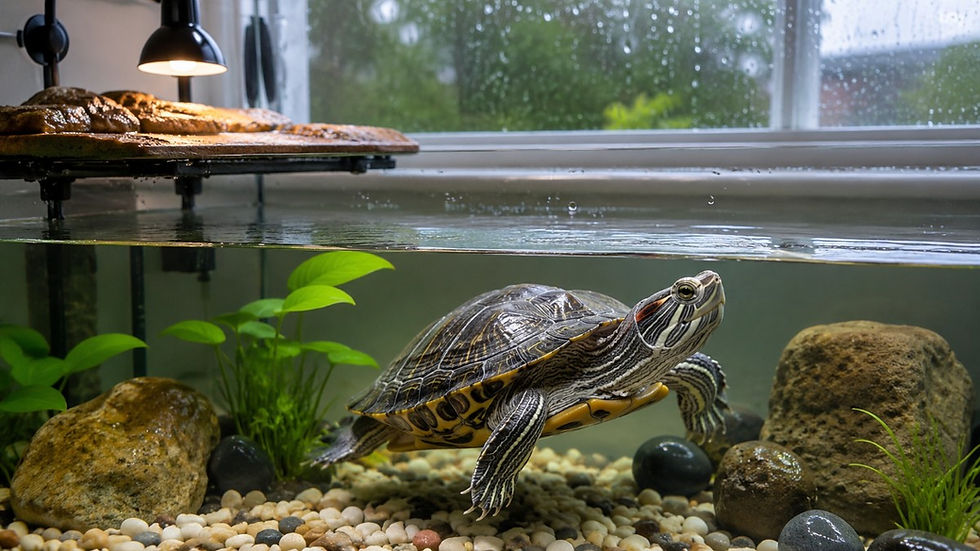
Red-eared slider turtle monsoon care is very important because rainy weather can make turtle water dirty faster and reduce proper drying time. A red-eared slider may live in water, but it cannot stay wet all day. It needs clean swimming water, a dry basking area, proper heat, UVB light, and a balanced diet to stay healthy.
During monsoon season, many turtle owners notice cloudy water, bad smells, low room temperature, and more moisture around the tank. These problems can increase the risk of shell rot, skin infection, eye problems, and poor appetite. Monsoon itself does not directly cause disease, but poor care during monsoon can make health problems worse.
A red-eared slider is a semi-aquatic turtle. This means it needs both water and land. The water must stay clean, and the basking area must stay dry. If your turtle cannot dry its shell properly, the risk of shell problems can increase. This is why clean water and dry basking are the two most important parts of red-eared slider care during rainy season. If you're new to turtle keeping, How to Care for Your Red-Eared Slider Turtle provides a complete overview of daily care, housing, feeding, and health requirements.
Why Monsoon Is Risky for Red-Eared Sliders?

Monsoon brings high humidity, cloudy weather, cooler rooms, and more moisture in the air. These changes can affect your turtle tank. Water may smell faster, food may spoil faster, and the basking platform may stay damp for longer. If the filter is weak or the tank is small, the problem becomes worse.
Red-eared sliders produce a lot of waste. They eat in water, pass waste in water, and often leave small food pieces behind. If leftover food is not removed, it breaks down and pollutes the tank. Dirty water can irritate the turtle’s shell, skin, and eyes. It can also create a bad environment for bacteria and fungus.
During monsoon, you should check the tank more often than usual. Do not wait until the water smells bad. Clean-looking water is not always safe water. The water may look clear but still contain waste chemicals. This is why regular cleaning, strong filtration, and partial water changes are important.
What Is Shell Rot in Red-Eared Sliders?

Shell rot is a shell infection. It can affect the top shell or bottom shell of the turtle. In the beginning, it may look like a small white patch, soft spot, rough area, or slight color change. If ignored, it can become deeper and more serious.
Common signs of turtle shell rot include soft shell areas, shell pitting, bad smell, white or yellow patches, red marks, wet-looking damaged areas, and loose shell pieces. Sometimes the shell may look dull, uneven, or painful. If the infection becomes severe, it can reach deeper layers and make the turtle very sick.
Shell rot should never be treated casually. Do not peel the shell, scratch the shell, or apply random medicine. If you see shell rot symptoms, improve the tank hygiene immediately and contact a reptile vet. Good care can reduce the risk, but proper treatment is needed when infection is already present. Understanding the basics of proper housing can help prevent many rainy-season problems. Read Red-Eared Slider Turtles: Essential Care and Housing Tips for important setup recommendations.
Clean Water Is the First Protection
Clean water is the strongest protection against shell rot during monsoon. A red-eared slider tank should not smell bad, look cloudy, or have food waste floating around. The water should be clean enough for the turtle to swim, eat, and live safely every day.
A strong filter is very important because turtles create more waste than fish. A small aquarium filter is usually not enough for a growing red-eared slider. A good filter helps remove waste, but it does not replace water changes. You still need regular partial water changes to keep the water safe.
Use dechlorinated water for water changes. Do not suddenly change all the water unless it is necessary, because sudden changes can disturb the tank balance. Partial water changes are better for regular cleaning. Also clean the tank corners, basking ramp, decorations, and filter parts when needed.
During monsoon, leftover food should be removed quickly. Uneaten pellets, vegetables, and insects can rot in water and make the tank dirty. The cleaner the water, the lower the risk of shell, skin, and eye problems.
Keep the Basking Area Fully Dry

A red-eared slider must have a basking area where it can climb out of the water completely. The full shell should dry under heat and UVB light. If the turtle’s lower shell stays wet all the time, shell problems can start more easily.
The basking platform should be strong, dry, stable, and easy to climb. It should not sink when the turtle sits on it. It should not stay wet or slippery. During monsoon, check the platform daily because dampness and algae can build up faster.
A wet basking platform is not proper basking. The turtle needs a warm and dry place to rest. Basking helps the turtle dry its shell, warm its body, digest food, and stay active. If your turtle does not bask, check the temperature, light position, and platform design. A properly designed basking platform is essential for shell health. Red-Eared Slider Turtle Ke Liye Ideal Habitat Setup Kaise Karein? covers important habitat features every owner should know.
UVB and Heat Are Very Important
Many owners think normal room light or sunlight through a window is enough. This is not correct. Red-eared sliders need proper UVB light and heat. UVB helps the turtle use calcium properly. Calcium is important for strong bones and a healthy shell.
During monsoon, cloudy weather can reduce natural sunlight. This makes artificial UVB light even more important. The UVB bulb should be placed correctly above the basking area. It should not be blocked by glass or plastic because UVB may not pass properly through these barriers.
The heat lamp should make the basking area warm enough so the turtle wants to come out and dry. The water should also stay at a safe temperature. Do not guess by touching the water with your hand. Use a thermometer. If the water is too cold, the turtle may become slow, eat less, and avoid normal activity.
Red-Eared Slider Diet During Monsoon

A red-eared slider diet should be balanced. It should not depend on only one food. Red-eared sliders are omnivores, so they eat both animal protein and plant matter. Young turtles usually need more animal protein, while adult turtles need more greens and plant-based foods.
A good diet can include quality turtle pellets, leafy greens, aquatic plants, and safe animal protein. Food cannot cure shell rot, but good nutrition supports immunity, shell growth, and general health. Poor diet, dirty water, and weak UVB together can create serious health problems.
During monsoon, feeding should be controlled because extra food makes water dirty faster. Feed only what your turtle can finish. Remove leftovers quickly. If your turtle makes the main tank too dirty, you can feed it in a separate feeding tub. This keeps the main tank cleaner and reduces smell. For a detailed feeding schedule and nutrition breakdown, see What to Feed Your Red-Eared Slider Turtle: A Balanced Diet for Optimal Health.
Live Insects for Red-Eared Sliders

Live insects can be a useful protein add-on for red-eared sliders. They also encourage natural hunting behavior and make feeding more active. Live mealworms, superworms, crickets, and roaches can be used, but they should not become the main diet.
Among these, live crickets and suitable feeder roaches are usually the best regular insect options because they are active, protein-rich, and good for feeding variety. They also help the turtle show natural feeding behavior. Live mealworms are also useful, but they are better as an occasional treat. Superworms are larger and richer, so they should be used less often and only in the right size.
All live insects should be clean, farm-raised, and safe for pets. Do not feed wild insects because they may carry pesticides, parasites, or harmful chemicals. Also, feeder insects are not naturally high in calcium, so they should not replace calcium support, UVB light, turtle pellets, or greens.
The best feeding rule is simple: use pellets and greens as the base, and use live insects as a protein treat. This gives the turtle variety without spoiling the diet balance.
Best Foods for Shell Health
A healthy shell needs more than food. It needs clean water, UVB, heat, calcium, and a good basking routine. Still, diet plays an important role. If the turtle eats poorly, the shell and body can become weak over time.
Use a good aquatic turtle pellet as the main food. Add safe leafy greens and aquatic plants. Use live insects like crickets, roaches, mealworms, and occasional superworms for variety. Avoid giving too much animal protein to adult sliders because it can create diet imbalance and dirty water.
Calcium support is also important, but calcium alone is not enough. Without proper UVB, the turtle cannot use calcium properly. Diet, UVB, heat, and clean water must work together. Nutrition plays a major role in shell development and overall wellbeing. Learn more in What to Feed Your Red-Eared Slider Turtle: A Balanced Diet for Optimal Health.
Common Monsoon Mistakes to Avoid

One common mistake is leaving food in the tank. Uneaten pellets, greens, and insects quickly make the water dirty. During monsoon, this can create smell and poor water quality faster than usual.
Another mistake is using a weak filter. Red-eared sliders are messy pets, so they need strong filtration. If the tank smells bad even after cleaning, the filter may not be strong enough or the tank may be too small.
Many owners also forget the basking area. If the turtle cannot dry fully, shell health may suffer. A damp platform, wrong light placement, or low temperature can stop the turtle from basking properly.
Some owners feed only insects or only pellets. This is not balanced. A red-eared slider needs variety. No single food can give complete health. Pellets, greens, safe protein, calcium, UVB, and clean water all matter.
Health Warning Signs During Monsoon
Check your red-eared slider daily during rainy season. Look at the shell, eyes, nose, skin, appetite, and swimming style. Turtles often hide illness, so small signs should not be ignored.
Shell warning signs include soft areas, bad smell, white patches, red marks, pits, wounds, or loose damaged shell pieces. Eye warning signs include swelling, closed eyes, or discharge. Breathing warning signs include bubbles from the nose, open-mouth breathing, and unusual sounds.
Also watch for loss of appetite, weakness, floating sideways, too much hiding, or not basking at all. If you see these signs, do not wait for the problem to become serious. Improve the setup and contact a reptile vet. Routine observation is one of the most important parts of turtle ownership. How to Care for Your Red-Eared Slider Turtle includes basic health monitoring tips for beginners.
Hygiene and Human Safety

Red-eared sliders can carry germs even when they look healthy. Always wash your hands after touching the turtle, tank water, filter, food bowl, basking platform, or cleaning tools. Do not kiss or snuggle turtles. Do not clean turtle items in the kitchen sink.
This is very important in homes with children, elderly people, pregnant women, or people with weak immunity. Turtle care is not only about the pet. It is also about keeping the home safe and clean.
Use separate cleaning tools for the turtle tank. Keep turtle food and supplies away from human food areas. Good hygiene protects both the turtle and the family.
Never Release a Red-Eared Slider
If a red-eared slider becomes too big or difficult to manage, never release it into a pond, lake, river, temple tank, or local water body. Red-eared sliders can become invasive and may harm native turtles and local ecosystems.
Releasing a pet turtle may look kind, but it can create serious problems. The released turtle may also suffer because it may not find safe food or proper conditions. If you cannot care for your turtle, speak to a reptile vet, rescue group, or local authority for responsible help.

Red-eared slider monsoon care is all about clean water, dry basking, proper UVB, balanced feeding, and daily health checks. Shell rot is easier to prevent than treat, so do not wait for the shell to smell, soften, or develop wounds. Keep the tank clean, remove leftover food, maintain strong filtration, and make sure your turtle dries fully every day.
Live mealworms, crickets, roaches, and occasional superworms can be useful protein treats, but they should not replace turtle pellets, greens, calcium, UVB, or clean water. For regular insect variety, crickets and feeder roaches are usually the best options, while mealworms and superworms should be used more carefully.
If you want to support your red-eared slider with safe and natural feeding variety, choose clean farm-raised feeder insects from Promeal and keep following responsible turtle care practices during every season. For a complete understanding of long-term turtle care, habitat management, and healthy husbandry practices, read Red-Eared Slider Turtles: Essential Care and Housing Tips.
At Promeal, we know how important it is to give your pets a healthy and varied diet. That’s why we create high-quality, natural pet food to keep them happy and healthy. Our speciality is premium live and dried insect-based feeds like mealworms, superworms, crickets, roaches, waxworms, and hornworms. These insects are grown on an organic diet, making them a nutritious and tasty treat for your pets.
Check out our "Shop" section to find the perfect food for your pets!


Comments