
Red-Eyed Crocodile Skink Tank Setup Guide for a Natural Habitat

Updated: Apr 16

Red eyed crocodile skink enclosure setup is the most important part of keeping this species healthy. Many health problems begin because of poor housing. These reptiles are shy, ground-dwelling, and sensitive to change. A wrong enclosure setup is the biggest reason these skinks get stressed. When stress continues for a long time, it affects appetite, immunity, and lifespan.
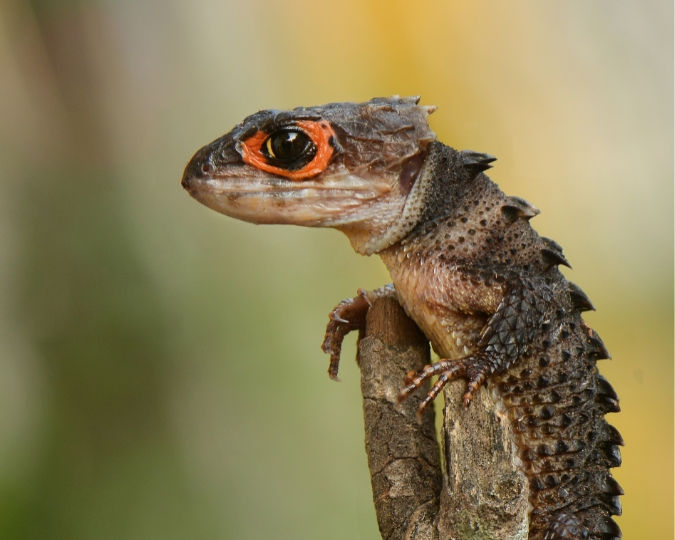
The red eyed crocodile skink, scientifically known as Tribolonotus gracilis, comes from the humid rainforests of Papua New Guinea. In the wild, it lives on the forest floor under leaves, logs, and moss. The enclosure in captivity must copy this natural habitat as closely as possible.
This guide explains tank size, substrate, humidity, temperature, hides, decorations, bioactive options, and cleaning routine in very simple language so beginners can set up the enclosure correctly from day one. For a complete understanding of daily handling and long-term maintenance, refer to Red-Eyed Crocodile Skink Care Guide for Beginners and Daily Care.
Minimum Tank Size for One Adult

A single adult red eyed crocodile skink needs at least a 20 gallon long tank. The long style tank is better than tall tanks because this species spends most of its time on the ground. Floor space is more important than height.
An adult grows to about 7 to 9 inches in total length. Because of this size, it needs enough room to move, explore, and hide without feeling trapped.
If you keep a pair, the enclosure must be larger. A 30 to 40 gallon tank is recommended for two adults. More space reduces stress and territorial behavior.
Glass terrariums with front opening doors are ideal because they reduce disturbance during maintenance. Top opening tanks can work, but sudden movement from above may scare the skink.
More space always means less stress.
Substrate Options for Proper Humidity
Substrate is the material placed on the bottom of the tank. It must hold moisture because this species requires high humidity.
Coconut fiber is one of the best options. It holds water well and supports burrowing behavior. It is soft and safe.
Sphagnum moss is another good choice. It keeps moisture and helps maintain humidity between 70 to 90 percent, which matches rainforest conditions.
Leaf litter can be added on top of coconut fiber. In the wild, these skinks live under fallen leaves. Leaf litter provides cover and natural comfort.
A good setup uses 2 to 4 inches of substrate depth. This allows light digging and moisture retention.
Avoid sand, gravel, or dry wood chips. These materials do not hold moisture and can cause dehydration.
Moist substrate is essential for shedding and skin health. Moist substrate supports shedding, but nutrition also plays a role as explained in Red-Eyed Crocodile Skink Diet Aur Feeding Guide: Proper Health Ke Liye.
Humidity Control and Moisture Management
Humidity should stay between 70 percent and 90 percent at all times. Low humidity causes dehydration and shedding problems.
Misting once or twice daily helps maintain this range. Use clean, room temperature water.
A moist hide is very important. This is a small enclosed space filled with damp sphagnum moss. It creates a safe, humid microclimate inside the enclosure.
Place the water bowl on the cooler side of the tank. This reduces fast evaporation. The bowl should be shallow but large enough for the skink to drink easily.
Digital hygrometers should be placed at mid-level to measure accurate humidity. Avoid placing the sensor directly under the misting area.
Stable humidity reduces stress and prevents skin issues.
Temperature Setup for Proper Digestion
Red eyed crocodile skinks prefer mild temperatures. The ideal daytime range is 75 to 82 degrees Fahrenheit. Night temperature can drop to 70 to 72 degrees Fahrenheit.
They do not require extreme basking spots like desert reptiles. Too much heat can cause stress and hiding behavior.
A low-wattage overhead heat bulb can be used if the room is cool. Ceramic heat emitters are also safe options.
Heat mats can be used under one side of the tank, but they must be controlled with a thermostat. Direct uncontrolled heat can burn the animal.
Thermometers should be placed on both warm and cool sides. This ensures a proper temperature gradient.
Stable temperature supports digestion and immune health. Temperature directly impacts feeding efficiency, which is explained in Red-Eyed Crocodile Skink Diet and Feeding Guide for Proper Health.
Hides and Security Areas

This species is shy and secretive. It needs multiple hiding places.
Cork bark is an excellent natural hide. It looks like forest wood and provides shelter.
At least 2 to 3 hides should be placed in different areas of the tank. One on the warm side, one on the cool side, and one moist hide.
More hides reduce stress and improve feeding response.
Plants can also provide security. Real plants help with humidity and natural look. Pothos and ferns grow well in humid enclosures.
Artificial plants can also be used if real plants are difficult to maintain.
A well-decorated enclosure makes the skink feel safe. Providing proper hiding spots is also emphasized in Red-Eyed Crocodile Skink Care Guide for Beginners and Daily Care.
Climbing Branches and Enrichment
Although mostly ground-dwelling, red eyed crocodile skinks may climb low branches.
Add small branches or driftwood pieces. These should be stable and secure.
Enrichment helps natural behavior. Rearranging small decorations occasionally encourages exploration.
However, avoid frequent major changes. Too much change causes stress.
Lighting Requirements
These skinks live under forest canopy. They do not need strong UVB like desert reptiles. However, low-level UVB lighting can support calcium metabolism.
A 5.0 UVB bulb placed above the enclosure can be used for 10 to 12 hours daily.
A natural day and night cycle is important. Turn off lights at night to allow proper rest.
Consistent light cycle supports a healthy rhythm and appetite. UVB lighting supports calcium absorption, which is also explained in Red-Eyed Crocodile Skink Diet and Feeding Guide for Proper Health.
Bioactive Setup Option

A bioactive enclosure uses live plants, beneficial insects, and natural soil to create a self-cleaning system. Springtails and isopods break down waste. Live plants improve humidity.
Bioactive setups require research and proper layering. They are more advanced but can create a very natural environment. The substrate layer usually includes drainage material at the bottom, soil mix in the middle, and leaf litter on top. Bioactive tanks reduce cleaning frequency but still need monitoring.
Bioactive setups can reduce stress and create natural balance.
Cleaning Routine for Healthy Environment
Spot clean daily by removing waste and uneaten insects. Change part of the substrate every few months if using standard setup.
Deep clean the enclosure every 3 to 4 months. Remove decorations and wash them with reptile-safe disinfectant. Always rinse thoroughly and dry before placing items back.
In bioactive setups, deep cleaning is less frequent but spot cleaning is still needed.
Clean water bowls daily to prevent bacteria growth. A clean enclosure prevents disease and odor.

Common Setup Mistakes
Using dry substrate is a major mistake. It lowers humidity quickly.
Placing the enclosure in direct sunlight causes overheating. Keeping the tank near loud noise or vibration increases stress.
Using strong heat lamps creates high temperatures above 85 degrees Fahrenheit, which can lead to hiding and appetite loss. Keeping multiple males together may cause aggression.
A stable and quiet environment keeps them calm. Many setup mistakes can lead to health issues explained in Red-Eyed Crocodile Skink Diseases Aur Treatment Guide Explained.
How Does Proper Enclosure Affect Routines?
With correct housing, these skinks can live 8 to 12 years in captivity.
Poor enclosure setup shortens lifespan due to chronic stress, dehydration, and poor digestion.
Correct tank size, humidity, temperature, and hiding spaces directly affect long-term health.
Red eyed crocodile skink enclosure design must copy a humid rainforest floor. A 20 gallon long tank is the minimum for one adult. Substrate should hold moisture and allow burrowing. Humidity must stay between 70 and 90 percent. Temperature should remain between 75 and 82 degrees during the day. Multiple hides and natural decorations reduce stress.
Proper enclosure means less stress and better health. When the environment is stable, feeding improves, shedding becomes smooth, and the skink remains active and calm.
Set up your red eyed crocodile skink enclosure carefully from the beginning and create a safe, natural space that supports long, healthy living. For a complete beginner roadmap, you can also read Red-Eyed Crocodile Skink Care Guide: Beginners Aur Daily Care Ke Liye.
At Promeal, we know how important it is to give your pets a healthy and varied diet. That’s why we create high-quality, natural pet food to keep them happy and healthy. Our speciality is premium live and dried insect-based feeds like mealworms, superworms, crickets, roaches, waxworms, and hornworms. These insects are grown on an organic diet, making them a nutritious and tasty treat for your pets.
Check out our "Shop" section to find the perfect food for your pets!


Comments