
Why Fish Die in Rainy Season: Hidden Causes Every Aquarium Owner Must Know?


Why fish die in rainy season is one of the most common questions aquarium owners ask when their fish suddenly become weak, stop eating, gasp near the surface, or die without a clear reason. Many people think rain itself is the problem, but in most cases, fish do not die because of rain directly. They die because rainy season can disturb the balance inside the aquarium.
An aquarium is a closed water system. Fish cannot move away from bad water like they can in rivers, ponds, or lakes. If oxygen becomes low, ammonia rises, temperature changes, or the filter stops during a power cut, fish can get stressed very fast. The tank may look clean from outside, but dangerous changes can already be happening inside the water.
During rainy season, the biggest hidden problems are low oxygen, ammonia spike, nitrite poisoning, sudden temperature change, pH swing, poor filtration, power cuts, overfeeding, and disease stress. These problems can make fish weak slowly, but the death may look sudden. That is why rainy season fish care is not only about feeding. It is about keeping the full tank stable.
Why Rainy Season Becomes Risky For Aquarium Fish?
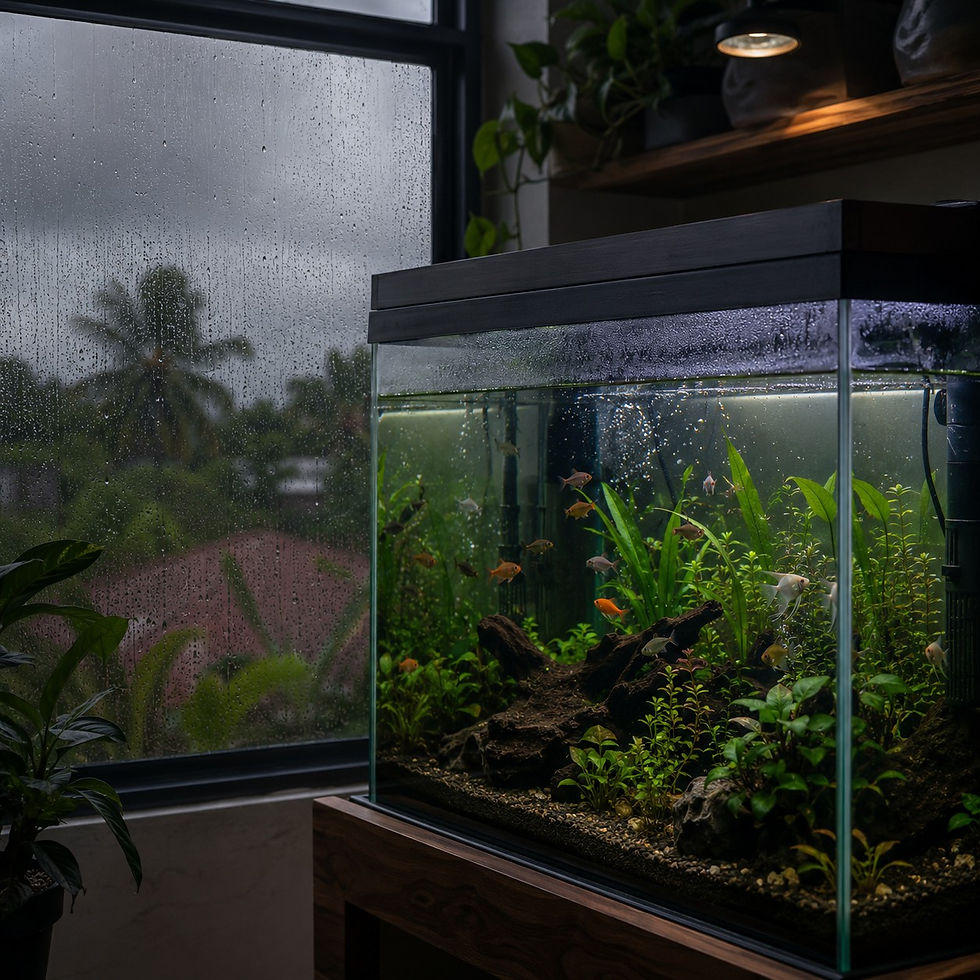
Rainy season changes the environment around the aquarium. The weather becomes cooler, humidity increases, sunlight becomes low, and electricity cuts become more common in many places. These changes can affect the aquarium’s oxygen level, temperature, bacteria balance, and water quality.
Many aquarium owners also make small mistakes during this season. They feed more because fish look weak. They skip water testing because the tank looks clear. They ignore weak filter flow or slow fish movement. These small mistakes can slowly turn into serious aquarium problems.
Clear water does not always mean safe water. Ammonia, nitrite, low oxygen, and pH changes cannot always be seen with the eyes. This is why fish may look fine one day and become weak the next day. In rainy season, regular observation is very important.
Low Oxygen In Fish Tank During Rainy Season
Low oxygen is one of the biggest reasons why fish die suddenly in rainy season. Fish need dissolved oxygen in water to breathe. When oxygen drops, fish may gasp near the surface, breathe fast, stay near the filter outlet, become lazy, or stop eating.
Rainy season can create oxygen problems in many ways. Power cuts stop air pumps and filters. Dirty water uses more oxygen. Extra food and waste break down in the tank and reduce water quality. Overcrowded aquariums also use oxygen faster.
If fish are gasping at the surface, treat it as an emergency sign. Increase aeration, check the air pump, improve surface movement, and make sure the filter is running properly. A battery air pump is very useful during monsoon power cuts.
Ammonia Spike After Overfeeding

Ammonia spike is another common reason why aquarium fish die in rainy season. Fish release waste naturally, and leftover food also breaks down in water. This creates ammonia, which is toxic for fish. High ammonia can damage fish gills, burn the body, create stress, and even cause sudden death.
During rainy season, many owners feed extra food because they think fish need more strength. But extra feeding can quickly make water dirty. If fish do not eat all the food, the leftover food sinks, rots, and increases ammonia.
Overfeeding is one of the most dangerous rainy season aquarium mistakes. Feed only what fish can finish quickly. If food remains at the bottom, remove it. During power cuts, sickness, or low activity, reduce feeding because the filter and oxygen level may already be under pressure.
Weak Filter And Nitrite Poisoning
Your aquarium filter does more than remove visible dirt. It also holds beneficial bacteria. These bacteria help break down fish waste. First, ammonia turns into nitrite. Then nitrite turns into nitrate. This natural process is called the nitrogen cycle.
The problem is that nitrite is also harmful for fish. If the filter becomes weak, stops during power cuts, is cleaned too much, or is not mature enough, ammonia and nitrite can rise. Fish may become weak, breathe fast, hide, or suddenly die.
Never wash filter media with untreated tap water. Tap water may harm beneficial bacteria. Do not replace all filter media at once. Clean filter media gently in removed aquarium water when needed. This helps keep the good bacteria alive and protects the tank balance.
Sudden Temperature Changes

Rainy season can cause sudden temperature changes, especially in small tanks or tanks placed near windows, damp walls, or open balconies. Fish are cold-blooded animals, so their body temperature depends on the water around them. If water temperature changes too fast, fish can become stressed.
Temperature stress can affect digestion, immunity, breathing, and activity. Fish may stop eating, hide, become dull, or become more open to disease. Some tropical fish need stable warm water, so rainy season cooling can become a serious problem for them.
Use a thermometer daily during rainy season. If your fish species needs warm water, use a heater with a thermostat. Do not keep the aquarium where rain splash, cold wind, or direct window temperature changes can affect the tank.
pH And Water Balance Problems
pH shows whether aquarium water is acidic, neutral, or alkaline. Many fish can adjust to a stable pH, but sudden pH changes can be dangerous. During rainy season, pH may become unstable because of old water, dirty substrate, low alkalinity, or unsafe water changes.
Alkalinity helps keep pH stable. If alkalinity becomes too low, pH can crash. This can stress fish and also affect the beneficial bacteria in the filter. When filter bacteria become weak, ammonia can rise faster.
Stable water is more important than chasing a perfect pH number. Do regular partial water changes with treated water. Do not add unknown water, untreated tap water, or direct rainwater into the aquarium. Always match the new water temperature before adding it to the tank.
Power Cuts During Rainy Season

Power cuts are very dangerous for aquariums. When electricity goes off, the air pump stops, the filter stops, and the heater may also stop. This can reduce oxygen and disturb the biofilter. Large fish, crowded tanks, and warm-water tanks are at higher risk.
During a power cut, avoid feeding fish. Fish can stay without food for some time, but dirty water and low oxygen can harm them quickly. Feeding during power cuts increases waste and puts more pressure on the tank.
Keep a battery air pump ready. Check the filter when power comes back. Sometimes filters restart with poor flow or trapped dirt. After a long power cut, observe fish closely and test water if possible.
Unsafe Water Change Or Rainwater Use
Some fish owners add rainwater or untreated water during rainy season. This can be risky. Rainwater may look natural, but it can collect dust, pollution, roof dirt, chemicals, and unstable pH. Untreated tap water can also contain chlorine or chloramine, which can harm fish and filter bacteria.
Never add unknown water directly to the aquarium. Use treated tap water with a good water conditioner. Keep the new water close to the tank temperature. Avoid sudden large water changes unless there is a serious emergency.
Partial water changes are better for regular maintenance. They help remove waste, reduce nitrate, refresh minerals, and keep the aquarium stable.
Diet And Feeding Guide During Rainy Season
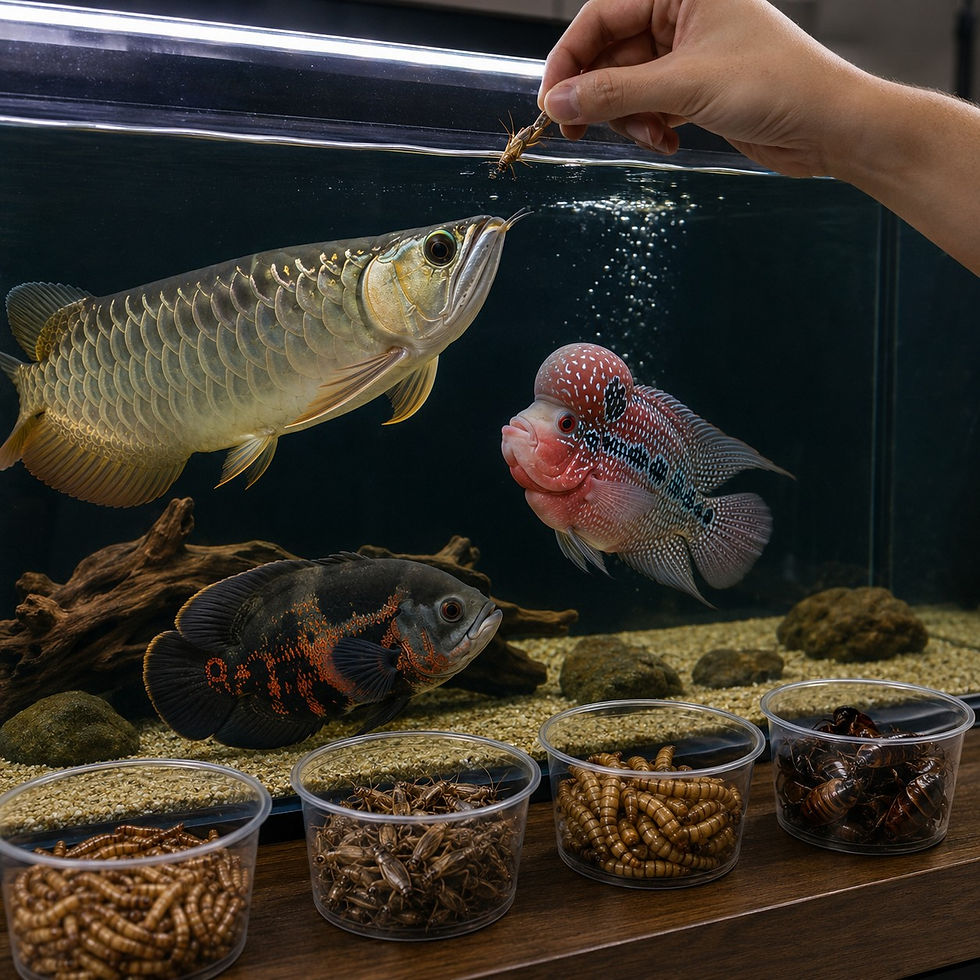
Feeding during rainy season should be controlled, clean, and simple. Fish need good nutrition, but extra food can quickly damage water quality. Pellets or balanced fish food should remain the main diet for most aquarium fish because they provide daily nutrition in a controlled way.
Live insects can be used as a natural protein-rich treat for suitable fish, especially predator fish like Arowana, Oscar, Flowerhorn, large cichlids, and other insect-eating fish. Live crickets are often the best option for natural feeding response because their movement encourages hunting behavior and active feeding. Live mealworms are good for medium to large fish and are easy to feed. Live superworms are better for large fish only because they are bigger and fattier. Roaches can also be useful for large predator fish, but they should be clean, captive-bred, and correctly sized.
Do not use live insects as the only food. Use them as an add-on with a balanced diet. Never feed wild-caught insects because they may carry pesticides or parasites. Feed small quantities, choose the right size, and remove uneaten insects quickly. In rainy season, this is very important because leftover food can spoil water fast.
Aquarium Setup For Rainy Season
A safe rainy season aquarium setup should focus on oxygen, filtration, stable temperature, and electrical safety. Keep the tank away from open windows, rain splash, damp walls, and direct cold airflow. The aquarium should be in a stable place where temperature does not change suddenly.
The filter should run properly with good water movement. The air pump should create enough bubbles or surface agitation. Surface movement helps oxygen enter the water. A heater may be needed for tropical fish if the temperature drops.
Keep all plugs, extension boards, and switches away from water. Use drip loops for wires so water does not run into electrical points. Electrical safety is part of aquarium care during rainy season.
Health Precautions And Common Fish Diseases

Rainy season does not always cause disease directly, but it creates stress. Stress weakens fish immunity. When fish are stressed, diseases like fin rot, white spot disease, fungal infection, cloudy eyes, body ulcers, and bacterial infections can appear.
Fin rot may show as torn, black, or melting fins. White spot disease may show as tiny white dots on the body and fins. Fungal infection may look like cotton-like growth. Bacterial infection may show red patches, wounds, swelling, or cloudy eyes.
Before using medicine, check water quality. Many diseases start because of poor water conditions. If ammonia, nitrite, oxygen, or temperature is wrong, medicine alone may not solve the problem. Clean water is the first treatment support for most aquarium health problems.
Breeding Fish During Rainy Season
Some fish may show breeding behavior during rainy season because changes in temperature, water freshness, and environment can trigger natural instincts. But breeding should be done only when the tank is stable. Poor water quality can harm eggs, fry, and parent fish.
For breeding, use a separate breeding tank if possible. Keep water clean, temperature stable, and filtration gentle. Avoid strong suction filters that can pull fry. Feed breeding pairs a good diet, but do not overfeed.
Fry are very sensitive to ammonia, temperature changes, and dirty water. If you cannot maintain stable water during power cuts or heavy rain, it is better to delay breeding. Healthy breeding starts with stable water, not only with good food.
Warning Signs Before Fish Death
Fish usually show signs before they die. Watch for gasping at the surface, fast breathing, sitting at the bottom, hiding, rubbing the body on objects, clamped fins, faded color, loss of appetite, strange swimming, white spots, red marks, or cloudy eyes. If you see these signs, do not wait. Increase aeration, check the filter, stop feeding for a short time, remove waste, and test water if possible. A quick response can save fish before the problem becomes serious.
Best Rainy Season Aquarium Care Routine

A good rainy season fish care routine is simple. Observe fish every day. Check breathing, swimming, appetite, and color. Feed less but better. Remove leftover food. Keep the filter running. Keep oxygen strong. Do regular partial water changes with treated water.
Check temperature daily and protect the tank from sudden cooling. Keep a battery air pump ready for power cuts. Do not add untreated water or direct rainwater. Quarantine new fish before adding them to the main tank.
The goal is stability. Fish stay healthier when water, oxygen, temperature, and feeding remain stable.
Why fish die in rainy season has one main answer: the aquarium balance gets disturbed. Rainy season can cause low oxygen, ammonia spikes, nitrite problems, temperature changes, pH swings, power-cut stress, overfeeding issues, and disease outbreaks.
The good news is that most rainy season fish deaths can be prevented. Keep the tank clean, maintain strong aeration, avoid overfeeding, protect the filter bacteria, use treated water, and prepare for power cuts. For suitable predator fish, clean live insects like crickets, mealworms, superworms, and roaches can support natural feeding behavior when used in the right quantity.
For healthy aquarium fish during rainy season, focus on clean water, stable oxygen, controlled feeding, and quality nutrition. To support active feeding in predator fish, explore Promeal’s clean live feeder insects as a natural treat in a balanced fish care routine.
At Promeal, we know how important it is to give your pets a healthy and varied diet. That’s why we create high-quality, natural pet food to keep them happy and healthy. Our speciality is premium live and dried insect-based feeds like mealworms, superworms, crickets, roaches, waxworms, and hornworms. These insects are grown on an organic diet, making them a nutritious and tasty treat for your pets.
Check out our "Shop" section to find the perfect food for your pets!


Comments