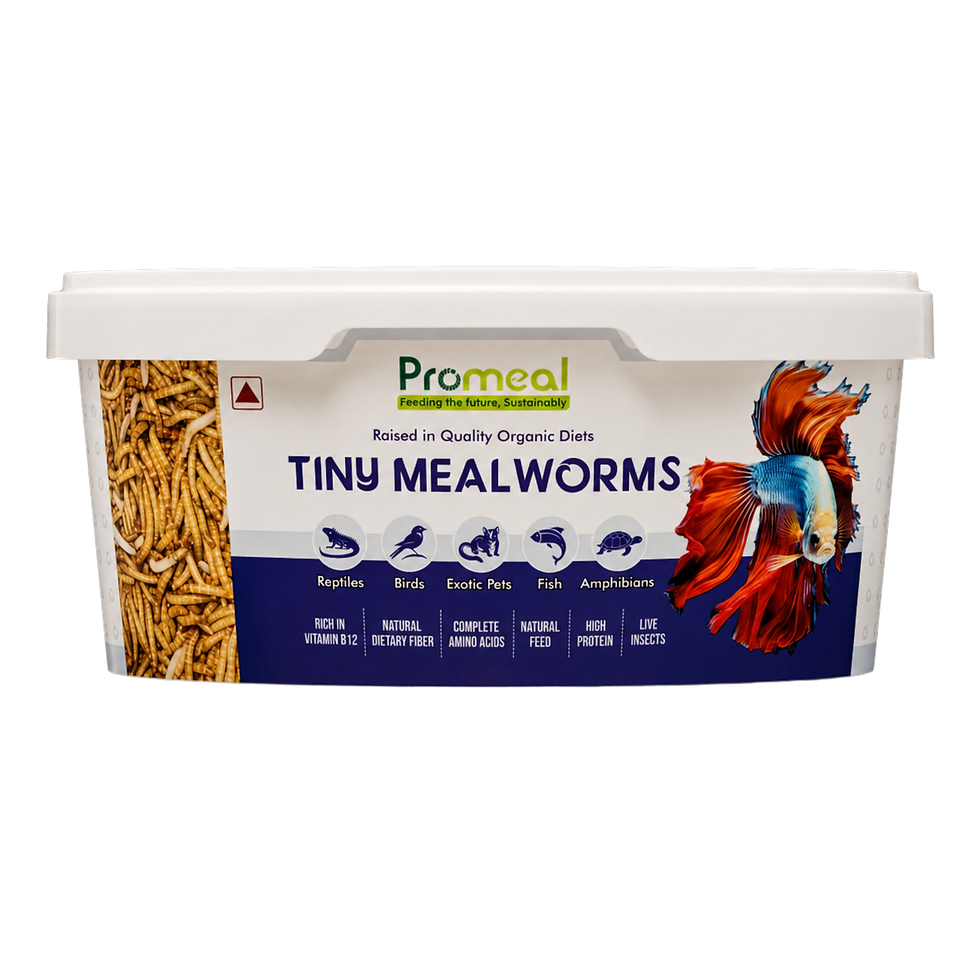
Dried Tiny Mealworms
The smallest dried worm we make — 0.75 to 1 cm, sized for small mouths
Same nutrition as full-size dried mealworms, easier to swallow
For tetras, guppies, bettas and goldfish; finches, canaries and budgies; juvenile reptiles
Preservative-free and sustainably farmed, gently dried for maximum nutrition
No refrigeration, no mess, long shelf life
15g (500+ worms) to 150g (5000+ worms)
Young Tenebrio molitor larvae harvested small, at 0.75–1 cm, then gently dried.
Nutritionally identical to our standard dried mealworms — the difference is purely the size of the bite.
Why it matters: a zebra finch or a guppy physically can't manage a 1-inch worm. Feeding the right size means the food actually gets eaten.
100% mealworm. No additives, preservatives, fillers or colouring.
Suitable for: tetras, guppies, bettas, mollies, goldfish and other small tropical fish; zebra finches, society finches, canaries, budgies and quail; juvenile geckos, hatchling tortoises and small reptiles; dwarf hamsters and other small exotics; chicks and young birds.
Especially useful for breeders raising fry and chicks, where extra protein during early growth matters.
Not a complete diet. A protein supplement alongside the regular feed.
Pack sizes: 15g (500+ worms), 30g (1000+), 60g (2000+), 150g (5000+). Even the smallest pack lasts a single small pet a long time.
Feed dry, or soften in a little warm water for 2–3 minutes — recommended for small fish and young birds.
Small fish: a pinch at a time. Soaking first stops them floating. Remove anything uneaten within a few minutes.
Finches and canaries: 4–6 worms per bird, two or three times a week. More during moulting and breeding.
Chicks and fry: small amounts more often, rather than one large feed.
Juvenile reptiles: soften, dust with calcium, offer in a shallow dish.
Start with less than you think — small pets eat very little.
Use a dry spoon every time.
How are these different from your regular dried mealworms? Only the size — 0.75–1 cm instead of about 2.5 cm. Same species, same farm, same drying process, same nutrition. These are for pets that can't manage a full-size worm.
Can I feed these to my betta? Yes, this is one of the best uses for them. Soften a few in warm water, offer 2–3 at a time, and remove anything uneaten so the water stays clean.
Are they good for finches? Very — finches and canaries are among the main reasons customers buy this size. Full-size mealworms are too large for most finches to handle comfortably.
Should I soak them? For small fish and young birds, yes — 2–3 minutes in warm water. For adult finches, budgies and small reptiles, dry is fine.
How many worms do I actually get? Approximately 500 in 15g, 1000 in 30g, 2000 in 60g and 5000 in 150g. Because they're small, a 15g pack goes a surprisingly long way.
Dried or live tiny mealworms? Live if you want your pet to hunt and you don't mind the upkeep. Dried for convenience and shelf life. Many customers keep dried as the backup for travel days.
How long do they keep? Months in a sealed jar in a cool, dry place. No refrigeration. Best used within 12 months of opening.