Dried Medley Treat for Small Birds
A small-sized insect mix made specifically for small birds
Every insect sized for a finch or budgie beak — nothing too large to swallow
Supports feather condition, moulting and breeding-season nutrition
For finches, canaries, budgies, lovebirds, sparrows and mynas
Encourages natural foraging behaviour alongside their seed diet
15g (250+ insects) to 150g
A protein-rich blend of small dried insects, formulated for the size and dietary needs of small birds.
Size is the whole point of this product. Our other insect mixes contain pieces too large for a finch or canary to manage. Every insect in this blend is small enough to be eaten comfortably.
Why a mix: wild birds don't eat one insect. They forage across whatever is available — larvae, beetles, small grubs — and that variety is what makes an insect diet nutritionally complete. Seed alone doesn't provide it.
Each insect contributes different proteins, fats, amino acids, vitamins and minerals, supporting energy, feather condition and immunity.
Most valuable at two moments: during moulting, when feather regrowth demands extra protein, and during breeding season, when parent birds need more and will feed insects to their chicks.
Encourages natural foraging behaviour — scatter-feeding it gives a caged bird something to do.
Suitable for: zebra finches, society finches and other finches; canaries; budgies and lovebirds; sparrows, mynas and bulbuls; quail and small softbills. Also works in a garden or balcony feeder for wild birds.
Not a complete diet. A supplement alongside a quality seed or pellet base, not a replacement for it.
Pack sizes: 15g (250+ insects), 30g, 60g, 150g. For one or two small birds, 15g or 30g lasts a long while.
Feed dry in a separate treat dish, or scatter a small amount for foraging.
A pinch per bird, two or three times a week, is right for most small birds.
Increase during moulting and breeding season, when protein demand is highest.
For very small birds or chicks, soften in a few drops of warm water for a minute first.
Parent birds will carry insects to their chicks themselves — just make it available to the adults.
Keep it separate from the seed mix so you can see how much is actually being eaten.
Garden feeder: a small amount in a shallow dish or platform feeder, topped up at the same time daily, brings sparrows, bulbuls and mynas.
Use a dry spoon each time.
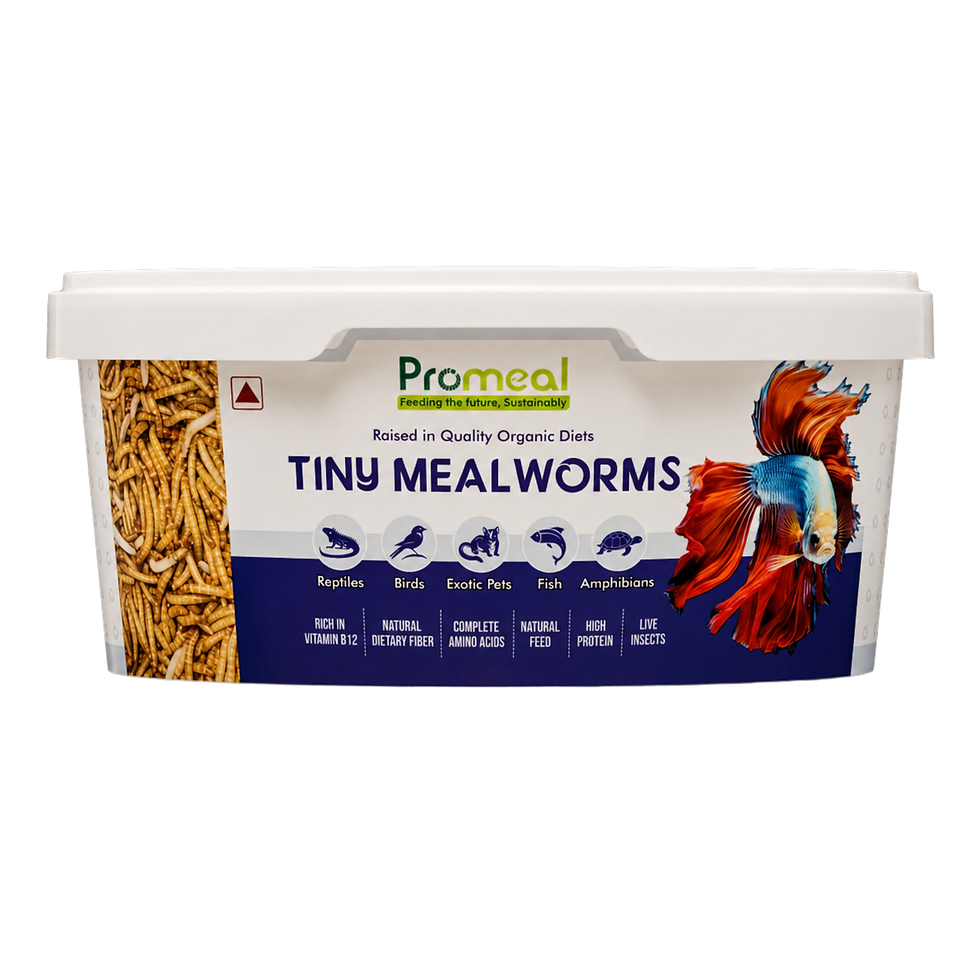
Why not just feed dried mealworms? Two reasons. Size — a full-size mealworm is too large for most finches and canaries. And variety — wild birds eat several insects, not one, and the mix covers more of what they need. If you prefer a single insect, our Dried Tiny Mealworms are the right size for small birds.
Can this replace my bird's seed? No. Seed or a quality pellet should remain the base of the diet. This is a protein supplement and enrichment treat alongside it, a few times a week.
How much should I give a budgie or finch? A pinch per bird, two or three times a week. More during moulting and breeding season when protein demand rises.
My bird has never eaten insects. Will it know what to do? Usually yes — insect-eating is instinctive for most small birds, even cage-bred ones. Offer a small amount in a separate dish at the usual feeding time and give it a few days. Some birds investigate immediately, others take a week.
Is this good during moulting? It's one of the best times to use it. Feather regrowth takes significant protein, and this is where an insect supplement makes the most visible difference.
Can I use it for my breeding pair? Yes, and it's a strong use case. Parent birds feed insects to their chicks naturally, so making this available during breeding supports both the adults and the chicks.
Will it attract wild birds to my balcony? It works well for that. Put a small amount in a shallow dish or platform feeder, keep it topped up at a regular time, and sparrows, bulbuls, mynas and sunbirds will start visiting.
How long does a pack last? For one or two small birds fed a few times a week, 15g or 30g lasts several weeks. Larger packs suit an aviary or a regular garden feeder.