
Crayfish Care in Rainy Season: Maintaining Safe Water Levels & Proper Hiding Spaces
- Sanket Shinde

- Jun 11
- 9 min read

Crayfish care in rainy season becomes very important because water conditions can change quickly during wet weather. Many people think crayfish are very strong because they live in freshwater and can survive in muddy areas in nature. But a pet crayfish in an aquarium depends completely on clean water, safe tank setup, proper food, oxygen, and hiding spaces. If the tank water becomes dirty or unstable during rainy season, the crayfish can become stressed, weak, or sick.
Crayfish are also called crawfish, crawdads, and freshwater lobsters in many places. They are active bottom-dwelling animals that love to explore, dig, hide, and search for food. In nature, they live around rocks, plants, mud, wood, and burrows. This means a crayfish tank should never be empty or plain. It should have safe water levels, clean water, strong oxygen, and proper hiding spaces so the crayfish feels secure.
Why Rainy Season Can Be Risky for Crayfish?

Rainy season can create many small changes in a crayfish aquarium. The room temperature may drop, humidity may increase, and the tank may get less sunlight. If the aquarium is near a window, balcony, or outdoor area, rain splash, dust, and sudden temperature changes can disturb the tank water. Outdoor tubs and ponds are even more risky because rainwater can quickly increase the water level and change water quality.
The biggest problem during rainy season is not only rainwater. The real problem is unstable water conditions. When the water becomes dirty, low in oxygen, or suddenly different in temperature or pH, crayfish can become stressed. Stress can affect feeding, movement, molting, breeding, and overall health. That is why rainy season aquarium care should focus more on water stability than only cleaning.
Maintain Safe Water Levels for Crayfish
Safe water level is one of the most important parts of rainy season crayfish care. Crayfish need enough water to walk, breathe, hide, and move naturally, but the tank should not be filled up to the top. Crayfish are strong climbers. They can climb filter pipes, air tubes, stones, plants, and tank corners. If the water level is too high and the lid is loose, they may escape from the aquarium.
A long and wide tank is better than a very tall tank because crayfish spend most of their time at the bottom. They need bottom space more than deep water. Keep the water deep enough for normal movement, but always leave space at the top. Use a tight lid and cover small gaps around filters and wires. An escaped crayfish can dry out quickly, so escape prevention is a life-saving step.
If you keep crayfish in an outdoor tub or pond, make sure extra rainwater has a safe drainage path. The water should not overflow in a way that lets the crayfish escape. Also make sure dirty ground water, pesticide water, garden chemicals, or roof runoff does not enter the crayfish setup. Rainwater may look clean, but it can carry dust, chemicals, waste, and pollution.
Keep Water Quality Stable

Clean and stable water is the heart of crayfish care in rainy season. A crayfish tank should not smell bad, look cloudy, or collect leftover food. Crayfish are messy eaters, so uneaten food can quickly rot and increase ammonia. Ammonia and nitrite are dangerous for aquatic animals, and poor water quality can make crayfish weak.
Use a good aquarium filter that can handle waste. The filter should keep the water moving and help support beneficial bacteria. An air stone is also useful, especially during rainy and humid weather, because oxygen levels can become low in dirty or warm water. If your crayfish is coming to the top again and again, acting weak, or moving slowly, check oxygen and water quality.
Do not do sudden full water changes unless there is an emergency. Big sudden changes can shock the crayfish. Small partial water changes with treated water are safer. Always use dechlorinated water for water changes. Tap water should be treated with aquarium water conditioner before adding it to the tank. Stable water is better than sudden over-cleaning.
Do Not Add Rainwater Directly
Many beginners think rainwater is natural, so it must be safe for crayfish. This is not always true. Rainwater can collect dust, roof dirt, bird droppings, smoke particles, and chemical pollution. It can also change the pH and mineral balance of the aquarium. Sudden pH changes are stressful for crayfish, especially during molting.
Never add rainwater directly to a crayfish aquarium just because it is available. If you want to top up or change water, use properly treated water. The water should be close to the tank temperature and should not create a sudden shock. During rainy season, the main goal is not to make the tank “more natural.” The main goal is to keep it safe, clean, and stable.
Provide Proper Hiding Spaces
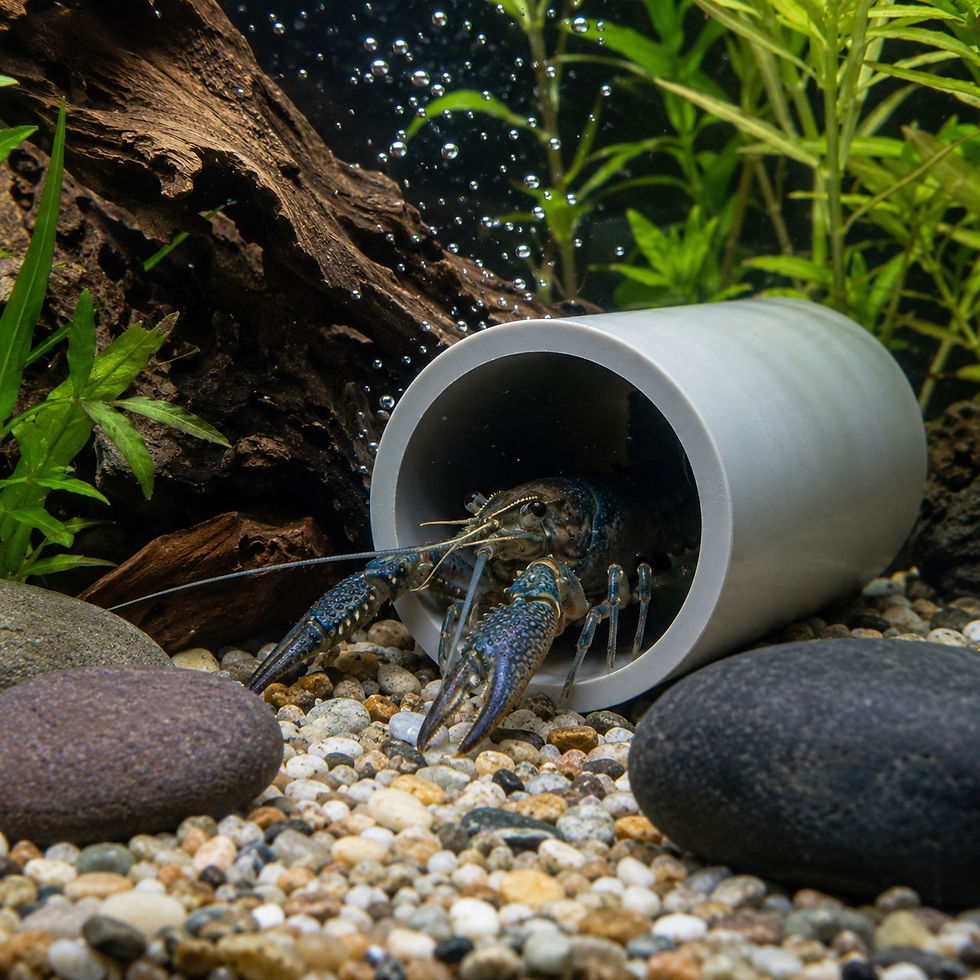
Proper hiding spaces are not only decoration. They are a basic need for crayfish. Crayfish naturally hide under rocks, wood, plants, and burrows. In an aquarium, they need safe caves and shelters to feel protected. Without hiding spaces, they may become stressed, aggressive, or weak.
Good hiding spaces include PVC pipes, smooth rock caves, aquarium caves, clay pots, coconut shells, driftwood shelters, and safe hardscape. The hiding space should be big enough for the crayfish to enter and turn around. Avoid sharp stones or rough edges because they can injure the crayfish, especially after molting.
Hiding places are most important during molting. When crayfish molt, they shed their old shell and become soft for some time. At this stage, they are very vulnerable. Other crayfish, fish, or tank mates may attack them. A strong hiding place helps the crayfish stay safe until the new shell becomes hard again. A crayfish without shelter is always at higher risk during molting.
Rainy Season Tank Setup for Crayfish
A good rainy season crayfish tank should be simple, strong, and easy to clean. Use sand or smooth gravel as substrate because crayfish like to dig and move things around. Avoid sharp gravel because it can hurt their body. Keep decorations stable because crayfish may push or dig under them.
The tank should have a good filter, air stone, tight lid, and many hiding spaces. Live or artificial plants can be added, but remember that crayfish may cut, dig, or eat plants. Keep the setup practical instead of overdecorated. A clean and safe tank is always better than a beautiful tank that is hard to maintain.
Do not keep too many crayfish in a small tank. Crayfish are territorial and may fight. If you keep more than one crayfish, give more hiding spaces than the number of crayfish. This helps reduce fighting, but it does not completely remove aggression. Many crayfish are safest when kept alone.
Feeding Crayfish During Rainy Season

Crayfish are omnivores, which means they eat both plant-based and animal-based food. A good crayfish diet can include sinking crayfish pellets, algae wafers, blanched vegetables, small protein foods, and occasional feeder insects. Common crayfish food keywords like what do crayfish eat, crayfish food, freshwater lobster food, and crawfish food all point to the same basic rule: crayfish need variety, but not overfeeding.
During rainy season, feed small portions only. If food remains after feeding, remove it. Leftover food can rot and cause ammonia spikes. This is very important because rainy weather can already make water conditions unstable. Overfeeding is one of the fastest ways to spoil crayfish tank water.
Live insects can be used as a protein treat for crayfish. Live mealworms, superworms, crickets, and roaches can all be offered in controlled amounts, but they should not become the full diet. Among them, small crickets and small feeder roach nymphs are usually better choices because they are protein-rich and easier to portion when properly sized. Mealworms can be used occasionally, but they should not be the main food. Superworms are bigger and richer, so they should be given rarely and only in small pieces if needed.
Always use clean, captive-bred feeder insects. Do not feed wild insects, wild cockroaches, or insects exposed to pesticides. Feeder insects should be the right size so the crayfish can eat them easily. Remove uneaten insect parts quickly. Live insects are a natural protein add-on, not a complete crayfish diet.
Molting Care in Rainy Season
Molting is a natural process where the crayfish sheds its old shell and grows a new one. This is normal, but it is also a sensitive time. Before molting, a crayfish may hide more, eat less, and move less. Many beginners think the crayfish is sick, but hiding before molting can be normal behavior.
During molting, do not touch, move, or disturb the crayfish. Do not remove it from the cave. Do not allow aggressive tank mates near it. After molting, the crayfish body is soft and weak. It needs time to harden again. This is why hiding spaces, clean water, and low stress are very important.
Do not remove the old shell immediately unless it is creating water-quality problems. Many crayfish eat part of the old shell to recover minerals. A balanced diet and mineral support help the shell become strong. Poor water quality, stress, and lack of shelter can make molting more dangerous.
Health Precautions and Common Diseases

A healthy crayfish usually moves normally, reacts to food, uses its claws properly, and hides when needed. Warning signs include extreme weakness, lying on the side for a long time, refusing food for many days outside molting time, damaged shell, unusual patches, repeated failed molts, and sudden strange behavior.
Many crayfish health problems are connected to poor water quality, stress, injuries, and weak diet. Dirty water can cause shell problems, low oxygen stress, and poor recovery after molting. If the tank smells bad or looks cloudy, clean it carefully with partial water changes and check the filter.
Crayfish plague is a serious disease known in crayfish populations, but it should not be casually diagnosed at home. If many crayfish die suddenly or show unusual disease signs, isolation and expert advice are important. For most home aquariums, the best health protection is prevention. Clean water, stable oxygen, safe hiding spaces, and controlled feeding prevent many problems before they start.
Breeding Crayfish During Rainy Season
Crayfish breeding needs clean water, low stress, and safe shelter. Female crayfish carry eggs under the abdomen. When the babies hatch, they may stay close to the mother for some time before moving on their own. A breeding crayfish should not be disturbed again and again.
If a female crayfish is carrying eggs, give her a quiet hiding space. Avoid sudden water changes, loud disturbance, and aggressive tank mates. Keep the water clean and oxygen-rich. Feed small amounts of good-quality food so leftovers do not spoil the tank.
Baby crayfish need tiny food, clean water, and many small hiding spaces. Cannibalism can happen if babies are crowded or hungry. Rainy season breeding setups need extra care because dirty water and low oxygen can harm eggs and young crayfish. A simple clean nursery setup is better than a crowded display tank.
Best Tank Mates for Crayfish
Crayfish tank mates should be chosen very carefully. Many crayfish can catch slow fish, attack bottom dwellers, damage fins, and eat small weak animals. Shrimp, snails, small fish, and bottom fish may be at risk. Even peaceful-looking crayfish can become aggressive at night.
The safest option is often to keep a crayfish alone in its own setup. If tank mates are added, they should be fast, healthy, and not bottom-resting, but there is still risk. Never keep crayfish with expensive, slow, long-finned, or delicate fish. Crayfish are not ideal community tank pets for beginners.
Common Rainy Season Mistakes

One common mistake is adding rainwater directly to the tank. Another mistake is overfeeding because the crayfish seems more active. Some owners also forget to secure the lid, and the crayfish escapes at night.
Another major mistake is keeping the tank without hiding spaces. This becomes dangerous during molting. Keeping many crayfish together in a small tank is also risky because they may fight or attack each other. Sudden full water changes, untreated tap water, dirty substrate, and weak filtration can also create problems.
Never release unwanted crayfish into ponds, rivers, drains, or natural water bodies. Pet crayfish can harm local ecosystems and may spread disease. If you cannot keep your crayfish, rehome it responsibly. Releasing aquarium pets into nature is never a safe option.
Daily Rainy Season Care Routine
Check your crayfish tank every day during rainy season. Look at the water clarity, smell, filter flow, air bubbles, food waste, and crayfish behavior. Make sure the lid is closed properly. Check if the crayfish is hiding normally or showing weakness.
Feed small portions and remove leftovers. Keep shelters clean and stable. Do partial water changes with treated water when needed. Do not suddenly change the full tank unless there is a serious emergency. Watch the crayfish closely during molting time and avoid disturbing it.
The best crayfish care routine is simple: clean water, safe water level, strong oxygen, proper hiding spaces, controlled feeding, and no sudden changes.

Crayfish care in rainy season is all about keeping the tank stable, clean, and safe. Rainy weather can change water levels, oxygen, temperature, and tank conditions, so owners must be more careful. A healthy crayfish needs safe water depth, good filtration, proper aeration, strong hiding spaces, and a balanced diet.
Live insects like mealworms, superworms, crickets, and roaches can be used as occasional protein treats, but they should be clean, captive-bred, and given in small amounts. Small crickets and small feeder roach nymphs are usually the better live insect options because they are easy to portion and protein-rich. Still, they should not replace a balanced crayfish diet.
If you want your crayfish to stay active, safe, and healthy during rainy season, focus on water quality first. Keep the tank escape-proof, provide hiding spaces for molting, avoid direct rainwater, and feed carefully. For natural protein support, choose clean and safe feeder insects from a trusted source and build a better rainy-season care routine today.
At Promeal, we know how important it is to give your pets a healthy and varied diet. That’s why we create high-quality, natural pet food to keep them happy and healthy. Our speciality is premium live and dried insect-based feeds like mealworms, superworms, crickets, roaches, waxworms, and hornworms. These insects are grown on an organic diet, making them a nutritious and tasty treat for your pets.
Check out our "Shop" section to find the perfect food for your pets!


Comments