
Snakehead Fish Diseases, Health Issues and Prevention Guide

Updated: Dec 23, 2025

Snakehead fish are strong, aggressive, and hardy fish, but even they can fall sick if kept in poor conditions. Most beginners believe snakehead fish rarely get diseases, but this is not true. Snakehead fish diseases are common when water quality, diet, and stress are not managed properly. Just like any other fish, snakeheads depend completely on their environment for survival. If the water is contaminated, oxygen levels are low, or the food is poor, disease will likely follow. This blog explains common snakehead fish diseases, signs of illness, and simple ways to prevent health problems.
1. Why the Environment Is the Main Cause of Disease?
Water is the life of a fish. Snakeheads live in water 24 hours a day, so even small problems can affect their health. Poor water quality allows harmful bacteria, parasites, and fungi to grow quickly. High ammonia, dirty substrate, overfeeding, and weak filtration create stress. Stress weakens the immune system of snakehead fish and makes them easy targets for disease. Sudden changes in temperature or pH also shock the fish and cause illness. A stable and clean environment is the foundation of good health.
2. Common Bacterial Infections in Snakehead Fish
Bacterial infections are one of the most dangerous snakehead fish diseases. These infections usually start when the fish is already stressed or injured. Bacteria enter through wounds, damaged fins, or poor water. Infected fish may develop red patches, ulcers, swollen bodies, or bleeding near the fins and mouth. Some fish show cloudy eyes or popeye. Bacterial diseases spread fast and can kill fish if ignored. In ponds and crowded tanks, bacterial outbreaks are very common. Early treatment and water correction are extremely important.
3. Parasites in Snakehead Fish
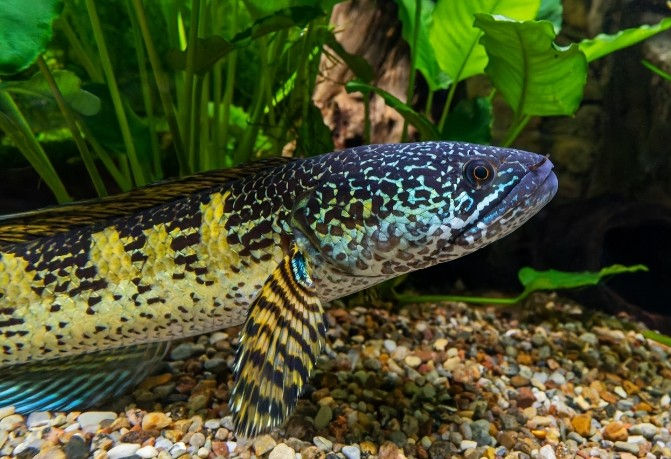
Parasites are another major health problem. The most well-known parasite is white spot disease, also called Ich. In this disease, small white dots appear on the skin and fins. The fish may rub its body against tank surfaces and breathe rapidly. Internal parasites can also infect snakehead fish and cause weight loss, weak movement, and slow growth. Parasites usually enter through new fish or contaminated water. Poor quarantine practices are a leading cause of parasite infection.
4. Fungal Infections and Secondary Diseases
Fungal infections often appear when a fish is already weak or injured. These infections look like cotton-like growth on the skin, fins, or mouth. Fungus does not usually attack healthy fish. It takes advantage of stress, wounds, or poor water conditions. Protozoan infections may also affect gills and skin, making breathing difficult. Fungal and protozoan diseases are mostly secondary problems caused by poor care. Fixing the root cause is more important than medicine alone.
5. Fin Damage and Physical Injuries
Fin damage is common in snakehead fish, especially in small tanks or aggressive setups. Torn fins, fin rot, or missing fin parts can occur due to fighting, sharp decorations, or poor water. Fin rot often starts as fraying edges and slowly moves inward. Fin damage allows bacteria and fungi to enter the body. Clean water and enough space help fins heal naturally. Severe fin damage may need treatment.
6. Signs of Illness in Snakehead Fish

Early detection saves lives. A healthy snakehead fish is active, alert, and eats well. A sick fish shows clear changes. Loss of appetite is one of the first warning signs. Lethargy, hiding, slow movement, and floating near the surface are also common signs. Skin color may fade or darken. Red marks, white spots, slime buildup, or wounds indicate disease. Rapid breathing and gasping show gill problems or poor water quality. Observing your fish daily is the best habit.
Loss of Appetite and Weak Behavior
When a snakehead fish stops eating, something is wrong. This can be due to stress, parasites, bacterial infection, or bad water. Weak swimming, tilted posture, or resting at the bottom are serious signs. Never ignore appetite loss in snakehead fish. Early action can prevent major disease outbreaks.
Skin and Body Changes
Healthy snakeheads have smooth skin and clear patterns. Sick fish may show ulcers, swelling, white patches, excessive mucus, or rough skin. Bulging eyes or sunken eyes are also warning signs. Any visible body change should be treated as a health alert. Checking water quality should always be the first step.
6. Importance of Quarantine and Isolation

Quarantine is one of the most effective disease prevention methods. New fish should always be kept separately for observation. Sick fish must be isolated immediately. A quarantine tank helps prevent disease spread and allows focused treatment. Most snakehead fish diseases spread because quarantine is skipped. A quarantine period of two to four weeks is ideal for safety.
7. Disease Prevention Through Clean Water
Clean water is the strongest medicine for snakehead fish. Regular water changes remove toxins like ammonia and nitrite. Strong filtration keeps water clear and oxygen-rich. Overfeeding must be avoided because leftover food pollutes water quickly. Stable temperature and clean water stop most diseases before they start. Testing water regularly helps detect hidden problems early.
8. Proper Diet and Nutrition for Strong Immunity
Snakehead fish are carnivores and need a high-protein diet. Feeding only low-quality food weakens their immune system. A balanced diet supports growth, healing, and disease resistance. Overfeeding should be avoided because it causes digestive issues and dirty water. Good food builds strong immunity and reduces disease risk. A healthy fish fights infections naturally.
9. Stress Reduction for Better Health
Stress is a silent killer for snakehead fish. Small tanks, overcrowding, loud noise, sudden lighting changes, and frequent handling increase stress. Poor tank mates and aggressive interactions also cause stress. Lower stress means stronger immunity and fewer diseases. Providing hiding spots and enough space keeps snakeheads calm and healthy.
10. Daily Care and Observation Routine

Daily care plays a huge role in disease prevention. Feeding on schedule, removing waste, checking filters, and observing behavior should be routine. Any small change in movement or color should be noted. Consistency in care prevents sudden health issues. Fish keepers who observe daily notice problems early and act faster.
Treatment Awareness and Caution
Different diseases need different treatments. Using the wrong medicine can make the problem worse. Overdosing or unnecessary antibiotic use harms fish and water quality. Never treat without understanding the problem first. Isolation tanks help treat fish safely without affecting others.
Antibiotic Responsibility
Antibiotics should only be used when truly needed. Overuse can create resistant bacteria that are hard to control. Many bacterial infections can be prevented through hygiene and good care. Responsible treatment protects both fish and the environment. Prevention is always better than a cure.
When Removal Becomes Necessary?
In rare cases, a fish may not recover and may risk infecting others. Removing severely sick fish may be necessary to protect the group. This decision should be made carefully and humanely. Protecting the overall population is important in disease management.
11. Long-Term Health Strategy
Healthy snakehead fish come from long-term good practices. Clean water, quality food, a stress-free setup, and quarantine form a complete health system. Diseases usually appear when one or more of these are ignored. A strong routine keeps snakehead fish healthy for years.
Snakehead fish diseases are mostly caused by poor environment, stress, and bad care. Most health problems can be prevented with clean water, proper diet, and careful observation. Medicines help, but they should never replace good care. Good care is the best medicine for snakehead fish. When you focus on prevention, your snakehead will grow strong, active, and disease-free.
At Promeal, we know how important it is to give your pets a healthy and varied diet. That’s why we create high-quality, natural pet food to keep them happy and healthy.
Our speciality is premium live and dried insect-based feeds like mealworms, superworms, crickets, roaches, waxworms, and hornworms. These insects are grown on an organic diet, making them a nutritious and tasty treat for your pets.
Check out our "Shop" section to find the perfect food for your pets!


Comments