
Snakehead Fish Tank Setup: Complete Enclosure Guide

Updated: Dec 23, 2025

A poor enclosure setup leads to stress, disease, and escape risks in snakehead fish. Many snakehead owners focus only on food but ignore the tank and enclosure. This is a big mistake. Snakehead fish are powerful, intelligent, and highly sensitive to their surroundings. If the tank setup is wrong, the fish can become aggressive, unhealthy, or even escape from the tank.
A proper snakehead fish tank setup is not just about size. It includes the right tank type, safe substrate, hiding spaces, strong filtration, controlled water flow, secure lids, and suitable lighting. This guide explains everything step-by-step so you can build a safe and stress-free enclosure for your snakehead fish.
1. Understanding Snakehead Fish Behavior Before Tank Setup
Before setting up a tank, it is important to understand how snakehead fish behave. Snakehead fish are territorial predators. They like to patrol their space and hide when they feel threatened. They are also excellent jumpers and can breathe air, which makes them more likely to escape if the tank is not secure.
Snakehead fish are easily stressed by cramped spaces, bright light, strong water currents, and lack of hiding spots. Stress weakens their immune system and leads to diseases like bacterial infections and fin damage.
This is why the right snakehead fish tank setup is the foundation of long-term health.
2. Choosing the Right Tank for Snakehead Fish

The first and most important step in a snakehead fish tank setup is choosing the right tank. Snakehead fish grow large and muscular, and they need enough space to move freely. Their body structure and active nature require horizontal swimming space more than height.
A small tank restricts movement and increases aggression. Even juvenile snakeheads need space because they grow very fast. When kept in cramped tanks, snakehead fish often become stressed, stop eating properly, and show aggressive behavior.
3. Minimum Tank Size for Snakehead Fish
Tank size depends on the species, but in general, snakehead fish need large tanks to stay healthy. Providing extra space always results in better growth and calmer behavior.
A single juvenile snakehead fish should be kept in a tank of at least 40 to 50 gallons, which is approximately 150 to 190 liters. In tank dimensions, this usually means a tank around 90 to 120 cm in length, 45 cm in width, and 45 cm in height, or roughly 36 to 48 inches long, 18 inches wide, and 18 inches high.
As the fish grows, upgrading to a 75-gallon tank, which is about 280 liters, is strongly recommended. This size generally measures around 120 to 150 cm in length, 45 to 50 cm in width, and 50 cm in height, or 48 to 60 inches long, 18 to 20 inches wide, and 20 inches high.
Large snakehead species require tanks of 100 gallons or more, which is approximately 380 liters or above. These tanks are usually 150 to 180 cm long, 50 to 60 cm wide, and 50 to 60 cm high, or 60 to 72 inches in length, 20 to 24 inches in width, and 20 to 24 inches in height.
Bigger tanks always mean better health and lower stress for snakehead fish.
4. Glass vs Acrylic Tanks
You can use either glass or acrylic for your snakehead tank. Glass tanks are common, durable, and scratch-resistant. They are heavier and more rigid. Acrylic tanks are lighter, stronger against impact, and provide better insulation, but they scratch more easily and can be more expensive for large sizes.
If you plan a very large tank, acrylic can be better because it is lighter for the same strength. For DIY setups or budget builds, glass is usually more affordable. Choose a tank material that fits your budget and the size you need, but always make sure the seams and lid fittings are secure.
5. Substrate and Decorations

Substrate and decorations create a natural feeling and a sense of security for snakeheads. A soft, natural-looking substrate helps hiding places look natural and supports live plants if you use them. Avoid sharp gravel or coarse stones that could injure your fish. Rounded sand or fine river gravel works well.
Decorations should offer hiding spots and breaks in the line of sight. Snakeheads are ambush hunters; they like to hide and wait. Use driftwood, large smooth rocks, and caves. If you use wood, make sure it is aquarium-safe, well-cleaned, and waterlogged so it does not float. Do not use small decorations that fish can move and get trapped in.
6. Natural substrate options
Natural substrate choices include fine sand, smooth river pebbles, and inert planted substrates if you want live plants. Fine sand is gentle on the fish and easy to clean. It also suits many plant roots. Smooth river pebbles create a natural look but can trap waste between stones, so they require careful cleaning.
If you keep live plants, choose a nutrient-rich substrate designed for aquariums or use root tabs for nutrient delivery. Plants help water quality, reduce stress, and give hiding places. Pick hardy plants if your snakehead is a digger or tends to uproot plants; floating plants also help by providing cover and reducing stress from bright light.
7. Hiding Spots Importance
Hiding spots are not optional — they are essential. Snakeheads need cover to feel safe, to rest, and to ambush prey. Without hiding spots, fish show stress behaviors like constant darting, hiding behind filters, or refusing to eat. Provide multiple hiding places so each fish can claim a retreat without fighting.
Hiding spots can be caves, dense plants, driftwood overhangs, or PVC pipes covered with natural material. Make sure all hiding places have smooth edges and safe entrances wide enough for the fish to turn around. Avoid decorations with small gaps where a fish can get trapped.
8. Filtration And Water Movement
Strong filtration is required for snakehead tanks. These fish are often messy eaters and produce significant waste, especially when fed protein-rich diets. A filter that can turnover the tank volume several times per hour is a good starting point. For heavy bioloads or large fish, consider canister filters or external filters that provide mechanical, chemical, and biological filtration.
Although filters should be powerful, water flow should be low to moderate inside the tank. Snakeheads do not like very strong currents that make resting or ambushing difficult. Use filter outlets that can be directed or diffused so the main body of the tank has a gentle flow while the filter intake still circulates water effectively.
9. Strong Filtration Needs
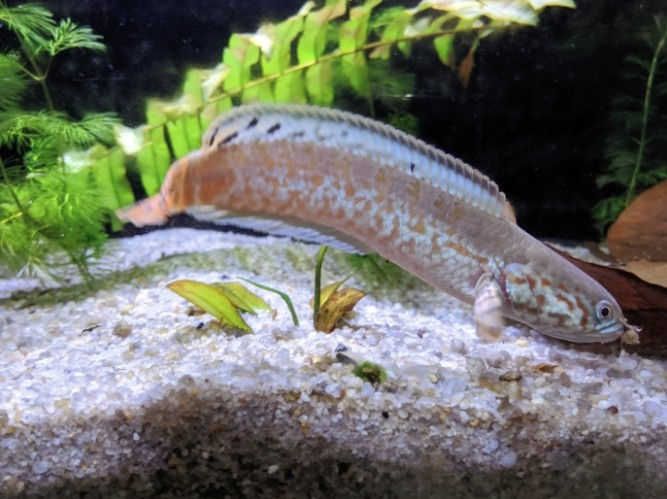
Because of high-protein diets and larger fish size, biological filtration must be robust. Use media with a high surface area for beneficial bacteria. Keep spare filter media for quick changes, and avoid cleaning all media at once to preserve bacteria colonies. Regular maintenance of the filter is vital; a clogged filter reduces oxygen and water quality quickly.
Consider using a pre-filter sponge on the intake to reduce the risk of sucking in small fish or fry. A heater and reliable thermometer are essential to maintain the correct stable temperature for your snakehead species.
Low to moderate flow
To balance strong filtration with comfortable flow, install flow diffusers or spray bars, or use multiple outlets placed strategically. Position outlets to create gentle circulation without strong jets in the main swimming area. This reduces stress and mimics more natural still-water habitats where snakeheads are found.
If your tank includes lots of plants or long-finned fish alongside snakeheads, check that the current does not damage plants or fin tissue. Adjust the flow after adding fish and watch how they react for the first few days.
10. Water Parameters And Cycling
Before adding fish, cycle the tank to build healthy bacterial colonies. A fully cycled tank with stable ammonia and nitrite at zero is essential. Test water for ammonia, nitrite, nitrate, pH, and temperature before introducing snakeheads.
Most common snakehead species prefer warm freshwater conditions with a temperature range around 22–28°C, and a near-neutral pH. Keep water stable — rapid swings in temperature or pH cause stress and illness. Do regular water changes of 10–25% weekly depending on bioload to keep nitrates low and water fresh.
Lid and Escape Prevention
Why tight lids are mandatory: Snakeheads are known to be agile and can jump or push through small openings. A secure lid prevents escapes, protects the fish from household dangers, and prevents other pets or children from reaching the tank. Many snakeheads are strong and will find gaps if the lid is not tight.
Use a lid that seals well but still allows ventilation to prevent heat build-up. If the tank has external equipment like filter pipes, seal gaps with aquarium-safe silicone or use foam gaskets. Always test the lid security before leaving the fish unattended.
11. Common Escape Mistakes

Common mistakes include leaving filter openings uncovered, using lids with loose fittings, and placing decorations that create climbing paths. Some owners use mesh lids that are too wide or have holes big enough for fish to push up through. Do not leave the lid propped open after maintenance — always close it before walking away.
Also check that any light fixtures or hoods fit tightly. If you use hanging plants or decor that attach to the lid, ensure they do not lift the lid or create a gap. A small escape gap is enough for a stressed fish to get out.
12. Lighting Requirements
Snakeheads do not need intense lighting. Low to moderate lighting is best to reduce stress, encourage natural behavior, and keep plants healthy without forcing the fish into constant activity. Bright lights can increase aggression and make fish more visible and stressed.
Use timers to provide a consistent day/night cycle, generally 8–10 hours of light per day. If plants are present, balance lighting with plant needs — use low-light plant choices or provide shaded areas with floating plants. Sudden changes in lighting can stress fish, so transition lights gradually when possible.
13. Stress Prevention And Behavior
Stress is the root cause of many health problems for snakeheads. A secure, spacious tank with hiding spots, stable water, and correct temperature prevents most stress. Avoid overcrowding, sudden changes, and aggressive tankmates. Observe your fish daily for signs of stress: loss of appetite, rapid breathing, clamped fins, or unusual hiding.
If you see aggression between fish, separate them to avoid injury. During the first days in a new tank, snakeheads may hide and refuse food — this is normal. Offer easy-to-catch food and reduce disturbance until they settle. A calm, consistent routine helps fish adapt faster.
14. Feeding And Maintenance Tips

Feed high-protein, varied diets that mimic their natural carnivorous habits. Frozen fish pieces, shrimp, and quality pellets designed for carnivores are good choices. Avoid overfeeding; uneaten food adds to waste and harms water quality. Feed small amounts and remove leftover food promptly.
Regular maintenance includes weekly water tests, partial water changes, gravel vacuuming, and filter checks. Keep a simple log of water parameters and maintenance tasks — this helps diagnose problems early. Consistent care beats fancy equipment when it comes to long-term health.
15. Troubleshooting Common Problems
If you notice cloudiness, test for ammonia and nitrite first — these are signs of bacterial imbalance. High nitrates suggest insufficient water changes. If fish show red or ragged fins, check for injuries from decorations or aggression. If you cannot correct an issue quickly, consider moving the affected fish to a quarantine tank with clean water and minimal stress until it recovers.
For escapes, inspect the lid, filter openings, and decorations that touch the lid. For aggression, separate fish and re-evaluate tank size and hiding space. Quick, calm action prevents small problems from becoming fatal.
A secure, spacious enclosure is the foundation of snakehead fish care. If you start with the right tank, strong but diffused filtration, safe substrate and hiding spots, a tight lid, gentle lighting, and consistent maintenance, your snakehead will be healthy and show natural behaviors. Always plan for the adult size of the fish, provide multiple hiding spots, and never skip the cycling process. Attention to these basics reduces stress, disease, and the risk of escape.
At Promeal, we know how important it is to give your pets a healthy and varied diet. That’s why we create high-quality, natural pet food to keep them happy and healthy.
Our speciality is premium live and dried insect-based feeds like mealworms, superworms, crickets, roaches, waxworms, and hornworms. These insects are grown on an organic diet, making them a nutritious and tasty treat for your pets.
Check out our "Shop" section to find the perfect food for your pets!


Comments