
Pacman Frog in Rainy Weather: Managing Excess Humidity & Feeding Balance


Pacman frog rainy weather care is very important because rainy days can quickly change the condition inside the frog tank. Many owners think rain is always good for frogs because frogs need moisture. This is only partly true. Pacman frogs do need humidity, but they do not need a wet, muddy, dirty, or poorly ventilated tank. In rainy weather, the room already becomes more humid, the substrate dries slowly, and leftover food can spoil faster. This can affect the frog’s skin, breathing, appetite, digestion, and overall health.
Pacman frogs are also called horned frogs because of the horn-like shape above their eyes. Many pet Pacman frogs belong to species like Cranwell’s horned frog and ornate horned frog. They are popular because they look cute, stay mostly in one place, and eat with a strong feeding response. But they are not low-care animals. A Pacman frog needs the right balance of humidity, temperature, clean substrate, safe feeders, and proper feeding frequency. Rainy weather can disturb this balance if the owner is not careful. If you are new to keeping these amphibians, How to Care for Your Pacman Frog covers the essential care requirements needed for long-term health and success.
Why Rainy Weather Affects Pacman Frogs?

Rainy weather increases air moisture inside the house. If the frog tank is already misted often, the enclosure can become too damp. The substrate may stay wet for many hours or even days. This is risky because Pacman frogs sit and burrow inside the substrate for long periods. If the bedding is too wet, the frog’s skin stays in contact with extra moisture, waste, and bacteria.
Pacman frogs breathe partly through their skin, so their skin health is very important. A dry tank is harmful, but a soaked tank is also harmful. The correct condition is damp, not wet. When you touch the substrate, it should feel moist. It should not feel muddy, sticky, or waterlogged. If you squeeze the substrate and water drips out, it is too wet.
Rainy weather can also lower the room temperature. This matters because Pacman frogs need warmth to digest food properly. If the tank becomes cool and humid at the same time, the frog may eat less, digest slowly, or become lazy. Some owners respond by feeding more, but that can create more problems. In rainy weather, feeding should be controlled, not increased without reason. While rainy weather creates excess humidity, temperature management remains equally important, as explained in Pacman Frog Summer Care Guide for Moisture and Temperature Care.
Ideal Humidity for Pacman Frogs
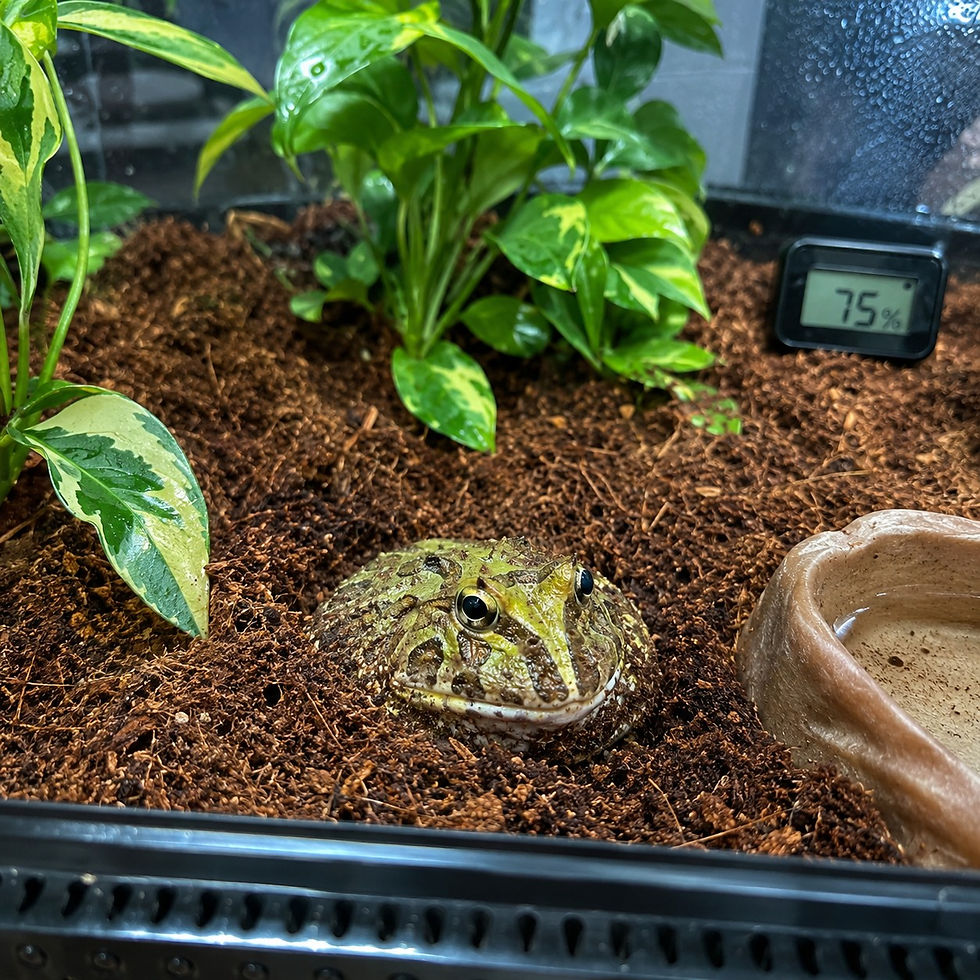
Pacman frogs generally do well in a humid enclosure, usually around 60% to 80% humidity. This range supports normal skin moisture and burrowing behavior. But humidity should not stay too high all the time. If the tank glass is foggy all day, the substrate smells bad, or mold starts growing, the setup is too wet or poorly ventilated.
A hygrometer is very helpful in rainy weather. Many owners guess humidity by looking at the tank, but guessing is not safe. A simple humidity meter helps you know if the enclosure is actually correct. During rainy days, you may need to mist less often than in summer or dry weather. The frog’s tank should be checked daily because the room humidity can change quickly.
The water bowl should always have clean, dechlorinated water. Pacman frogs may sit in the water bowl, but they are not strong swimmers. The bowl should be shallow so the frog can enter and leave easily. The water should be changed daily, especially during rainy weather, because dirty water can increase bacteria inside the tank. Creating the correct humidity range starts with proper enclosure design, which is discussed in detail in Habitat of Pacman Frogs: Creating the Perfect Environment for Your Pet.
Signs the Pacman Frog Tank Is Too Humid

A tank that is too humid will usually show clear signs. You may notice wet glass, bad smells, soggy bedding, mold growth, dirty water, or uneaten insects hiding in the substrate. The frog may also become less active, sit in one place for too long, refuse food, or show changes in skin color or skin texture. These signs should not be ignored.
Mold in a Pacman frog enclosure is a warning sign. A small amount of natural fungal growth can happen in damp setups, but visible mold, bad smell, and wet bedding mean the enclosure needs cleaning and better airflow. Food waste should never be left inside the tank. Dead insects, leftover worms, and dirty substrate can become a health risk in humid weather.
If the frog shows red skin patches, swelling, weakness, breathing difficulty, constant soaking, or extreme loss of appetite, it may need a reptile or exotic pet vet. Pacman frog health can get worse quickly when enclosure conditions are poor. Home treatment without proper knowledge can be dangerous.
How to Control Excess Humidity in Rainy Weather?

The first step is to reduce unnecessary misting. In dry weather, misting may be needed more often. In rainy weather, the air is already humid, so daily heavy misting can make the tank too wet. Use the hygrometer reading before misting. If the humidity is already in the correct range, do not add more water.
The second step is airflow. Pacman frogs need humidity, but they also need fresh air. A fully closed tank can trap moisture and smell. Good ventilation helps control mold, bacteria, and excess moisture. Use a secure lid with airflow, and do not cover the whole top with plastic or cloth unless humidity is too low. During monsoon or rainy weather, too much covering can make the tank wet and stale.
The third step is substrate care. Coconut fiber is commonly used because it holds moisture and allows burrowing. But it should be changed when it becomes dirty, smells bad, or stays soaked. Spot cleaning should be done daily. Full substrate changes should be done when needed based on hygiene, not only by calendar.
The tank should also be kept away from damp walls, leaking windows, direct rain spray, and cold floors. Rainy weather can make some rooms colder and wetter than others. A stable indoor spot is better for Pacman frogs. The enclosure should feel warm, clean, and moist, not cold and wet. Owners looking to improve enclosure setup and moisture management can also refer to Pacman Frog Ka Habitat: Apne Pet Ke Liye Perfect Environment Kaise Banayein?.
Feeding Balance During Rainy Weather
Feeding balance is one of the most important parts of Pacman frog rainy weather care. Pacman frogs are ambush predators. They sit and wait for food. They can eat a lot when offered food, but that does not mean they should be overfed. Overfeeding can lead to obesity, poor movement, fatty buildup, and digestion problems.
Juvenile Pacman frogs usually eat more often because they are growing. Adult Pacman frogs eat less often. In rainy weather, feeding should be based on the frog’s age, body condition, temperature, and appetite. If the tank temperature is lower than normal, digestion can slow down. Feeding large meals in a cool, wet tank is not a good idea.
Do not feed only because the frog looks hungry. Pacman frogs often react strongly to movement. This feeding response can make owners think the frog needs food all the time. A healthy feeding routine is better than random feeding. If the frog skips one meal but looks alert and the tank conditions are correct, it may not be an emergency. But long-term refusal to eat, weight loss, swelling, or weakness should be checked seriously.
Best Foods for Pacman Frogs

Pacman frogs need animal-based foods. Good feeder options include gut-loaded crickets, Dubia roaches, earthworms, hornworms, and other safe feeder insects of the right size. Gut-loading means feeding the insects healthy food before offering them to the frog. This improves their nutrition.
Mealworms can be used, but they should not be the main food. Mealworms have a harder outer shell compared to softer feeders like earthworms. If given too often, especially in large size or in poor tank conditions, they may increase digestion risk. Mealworms are better as an occasional feeder, not a daily staple. They can be useful in a varied diet when offered in the right size and amount.
Waxworms and very fatty feeders should also be limited. They may be accepted quickly because frogs like rich foods, but too many fatty feeders can cause weight gain. Rodents should not be used often. If used at all, they should be properly sized and offered carefully. Live rodents are risky because they can bite and injure the frog.
Wild insects should be avoided because they may carry pesticides, parasites, or unknown chemicals. This is especially important in rainy weather because insects collected outdoors may come from polluted soil, drains, gardens, or sprayed areas. Safe captive-bred feeder insects are always a better choice. If you want a deeper understanding of feeder insects, supplements, and balanced nutrition, read Pacman Frog Ko Kya Khilaye? Complete Nutrition Guide.
Calcium and Vitamin Support

A Pacman frog needs calcium and vitamins for healthy bones, nerves, muscles, and growth. Poor calcium balance can lead to metabolic bone disease. This condition can cause weak bones, poor movement, soft jaw, deformity, and feeding problems. Young frogs are especially at risk because they grow fast.
Feeder insects should be dusted with calcium and vitamins based on the frog’s age and the advice of a reptile or exotic pet care expert. Vitamin D3, calcium, and correct lighting or UVB guidance should be managed carefully. Too little can cause disease, and too much can also be harmful. Supplements are important, but they must be used properly.
Diet variety also matters. A frog that eats only one feeder all the time may miss important nutrients. Offering a rotation of safe feeders helps create better nutrition. In rainy weather, do not leave dusted insects inside the tank for long. The powder can become wet, insects can hide, and the tank can become dirty.
Enclosure Setup for Rainy Weather

A Pacman frog enclosure should be simple, safe, and easy to clean. The tank should have enough floor space, deep damp substrate for burrowing, a shallow water bowl, hiding areas, and a stable warm side. Pacman frogs do not need a tall climbing setup because they are ground-dwelling frogs. A safe floor setup is more important than decoration.
The substrate should be deep enough for the frog to burrow. Burrowing helps the frog feel safe and maintain moisture. But the substrate should never be mixed with sharp stones, gravel, sand, or small loose pieces that can be swallowed. Impaction can happen if a frog swallows unsafe substrate while feeding.
To reduce this risk, many owners feed with tongs or feed in a clean area where loose substrate is not sticking to the prey. This is useful in rainy weather because wet substrate can attach to insects more easily. Feeding should be clean and controlled to reduce impaction risk.
Temperature must also be stable. A cool and wet enclosure is not healthy. Use a safe heating method suitable for amphibians and monitor the temperature with a thermometer. The frog should have access to a warm area and a cooler area so it can choose where to sit.
Health Precautions and Common Diseases
Pacman frogs can suffer from several health problems when care is poor. Common risks include impaction, obesity, metabolic bone disease, vitamin A deficiency, bacterial infection, fungal infection, skin problems, and red-leg syndrome. Many of these problems are connected to poor diet, wrong humidity, dirty substrate, stress, or incorrect temperature.
Impaction can happen when the frog swallows substrate or eats prey that is too large or hard to digest. Signs may include bloating, no stool, low appetite, and unusual sitting posture. Obesity can happen when the frog is fed too much or gets too many fatty foods. A healthy Pacman frog is naturally round, but it should not become extremely swollen or unable to move normally.
Skin infection and red-leg problems are serious. Redness on the belly or legs, weakness, swelling, and unusual behavior can be danger signs. Do not try random home medicine on a Pacman frog. Amphibians absorb substances through their skin, so unsafe chemicals can harm them quickly. A qualified exotic vet is the safest option when illness is suspected. For a broader overview of health management, enclosure care, and routine maintenance, visit How to Care for Pacman Frogs? Complete Guide for Pet Owners.
Cleaning Routine During Rainy Weather

A clean routine is very important in rainy weather. The water bowl should be cleaned and refilled with dechlorinated water every day. Waste should be removed as soon as possible. Leftover insects should not stay in the tank overnight. Wet or dirty substrate should be removed quickly.
The enclosure should be checked for smell, mold, and pests. If the substrate remains wet for too long, replace part of it or do a full cleaning when needed. The tank should not be cleaned with harsh chemicals. Any cleaning product used around amphibians must be safe and fully rinsed away.
Owners should also wash hands before and after touching the frog, tank items, water bowl, substrate, or feeder insects. Amphibians can carry germs even when they look healthy. Good hygiene protects both the frog and the owner.
Breeding Considerations in Rainy Weather
Rainy weather may make some owners think it is the right time to breed Pacman frogs. In nature, seasonal rain can be linked with breeding behavior. But breeding Pacman frogs in captivity is not simple. It needs proper conditioning, correct temperature changes, controlled humidity, a safe rain-chamber setup, and careful management of eggs and tadpoles.
Pacman frog tadpoles can grow quickly and may show cannibalistic behavior. This means they need space, food, and careful separation. Breeding should not be done casually. Only experienced keepers should attempt Pacman frog breeding. The goal should always be animal welfare, not only producing babies.
For normal pet owners, rainy weather care should focus on health, not breeding. Keeping the frog clean, warm, properly fed, and safe is more important than forcing breeding behavior.
Common Rainy Weather Mistakes
One common mistake is over-misting the tank even when humidity is already high. Another mistake is using too much wet substrate and not changing it when it smells bad. Some owners also cover the tank too much, which traps stale air. This creates a perfect condition for mold and bacteria.
Another mistake is overfeeding during rainy days. If the frog is less active or the tank is cooler, heavy feeding can cause digestive stress. Feeding wild insects is also risky, especially during rain. Outdoor insects may look natural, but they can carry chemicals or parasites.
The biggest mistake is ignoring small warning signs. A little bad smell, a small mold patch, or a short appetite change may seem normal, but these signs can become serious if the owner does nothing. Pacman frog care is easiest when problems are fixed early. Understanding seasonal enclosure adjustments can help prevent common husbandry errors, which are also discussed in Pacman Frog Summer Care Guide: Moisture Aur Temperature Care.
Pacman frog rainy weather care is all about balance. Your frog needs humidity, but not a soaked tank. It needs food, but not overfeeding. It needs moisture, but also airflow. It needs a clean burrowing substrate, a shallow water bowl, safe feeder insects, stable temperature, and regular health checks.
The best rainy-weather setup is damp, warm, clean, and well-ventilated. Watch the humidity meter, reduce misting when needed, remove wet substrate, clean the water bowl daily, and feed a balanced diet with safe insects. Mealworms can be included sometimes, but they should not replace softer and more balanced feeders like earthworms, crickets, or roaches.
When care is done properly, Pacman frogs can stay healthy and comfortable even during rainy weather. For more exotic pet feeding and care tips, explore Promeal’s natural feeder insect range and keep your pet’s diet safe, clean, and balanced.
At Promeal, we know how important it is to give your pets a healthy and varied diet. That’s why we create high-quality, natural pet food to keep them happy and healthy. Our speciality is premium live and dried insect-based feeds like mealworms, superworms, crickets, roaches, waxworms, and hornworms. These insects are grown on an organic diet, making them a nutritious and tasty treat for your pets.
Check out our "Shop" section to find the perfect food for your pets!


I played Block Blast while waiting for a hiking trail gate to reopen after a short safety inspection. A ranger came over and unlocked the chain.