
Axolotl Care Guide: Everything You Need to Know

Updated: Jan 2
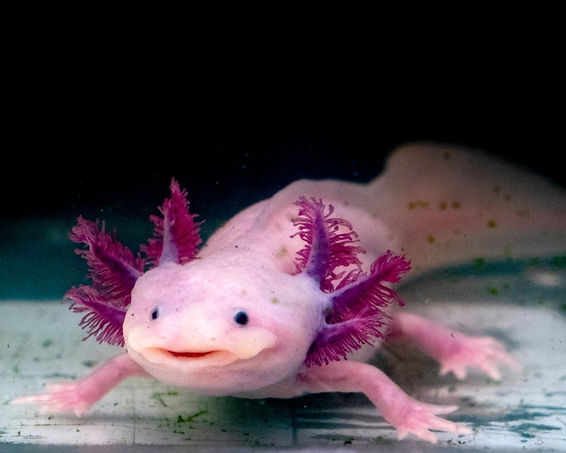
Axolotls have become very popular because of their cute face, smiling look, and soft, frilly gills. Many people think they are easy pets, but that is not true. Axolotls are delicate aquatic animals that need specific water conditions, correct food, and gentle care. If their needs are ignored, they can get sick very quickly. This axolotl care guide explains how to care for an axolotl properly, using very simple words so that beginners, students, and first-time pet owners can understand everything clearly. Creating the right environment is critical, and Axolotl Aquarium Setup for Beginners: Tank Size, Water & Setup Guide explains how to build a safe and stress-free habitat.
1. What Is an Axolotl?
An axolotl is a freshwater amphibian that lives its entire life in water. Even though it looks like a small water dragon or lizard, it is actually a type of salamander. The scientific name of an axolotl is Ambystoma mexicanum. Unlike frogs or other salamanders, axolotls do not leave water or change their body form as they grow.
What makes axolotls special is that they stay in their juvenile or baby form forever. This condition is called neoteny. Because of this, axolotls keep their external gills, flat head, and long-finned tail throughout their life. These feathery gills help them breathe underwater.
Another unique feature of axolotls is their regeneration ability. Axolotls can regrow lost legs, tails, and even parts of organs. This makes them very important for scientific research. Still, despite this ability, axolotls are very sensitive pets and need careful handling.
2. Axolotl Natural Habitat

To understand axolotl pet care, it is important to know where axolotls live naturally. Axolotls are native to Mexico and were originally found in freshwater lakes such as Lake Xochimilco. These lakes have cool, clean, slow-moving water with soft muddy bottoms and aquatic plants.
Axolotls are adapted to cold water environments. They prefer water that has plenty of oxygen and very little current. Their bodies are not built to handle warm temperatures or dirty water. This is why copying their natural habitat inside an aquarium is extremely important.
If axolotls are kept in warm or polluted water, they become stressed. Stress weakens their immune system and leads to fungal infections, loss of appetite, and shorter lifespan. Clean, cool water is the foundation of good axolotl care.
3. Axolotl Lifespan and Life Expectancy
Many beginners ask, what is the lifespan of an axolotl? In the wild, axolotls usually live around 5 to 6 years. This is because of predators, water pollution, and habitat loss. In captivity, axolotls can live much longer if they are cared for properly.
With correct axolotl pet care, axolotls can live 10 to 12 years, and some even reach 15 years. Their lifespan depends mainly on water quality, temperature, diet, and stress levels.
Poor water conditions, overfeeding, high temperatures, and small tanks reduce their life expectancy. On the other hand, stable water parameters, proper feeding, and a calm environment help axolotls live long and healthy lives.
4. Why Can’t We Touch Axolotls?

Axolotls may look friendly and soft, but they should not be touched often. Their skin is extremely sensitive and has a protective slime coat. This slime layer protects them from bacteria, parasites, and infections.
When humans touch axolotls, oils, soap residue, and chemicals from hands can damage the slime coat. Even gentle handling can cause stress and skin irritation. Stress is very dangerous for axolotls and can lead to illness.
Touching axolotls should only happen when it is necessary, such as during medical care or tank cleaning. Even then, handling should be minimal and done carefully. Axolotls are observation pets, not handling pets.
5. Axolotl Aquarium Setup and Enclosure Guide
A proper axolotl aquarium setup is the most important part of caring for an axolotl. A bad tank setup is one of the main reasons axolotls get sick.
Axolotls need a large tank because they grow quite big and produce a lot of waste. For one axolotl, a tank of at least 20 gallons (~ 76 liters) is required. Bigger tanks are always better because they keep water conditions more stable.
Water temperature plays a very important role in axolotl health. Axolotls need cold water, ideally between 16°C and 18°C. Water warmer than twenty degrees can cause stress, poor appetite, and fungal growth. In warm climates, cooling methods may be needed.
Filtration is necessary to keep water clean, but axolotls do not like strong water flow. Strong currents stress them and can damage their gills. A gentle filter with low flow is best for axolotl aquariums. For a detailed, step-by-step explanation of tank size, filtration, cooling, and substrate, follow Axolotl Aquarium Setup for Beginners: Tank Size, Water & Setup Guide.
The bottom of the tank also matters a lot. Axolotls swallow food by sucking it in, and they can accidentally swallow small stones. Gravel can cause serious internal blockages. Bare-bottom tanks or fine sand are the safest choices.
Lighting should be soft and low. Axolotls do not need bright light and can become stressed under strong lighting. A calm, dim environment helps them feel safe.
6. Axolotl Diet and Feeding Guide

Axolotls are carnivorous animals, which means they eat meat only. In the wild, axolotls eat worms, insects, and small aquatic animals. Their diet in captivity should be similar.
The best food for axolotls is earthworms, as they are nutritious and easy to digest. Other suitable foods include bloodworms, blackworms, and specially made axolotl pellets. Pellets should be high-quality and designed for carnivorous aquatic animals.
Axolotl feeding schedules depend on age. Baby axolotls need food every day because they grow quickly. Juvenile axolotls also eat frequently. Adult axolotls usually eat two to three times per week. Food choices, feeding frequency, and portion control are explained in depth in Axolotl Diet & Feeding Guide: How to Feed Your Axolotl Properly.
Mealworms can also be used for axolotls, but they should not be a regular food. Mealworms have a hard outer shell called chitin, which is difficult for axolotls to digest. Feeding mealworms too often can cause constipation or gut blockage, especially in small or young axolotls. If mealworms are used, they should be given only occasionally, in small amounts, and only to larger, healthy adult axolotls. Soft-bodied foods are always safer than mealworms.
Overfeeding is a common mistake. Extra food rots in the tank and pollutes the water. Uneaten food should always be removed to keep water clean and prevent disease.
7. Baby Axolotl and Larva Care

Baby axolotls are very small and fragile. They need special care, especially during the early larval stages. Newly hatched axolotl larvae cannot eat large food and need tiny live prey.
Axolotl larvae grow fast but can become aggressive toward each other. Cannibalism is common if they are crowded or underfed. Because of this, baby axolotls should be kept in separate containers or grouped by size.
Clean water is even more important for baby axolotls. Dirty water can kill larvae quickly. Gentle water changes and careful feeding are necessary during this stage. Caring for larvae and preventing cannibalism requires experience, which is covered in Axolotl Breeding Guide: Complete Eggs and Larva Care.
8. Axolotl Health Precautions and Common Diseases
Axolotls are sensitive animals and can get sick easily if water conditions are poor. The most common health problems in axolotls include fungal infections, bacterial infections, and digestive issues.
Fungal infections often appear as white, cotton-like patches on the skin or gills. These infections usually happen because of dirty water or stress. Improving water quality is the first step in treatment.
Signs of stress in axolotls include curled tail tips, floating, refusal to eat, and pale gills. Stress should never be ignored because it weakens the immune system.
Preventing disease is much easier than treating it. Clean water, stable temperature, and proper feeding are the best ways to keep axolotls healthy. If symptoms do not improve, an exotic or aquatic veterinarian should be consulted. Early signs of illness, fungal infections, and treatment options are explained in Axolotl Diseases and Treatment: Complete Health Care Guide.
9. Axolotl Breeding Guide Overview

Axolotl breeding is not recommended for beginners. Breeding creates hundreds of eggs and requires time, space, and experience. Only healthy adult axolotls should be bred.
Male and female axolotls can be identified by body shape and cloaca size. Breeding usually happens when water temperature changes slightly, mimicking seasonal changes.
After breeding, females lay eggs that must be protected. Adult axolotls may eat the eggs, so separation is necessary. Raising larvae requires daily care and live food.
Breeding should only be done with a clear plan and responsibility, as axolotls are long-living animals. Anyone considering breeding should first study Axolotl Breeding Guide: Complete Eggs and Larva Care to understand the responsibility involved.
10. Are Axolotls Good Pets for Beginners?
Many people ask, are axolotls good pets for beginners? The answer depends on the person. Axolotls are quiet and interesting and do not need daily interaction. However, they require strict water care and temperature control.
Axolotls are not playful pets and do not enjoy handling. They are best for people who enjoy watching and maintaining aquariums. If someone is willing to learn and maintain proper care, axolotls can be rewarding pets. Anyone considering breeding should first study Axolotl Breeding Guide: Complete Eggs and Larva Care to understand the responsibility involved.
Axolotls are truly unique animals, but they are not simple pets. They need cool, clean water, correct food, gentle handling, and a proper aquarium setup. When cared for properly, axolotls can live long, healthy lives and remain fascinating companions.
If you are ready to invest time and effort into proper axolotl care, these animals can be a wonderful addition to your aquarium. Knowledge and responsibility are the keys to keeping axolotls healthy and stress-free. Preventing stress and illness is easier when you understand warning signs outlined in Axolotl Diseases and Treatment: Complete Health Care Guide.
At Promeal, we know how important it is to give your pets a healthy and varied diet. That’s why we create high-quality, natural pet food to keep them happy and healthy.
Our speciality is premium live and dried insect-based feeds like mealworms, superworms, crickets, roaches, waxworms, and hornworms. These insects are grown on an organic diet, making them a nutritious and tasty treat for your pets.
Check out our "Shop" section to find the perfect food for your pets!


7M dạo này thấy mọi người nhắc hoài nên mình bấm vào xem thử cho biết thôi. Mình không có đọc sâu hay làm gì nhiều, chủ yếu lướt qua xem giao diện có dễ chịu không. Cảm giác đầu tiên là trang nhìn khá gọn, khoảng trắng vừa đủ nên không bị ngộp mắt. Mình thích nhất kiểu họ chia nội dung thành từng khung riêng, nhìn phát biết chỗ nào là thông tin chính chỗ nào là phần phụ, kéo xuống cũng không bị lẫn. Thanh menu để khá rõ ràng nên mình chuyển qua lại vài mục nhanh, không phải tìm lâu. Nói chung lướt vài phút thấy ổn, kiểu “vào là hiểu” chứ không rối, nhất…
soicaulodechuan.net lúc đầu mình cũng hơi ngại vào mấy trang kiểu này vì sợ rối mắt với đầy chữ, nhưng lướt thử vài phút thì thấy ổn hơn mình tưởng. Trang chia nội dung theo từng khối nhìn tách bạch, nên dù không đọc kỹ vẫn biết chỗ nào là phần chính để xem. Mình để ý cái menu đặt ngay chỗ dễ nhìn, bấm qua lại mấy mục không bị lạc, cảm giác mượt và nhanh. Mấy bảng thông tin họ trình bày dạng cột gọn gàng, liếc một cái là nắm được ý chính, không bị dồn dập. Nói chung dùng kiểu thư thả, không cần nhớ nhiều thao tác. Mình thích nhất là cách họ đặt menu…
OKFUN tối qua lúc chờ đồ ăn ra mình mở điện thoại lướt thử cho đỡ chán, kiểu vào vài phút xem trang bố cục ra sao mà cuối cùng lại kéo thêm mấy lần vì đọc cũng trôi, chữ không bị dí sát nhau nên mắt đỡ “kêu cứu” hơn hẳn. Mấy khối nội dung tách ra rõ ràng. Cuộn một đoạn là nắm được họ đang nói gì. Có chỗ họ ghi hoạt động từ 2018 với bảo mật SSL 256-bit ngay trong bài nên mình cũng bớt lăn tăn kiểu “giấu ở đâu rồi ta”. Menu đặt dễ thấy. Chuyển qua lại cũng mượt, không bị giật kiểu mạng nhà mình hay dở chứng. Nhìn chung nó…
EA 88 mình thấy dạo này nhiều người nhắc nên cũng tò mò vào lướt thử cho biết. Mình không phải kiểu ngồi đọc hết nội dung hay bấm từng mục đâu, chủ yếu xem giao diện có dễ nhìn không với thông tin có sắp xếp gọn gàng không. Vào cái là thấy trang chia khối khá rõ, nhìn một vòng là nắm được chỗ nào là phần giới thiệu, chỗ nào là tin cập nhật, không bị rối mắt. Có đoạn họ nói về chuyện link vào hay bị chặn ở Việt Nam và hướng xử lý, đọc qua thấy đúng kiểu vấn đề nhiều trang hay gặp nên cũng yên tâm hơn chút. Menu để ngay chỗ…
Đúng cái mọi người đang bàn, mình cũng chỉ cần xem nhanh cho rõ thôi. hi88 mình ghé thử tầm vài phút, chủ yếu lướt để coi bố cục họ sắp xếp ra sao chứ không ngồi mò từng thứ; cảm nhận là trang chia khu vực nhìn phát hiểu liền, các khối nội dung để dạng thẻ nên kéo xuống mắt bắt nhịp nhanh, đỡ phải đảo qua đảo lại tìm thông tin. Mình để ý phần bảng số liệu trình bày theo cột khá ngay ngắn, tiêu đề với con số canh thẳng hàng nên đọc lướt vẫn nắm được ý, chữ cũng dễ nhìn chứ không rối. Nói chung dùng kiểu “xem cho biết” mà thấy ổn,…