
Molly Fish Care in Rainy Months: Breeding Safety & Water Balance Tips
- Sanket Shinde

- May 31
- 7 min read
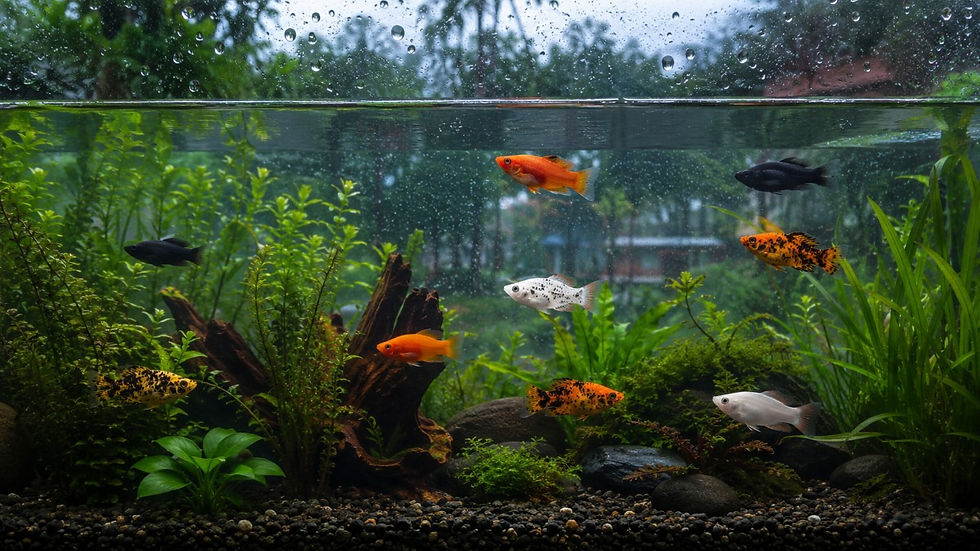
Molly fish are one of the most popular freshwater aquarium fish because they are colorful, peaceful, active, and easy to breed. They are loved by both beginners and experienced fishkeepers. However, rainy months can create serious challenges for molly fish tanks. Sudden weather changes, unstable water conditions, lower oxygen levels, and poor water quality can quickly stress these fish and affect their health.
During monsoon season, many fish keepers notice problems like fungal infections, loss of appetite, weak breeding activity, cloudy water, and unexpected fish deaths. These problems usually happen because rainy weather changes aquarium conditions faster than normal. Even small mistakes such as overfeeding or irregular water changes can become dangerous during this season.
Maintaining stable water balance is the most important part of molly fish care during rainy months. Clean water, proper feeding, stable temperature, and safe breeding conditions help mollies remain healthy throughout the monsoon season.
This complete molly fish monsoon care guide explains how to maintain water quality, protect breeding fish, improve fry survival, prevent diseases, and safely feed molly fish during rainy months.
Understanding Molly Fish and Their Needs

Molly fish belong to the livebearer family, which means they give birth to live fry instead of laying eggs. They are active tropical fish that enjoy swimming in groups and prefer warm, stable water conditions. Mollies are naturally found in freshwater and slightly brackish environments, which is why they prefer slightly hard and alkaline water.
Popular molly fish varieties include Black Molly, Dalmatian Molly, Balloon Molly, Sailfin Molly, and Lyretail Molly. Most molly fish grow between 3 and 5 inches depending on the variety, diet, and aquarium conditions.
Molly fish are generally hardy, but they are still sensitive to sudden environmental changes. Rainy weather can disturb aquarium stability and weaken their immune system. When water quality becomes unstable, molly fish become more vulnerable to stress, infections, and breeding problems.
Why Rainy Months Affect Molly Fish?
Rainy season changes the surrounding environment in many ways. Room temperatures may drop suddenly, humidity increases, and water quality may change because of seasonal water contamination. These changes directly affect aquarium stability.
In many homes, aquarium temperatures fluctuate more during monsoon months because sunlight reduces and room temperatures become cooler. Rainwater contamination may also affect tap water mineral levels and pH balance. If these changes are not controlled, molly fish may suffer from stress and illness.
Lower oxygen levels are another common problem during rainy weather. Warm tropical fish like mollies require proper oxygen exchange to stay active and healthy. Poor oxygen circulation can make fish weak and inactive.
Stable aquarium conditions are more important during monsoon than during any other season.
Best Tank Setup for Molly Fish During Rainy Months
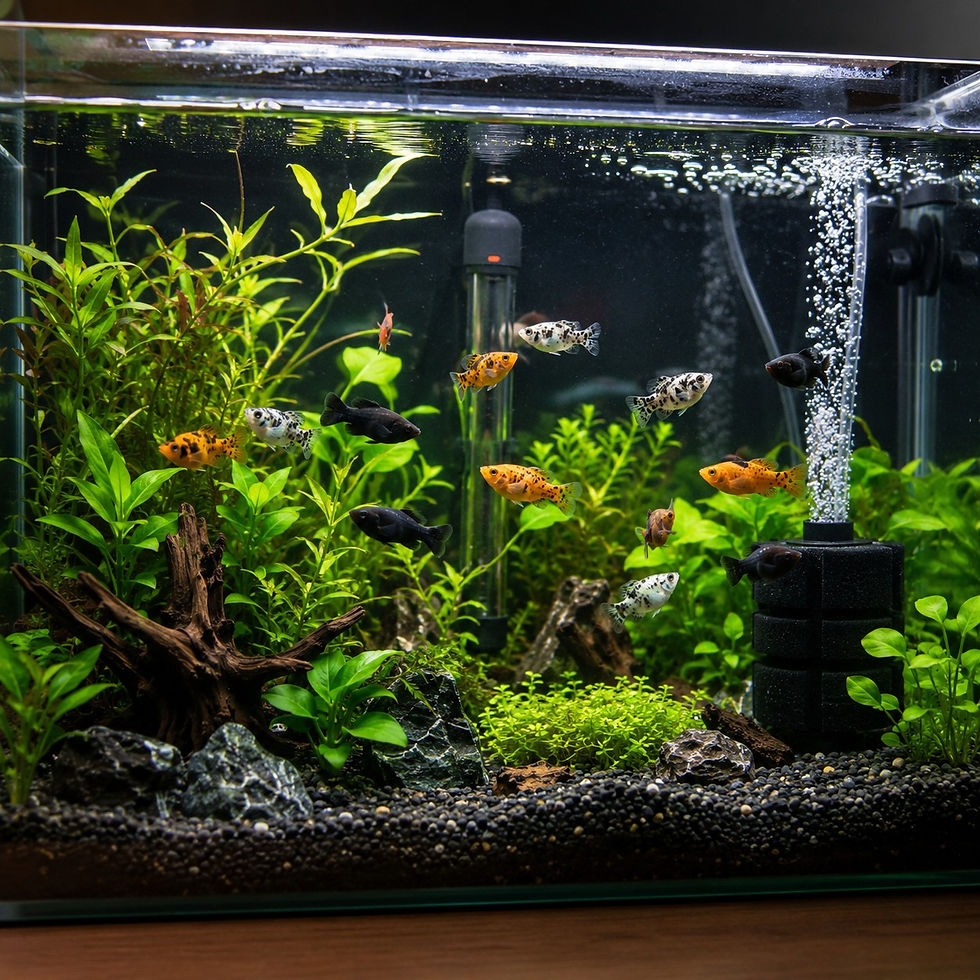
A proper aquarium setup helps molly fish stay healthy during rainy weather. Tank stability becomes extremely important because sudden changes can quickly affect breeding fish and fry.
A minimum 20-gallon aquarium is recommended for a small group of mollies. Larger tanks are always better because they maintain stable water conditions more easily. Small tanks experience faster temperature and pH changes during rainy months.
The ideal temperature for molly fish is between 24°C and 28°C. During monsoon season, using a reliable aquarium heater is highly recommended because sudden temperature drops can stress fish and slow breeding activity.
Stable temperature helps improve immunity, digestion, and breeding success in molly fish.
Mollies prefer a pH level between 7.5 and 8.5. Slightly hard water is beneficial for their health because it supports proper body functions and reduces stress. Sudden pH changes should always be avoided because they can shock the fish.
Good filtration is also essential during rainy months. A sponge filter or hang-on-back filter helps remove waste, control ammonia, and maintain biological balance inside the aquarium. Proper filtration becomes even more important when breeding mollies because fry are sensitive to poor water quality.
Live aquarium plants are highly beneficial for molly fish tanks. Plants improve oxygen levels, absorb waste compounds, and provide hiding places for fry. Java Fern, Hornwort, Water Sprite, and Anubias are excellent choices for molly fish aquariums.
Molly Fish Feeding Guide During Rainy Season

A balanced diet helps molly fish remain healthy, colorful, and active during monsoon months. Feeding becomes very important during this season because poor feeding habits can quickly damage water quality.
Molly fish are omnivorous, which means they eat both plant-based and protein-rich foods. A healthy molly fish diet should include high-quality flakes, spirulina-based foods, algae wafers, blanched vegetables, and occasional protein treats.
During rainy months, fish metabolism may slow slightly because of environmental changes. Overfeeding should always be avoided because leftover food increases ammonia and bacterial growth inside the aquarium.
Small controlled feeding is much safer than heavy feeding during monsoon season.
Many fish keepers also provide live insects and protein-rich treats to improve fish health and breeding condition. However, not every insect is suitable for molly fish.
Live mealworms are one of the better occasional protein treats for adult mollies because they contain protein and healthy fats. Small mealworms are easier to manage and softer than larger feeder insects. However, they should only be fed occasionally because excessive fatty foods may affect digestion.
Superworms are larger and harder to digest. They are not ideal for regular molly fish feeding because their tough outer shell may create digestive stress.
Small crickets can provide protein, but uneaten crickets may pollute aquarium water quickly. Feeder roaches are usually more suitable for larger carnivorous fish and are not considered the best choice for mollies.
Among live insects, small mealworms are generally the safest and most practical occasional option for adult molly fish.
Even with protein treats, the main diet of molly fish should always focus on algae-based foods and balanced commercial fish foods. Feeding once or twice daily in small amounts is usually enough.
Water Balance Tips for Molly Fish During Monsoon

Water balance is the most important factor in molly fish care during rainy months. Most health problems begin when aquarium conditions become unstable.
During monsoon season, fish keepers should monitor ammonia, nitrite, nitrate, pH, and temperature regularly. Sudden water chemistry changes can weaken fish immunity very quickly.
Large water changes should be avoided because they may create sudden pH or temperature shocks. Smaller weekly water changes of around 20 to 25 percent are much safer for mollies.
Using water conditioners during water changes helps remove harmful chemicals and improves water safety. Matching the new water temperature with aquarium temperature also helps reduce stress.
Stable water conditions are more important than frequent large water changes.
Oxygen levels should also be monitored carefully during rainy weather. Increased humidity and reduced air circulation may lower oxygen exchange inside the aquarium. Air pumps, air stones, and proper surface movement help improve oxygen availability.
Overfeeding should always be avoided because excess food quickly decomposes and increases ammonia. Dirty substrate and overcrowding also worsen water quality during monsoon season.
Molly Fish Breeding Safety During Rainy Months
Molly fish are famous for breeding easily, but unstable rainy-season conditions can reduce breeding success and increase fry mortality.
Male mollies can be identified by their pointed anal fin called a gonopodium, while females have a fan-shaped anal fin. Pregnant female mollies usually develop a swollen belly and darker gravid spot near the abdomen.
For healthy breeding, molly fish need stable, warm water; clean surroundings; and low stress. Sudden temperature changes or poor water quality may cause weak fry or failed pregnancies.
Pregnant mollies become more sensitive to stress during rainy months.

Providing live plants and hiding spaces helps pregnant females feel safer. Dense plants also improve fry survival because adult mollies sometimes eat newborn fry.
Baby mollies require very clean water and gentle filtration. Sponge filters are highly recommended in breeding tanks because they protect fry from strong water currents.
Freshly hatched brine shrimp, crushed flakes, and micro foods are suitable for fry feeding. Regular observation is important because fry health can decline quickly in unstable water.
Common Molly Fish Diseases During Rainy Months
Rainy months increase the risk of disease outbreaks because unstable water conditions weaken fish immunity. Most molly fish diseases are connected to stress and poor water quality.
White spot disease, also called Ich, appears as small white dots on the body and fins. This disease spreads quickly in stressed fish and usually becomes worse in unstable temperatures.
Fin rot is another common problem during monsoon season. Damaged or melting fins are usually caused by bacterial infections linked to dirty water.
Fungal infections may appear as cotton-like growths on the body or fins. These infections are common in weak or injured fish.
Swim bladder issues can also occur because of overfeeding or digestive problems. Affected fish may struggle to swim properly or float abnormally.
Preventing disease is much easier than treating disease in aquarium fish.
Maintaining clean water, stable temperature, proper feeding, and good filtration are the best disease prevention methods. Quarantining new fish before adding them to the main aquarium also helps prevent infections.
Common Mistakes Molly Fish Owners Make During Monsoon

Many aquarium problems during rainy months happen because of simple mistakes. Overfeeding is one of the most common issues because leftover food quickly pollutes water.
Ignoring water testing is another major problem. Many fish keepers only notice problems after fish become sick. Regular monitoring helps prevent sudden water quality crashes.
Sudden cold water changes may shock tropical fish like mollies. Water should always be close to aquarium temperature before use.
Overcrowding increases stress, ammonia production, and disease spread. Mollies need enough swimming space and stable water conditions to remain healthy.
Ignoring oxygen levels is also risky during monsoon months because reduced oxygen may weaken fish very quickly.
Molly fish can remain healthy and breed successfully during rainy months when aquarium conditions stay stable. Proper filtration, balanced feeding, stable temperature, clean water, and careful monitoring help prevent most common monsoon problems.
Although occasional live insects such as small mealworms may provide additional protein, the foundation of healthy molly fish care always comes from balanced nutrition and stable water quality.
Healthy water balance is the key to successful molly fish breeding and disease prevention during rainy season. With proper care, mollies can stay active, colorful, and healthy throughout the monsoon months.
Start improving your molly fish care routine today and maintain a clean, stable, and stress-free aquarium environment for safer breeding and healthier fish during rainy weather.
At Promeal, we know how important it is to give your pets a healthy and varied diet. That’s why we create high-quality, natural pet food to keep them happy and healthy. Our speciality is premium live and dried insect-based feeds like mealworms, superworms, crickets, roaches, waxworms, and hornworms. These insects are grown on an organic diet, making them a nutritious and tasty treat for your pets.
Check out our "Shop" section to find the perfect food for your pets!


Comments