
Balcony Bird Care in Rainy Season (India): Keep Birds Safe, Dry & Healthy
- Sanket Shinde

- 23 hours ago
- 7 min read

Balcony Bird Care in Rainy Season India
Balcony bird care in rainy season India is important because monsoon can make life both easy and risky for birds. Rain brings insects, fresh plants, and cooler weather, but it also brings wet food, dirty water, strong wind, damp corners, and higher infection risk. Many birds visit Indian balconies in this season because they look for quick food, clean water, and a dry place to rest.
If you feed birds from your balcony, your main job is not to give too much food. Your main job is to keep the feeding area clean and safe. Dry food, fresh water, and daily cleaning are the three most important rules of rainy season bird care. A small clean feeder is always better than a full plate of wet grains on the floor.
Why Birds Need Extra Care During Monsoon?

During monsoon, birds may look active because natural food is available outside, but city birds still face problems. Heavy rain can make small birds weak, wet ledges can make resting difficult, and dirty balcony corners can attract pests. Wet grains and spoiled food can also become unsafe quickly.
Indian balconies often attract sparrows, mynas, bulbuls, pigeons, doves, parakeets, crows, tailorbirds, and sunbirds. These birds do not all eat the same food. That is why balcony bird feeding should be simple, clean, and controlled. Helping birds means giving safe support and letting them stay free.
Best Food for Balcony Birds in Rainy Season
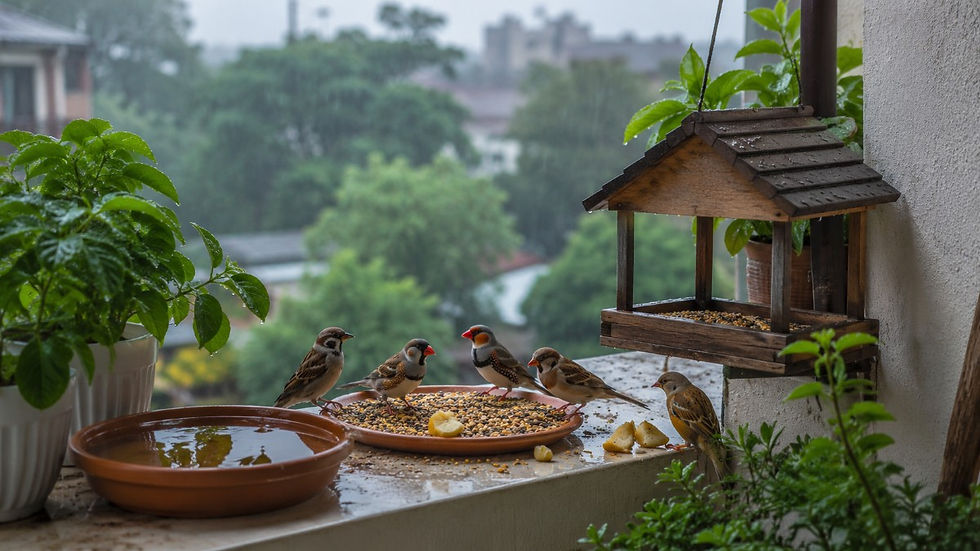
The best bird food for rainy season should be clean, dry, and given in small quantity. You can offer small millets, bajra, jowar, seed mix, sunflower hearts, and small pieces of fresh fruit for birds that eat fruit. House sparrows may come for small grains, bulbuls and mynas may enjoy fruit and insects, while sunbirds are more attracted to flowers and nectar plants.
Do not keep large amounts of food all day. In monsoon, moisture can spoil food faster. Feed only what birds can finish in a short time. If the food is still there after a few hours, remove it and clean the area. Small fresh portions are safer than large leftover portions.
Live Insects for Birds: Mealworms, Superworms, Crickets, and Roaches

Live insects can be useful for some insect-eating birds because they provide natural animal protein. In rainy season, many birds already find insects outside, so live insects should be used only as an add-on, not as the main diet. Among live mealworms, superworms, crickets, and roaches, live mealworms are the best option for balcony bird feeding because they are smaller, easier to serve, and suitable for many wild garden birds.
Live mealworms should be served in a smooth-sided bowl or mealworm feeder so they do not crawl away. Give only a few at a time and remove leftovers quickly. Superworms are larger and fattier, so they are better only as an occasional treat for bigger suitable birds. Crickets are nutritious but can jump and escape. Roaches are not ideal for open balcony feeding because they may create pest concerns if they escape. For Indian homes, live mealworms are the most practical and safest insect choice for controlled balcony bird feeding.
Foods You Should Not Feed Birds
Some foods are harmful even if birds eat them. Do not give bread, biscuits, namkeen, chips, fried food, spicy food, salty food, sweets, stale rice, moldy grains, milk, or leftover human meals. These foods can upset digestion, attract rats and ants, and make the balcony dirty.
Bread is a very common mistake. It fills the stomach but does not give proper nutrition. Salted and spicy foods are worse because birds have small bodies and cannot handle such food well. If food smells bad, looks sticky, has fungus, or becomes wet in rain, throw it away immediately.
How to Keep Bird Food Dry in Monsoon?

Keeping bird food dry is one of the biggest parts of monsoon bird care. Use a covered feeder instead of an open plate. Place it under a roof shade, balcony corner, or protected area where direct rain cannot fall. If your balcony gets strong sideways rain, feed birds only during dry hours and remove the feeder later.
Do not keep food on the floor because rainwater, dust, and droppings can mix with it. A raised feeder is cleaner. Store seeds in an airtight container away from damp walls and windows. Always empty old food before adding fresh food. Dry food reduces the risk of mold, smell, pests, and disease.
Clean Water Bowl Care for Birds
Birds need clean water for drinking and feather care, even during rainy season. But dirty water is unsafe. Keep a shallow water bowl where small birds can drink safely. Do not use a deep bowl because small birds may slip or drown.
Change the water every day and wash the bowl before refilling it. Do not allow water to stand for many days in plant trays, buckets, coconut shells, pots, or balcony corners. Stagnant water can attract mosquitoes and create health problems for the home. A clean water bowl helps birds, but a dirty bowl can harm birds and people.
Safe Balcony Setup for Birds
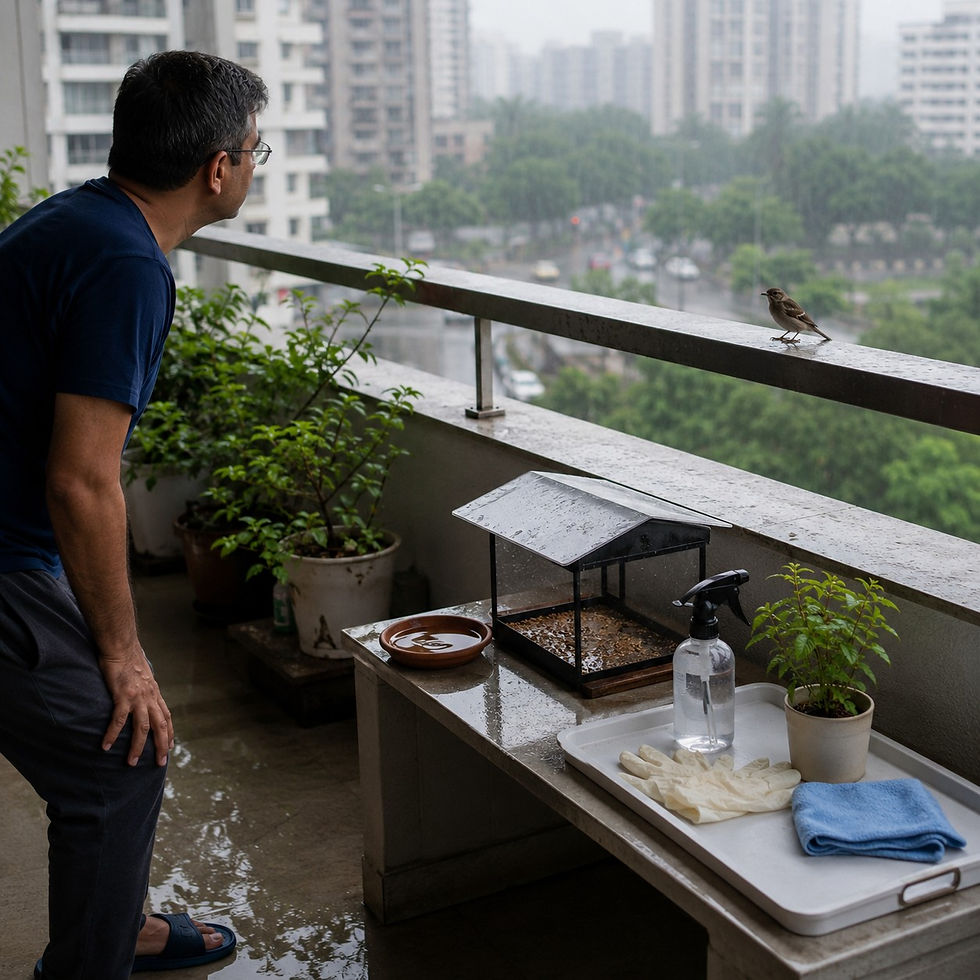
A bird-friendly balcony should be open, dry, and safe. Wild birds should not be enclosed. Keep one dry feeder, one shallow water bowl, and a peaceful corner with plants or shade. Keep food away from electrical plugs, extension boards, and wet wires.
Avoid nylon threads, loose plastic netting, glue traps, sharp wires, and sticky pest traps. Birds can get stuck in them. Keep cats and dogs away from the feeding area because even a quick attack can injure a bird.
Bird-friendly plants can also help. Hibiscus, tulsi, jasmine, ixora, marigold, bougainvillea, curry leaf, and native flowering plants can give shade and attract natural insects. Avoid chemical pesticides.
Health Precautions and Rainy Season Bird Diseases
Rainy season can increase health risks if feeding areas are dirty. Wet food, old droppings, and crowded feeders can spread infection. Watch for warning signs like fluffed feathers, weakness, sitting alone for a long time, swollen eyes, breathing difficulty, injury, unusual droppings, or a bird that cannot fly properly.
If you see a sick bird near your feeder, stop feeding at that spot for some time and clean the area properly. Do not try home medicines or antibiotics. Contact a local bird rescue group or avian expert if the bird is injured or very weak. Clean feeding is the best health precaution in rainy season.
Pigeon Feeding on Balcony in India

Pigeons are common in Indian cities, but daily balcony feeding can quickly attract many pigeons. This can create droppings, smell, blocked drains, dirty railings, and neighbour complaints. Feeding one or two visiting birds is different from creating a large daily pigeon crowd.
If pigeons gather every day, reduce feeding and avoid spreading grain on the floor. Clean droppings from railings, AC units, windows, and corners. Controlled feeding is safer for birds and better for your home. Responsible balcony bird care should not create hygiene problems.
Breeding and Nesting Care in Balcony
During monsoon, some birds may build nests in balconies, plant pots, pipes, shelves, or ledges. If there is an active nest, do not touch the eggs or chicks. Watch from a distance and avoid disturbing the parents. Keep pets away and do not spray chemicals near the nest.
Do not move an active nest unless there is real danger and a rescue expert guides you. In India, wild birds, their eggs, and nests are protected, so it is better to follow safe and ethical care. Never catch wild birds or keep them as pets.
What to Do If You Find a Baby Bird?
If a baby bird falls in your balcony, first check if it is a fledgling or a nestling. A fledgling has feathers and may hop around. It may look helpless, but it is often learning to fly while the parents stay nearby. A healthy fledgling should usually be left alone.
A nestling has very few feathers and cannot stand or hop properly. If the nest is nearby and safe to reach, it may need to be placed back carefully. If the bird is bleeding, cold, injured, attacked by a cat or dog, or the nest cannot be found, call a wildlife rescue group. Do not give milk, bread, rice, or water by force. When in doubt, call a rescuer instead of trying home treatment.
Daily Rainy Season Bird Care Routine

A simple routine keeps balcony birds safe. In the morning, wash the water bowl and refill it with fresh water. Add a small amount of dry food in a covered feeder. If using live mealworms, serve only a few and remove uneaten ones quickly.
During the day, check if food has become wet. Remove spoiled food, fallen fruit, and dirty grains. In the evening, clean droppings and check for ants, flies, rats, and stagnant water. Clean the feeder deeply at least once a week. This routine keeps your balcony safe, fresh, and bird-friendly.
Balcony bird care in rainy season India is simple when you follow the right habits. Give clean food, keep water fresh, use a dry feeder, avoid harmful foods, and clean the area daily. Do not overfeed birds, do not disturb nests, and do not try to treat injured birds at home.
For live insect feeding, live mealworms are the best choice for balcony birds because they are easy to serve and suitable for many insect-eating birds. Superworms, crickets, and roaches need more caution and are not the best choice for open balcony feeding.
This monsoon, make your balcony a safe and clean place for birds. Feed less, clean more, and care responsibly. Choose clean, natural, and protein-rich foods that support birds without making your balcony dirty.
At Promeal, we know how important it is to give your pets a healthy and varied diet. That’s why we create high-quality, natural pet food to keep them happy and healthy. Our speciality is premium live and dried insect-based feeds like mealworms, superworms, crickets, roaches, waxworms, and hornworms. These insects are grown on an organic diet, making them a nutritious and tasty treat for your pets.
Check out our "Shop" section to find the perfect food for your pets!


Comments