
Rescuing Baby Birds in Rain: Step-by-Step Emergency Care & Safe Release Guide
- Sanket Shinde

- 3 hours ago
- 10 min read

Rescuing baby birds in rain needs care, patience, and the right steps. Many people feel scared when they see a wet baby bird on the ground during heavy rain. The first thought is usually to pick it up, feed it, and keep it safe at home. But this is not always the best thing for the bird. In many cases, the baby bird may only be a fledgling learning to fly, and its parents may still be nearby.
The most important rule is simple. Do not rush. First observe, then act. A baby bird in rain may need help if it is cold, injured, featherless, attacked by a cat or dog, or sitting in a dangerous place. But if the bird is fully feathered, alert, hopping, and parent birds are nearby, it may not need full rescue. It may only need protection from immediate danger.
This guide will help you understand what to do when you find a baby bird in rain, how to identify a nestling or fledgling, how to give temporary emergency care, what not to feed, when live insects may be used under expert guidance, and how to support safe release.
What to Do First When You Find a Baby Bird in Rain?

When you find a baby bird in rain, first look at the area carefully. Check if the bird is on a road, balcony edge, open drain, wet floor, or near cats, dogs, ants, or people. Also check if there is a nest nearby or if parent birds are calling from trees, wires, walls, or railings.
If the bird is in immediate danger, you can gently move it to a safer nearby place. Keep it close to where you found it so the parents can still find it. Do not take it far away unless it is injured or clearly orphaned. Moving a healthy fledgling too far can separate it from its parents.
If the bird is wet, cold, weak, shivering, bleeding, unable to stand, or attacked by a pet, it needs urgent help. In this case, place it in a warm, dark, quiet temporary rescue box and contact a local wildlife rescue group, veterinarian, Forest Department, or trained bird rescuer.
Nestling vs Fledgling: Know Before You Rescue
Before rescuing a baby bird, you must know whether it is a nestling or a fledgling. This one step can prevent a big mistake.
A nestling is a very young baby bird. It may have no feathers, closed or partly open eyes, soft skin, and weak movement. A nestling cannot hop properly and cannot grip a branch well. If a nestling is on the ground, it usually needs help because it is too young to be outside the nest.
A fledgling is an older baby bird. It has feathers, open eyes, and can hop, flutter, or move around. Fledglings often leave the nest before they can fly perfectly. This is a normal part of growing up. Parent birds usually continue feeding them on the ground for a few days.
So, if the bird is a featherless nestling, try to find the nest and place it back if it is safe. If it is a healthy fledgling, keep pets away and observe from a distance. A fledgling on the ground is not always an abandoned bird.
Step-by-Step Emergency Care During Rain

If the baby bird is cold, wet, injured, or in danger, act gently. Use clean hands, gloves, or a soft cloth. Do not squeeze the bird. Birds are delicate, and too much handling can cause stress.
Take a small cardboard box and make small air holes. Line the box with clean tissue, paper towel, or a soft dry cloth. Do not use loose cotton threads because tiny feet can get trapped. Place the baby bird inside and keep the box in a warm, quiet, dark room.
Do not keep the box under direct sunlight. Do not place it near a fan, air conditioner, loud TV, or busy area. Do not let children or pets touch the bird. The goal is not to make the bird comfortable like a pet. The goal is to reduce stress until the bird can be reunited with its parents or handed over to trained help.
If the bird is only wet but active, dry shelter may be enough. If it is cold and weak, warmth is more important than food. Never force food or water into a cold or weak baby bird.
When to Put the Baby Bird Back in the Nest?
If the baby bird is a nestling and the nest is visible, safe, and reachable, gently place the baby back into the nest. Many people believe that parent birds will reject a baby if humans touch it. This is a common myth. In most cases, parents will not reject the baby only because of human scent.
After placing the nestling back, move away and watch from a distance. Parent birds may not return while people are standing nearby. Give them space and time. If parents return and feed the baby, the rescue is successful.
If the original nest is destroyed or unreachable, contact a wildlife rescuer for advice. In some cases, a temporary artificial nest may be suggested, but it must be placed safely near the original location. Do not hang a nest in direct rain, strong wind, or open predator access.
Temporary Rescue Box Setup for Baby Birds

A baby bird rescue box should be simple, clean, dry, and quiet. It should not be a cage. A cage can injure feathers, wings, legs, and beak. A cardboard box is usually safer for short-term holding.
The box should have small air holes, a soft base, and enough space for the bird to sit without rolling around. Keep it closed but breathable. Darkness helps reduce panic. Do not keep checking the bird every few minutes. Too much disturbance can increase stress.
Do not put a water bowl inside the box. Baby birds can fall into water, get wet again, or inhale water. Do not add grains, rice, bread, milk, biscuits, or kitchen leftovers. These foods are not safe emergency diets for wild baby birds.
This setup is only for temporary care. The bird should be moved to expert care as soon as possible if it cannot be reunited with its parents.
Diet and Feeding Guide: What to Feed and What to Avoid?

Feeding is the most risky part of baby bird rescue. In most cases, you should not feed a rescued baby bird unless a wildlife rehabilitator, avian vet, or trained bird rescuer tells you to do so. Wrong food, wrong quantity, wrong timing, or forced water can harm the bird.
Do not feed milk, bread, rice, biscuits, salty food, spicy food, seeds, or random home food. Do not pour water into the beak. Baby birds can inhale water easily, and this can be dangerous.
Live insects like live mealworms, small crickets, superworms, and roaches are often used as feeder insects for many insect-eating birds and animals, but they are not a universal food for every baby bird. For emergency baby bird feeding, small live mealworms or small crickets are usually the better option among these, but only when a rescuer or rehabilitator advises it. They are smaller, easier to portion, and more commonly used in guided bird care. Superworms and roaches may be too large, too active, or unsuitable for tiny nestlings unless prepared correctly by trained hands.
The safest product wording is this: live insects can support natural feeding for insect-eating birds under expert guidance, but they should not be promoted as a direct home rescue food for all baby birds. Balanced nutrition, calcium, hydration, species type, and chick age all matter.
Health Precautions and Disease Safety
Wild birds can carry germs, parasites, and infections. This does not mean you should panic, but you should handle the situation safely. Wear gloves if possible. Wash your hands after touching the bird, box, cloth, or any droppings. Keep the bird away from your face, kitchen, pet birds, poultry, and children.
If the bird looks sick, very weak, has strange discharge, breathing difficulty, swelling, or is found near dead birds, avoid direct contact and call experts. Do not keep sick wild birds inside the home for long.
Also keep cats and dogs away. A baby bird caught by a cat or dog needs expert care even if there is no big wound visible. Small punctures can become serious.
Clean handling protects both the bird and the rescuer.
Common Baby Bird Diseases and Health Risks
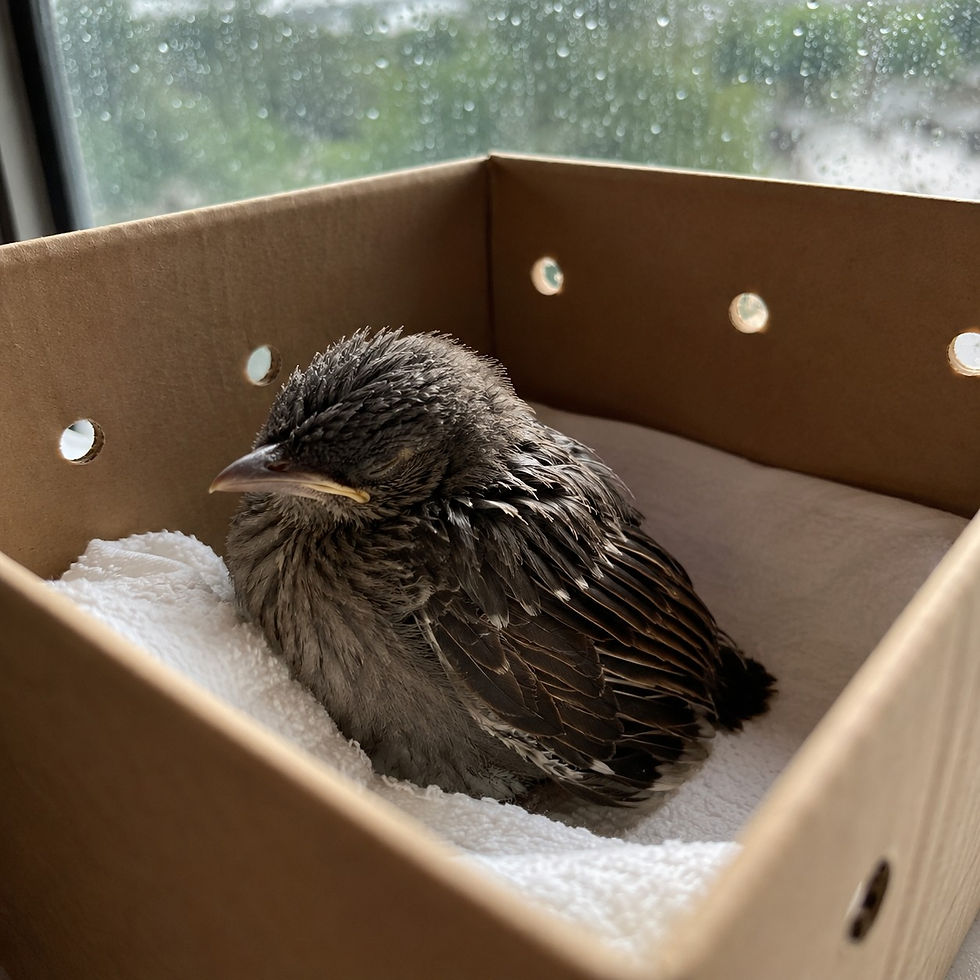
A rescued baby bird may suffer from cold stress, dehydration, injury, shock, infection, parasites, weakness, or malnutrition. Rain can make these problems worse because wet feathers and cold wind can reduce body warmth.
Cold stress is common after rain. A cold baby bird may look sleepy, weak, silent, or unable to sit properly. Injury may show as bleeding, swelling, drooping wing, twisted leg, or poor movement. Infection risk is higher if the bird was attacked by a cat, dog, rat, or crow.
Malnutrition can happen when people feed the wrong foods. Bread and milk are common mistakes. These foods do not match a baby bird’s natural diet and can cause serious problems. A baby bird’s diet depends on species. Some birds need insects, some need soft plant-based foods, and some need specialized formulas.
This is why rescue feeding should be guided by experts, not internet guesses.
When to Call a Wildlife Rehabilitator or Rescue Team

Call a wildlife rehabilitator, local rescue group, veterinarian, Forest Department, or authorized animal rescue team if the bird is injured, bleeding, cold, weak, attacked by a pet, covered in ants, trapped, orphaned, or if the nest is destroyed.
You should also call for help if the baby bird is a nestling and you cannot find the nest, if the parents do not return after careful observation, or if heavy rain continues and the bird cannot stay dry.
In India, wild birds should not be kept as pets after rescue. The right goal is rescue, treatment, rehabilitation, and release. Contact local wildlife officials or trusted rescue organizations for proper help.
Safe Release or Reuniting With Parents

Safe release does not mean throwing the bird into the air. That can injure or kill it. For many baby birds, the best release is reuniting with parents.
If the bird is a healthy fledgling, place it in a safer nearby spot such as a shaded area, low branch, balcony corner away from pets, or a dry area close to where it was found. Then move away and watch quietly. Parent birds may return when they feel safe.
If the bird is a nestling, returning it to the original nest is the best option if possible. If the bird is injured, weak, or orphaned, release should only happen after expert care. A rehabilitator will know when the bird can fly, feed itself, avoid danger, and survive outside.
India Legal and Ethical Care Note
In India, wild birds are part of the natural ecosystem and should not be captured, raised, sold, or kept casually at home. Rescue should be done only to save life, reduce suffering, and return the bird to nature through proper care.
If you find a baby bird in rain, your job is not to make it a pet. Your job is to protect it from danger, avoid wrong feeding, contact help when needed, and support safe return to its parents or habitat.
Breeding and Nesting Season Awareness
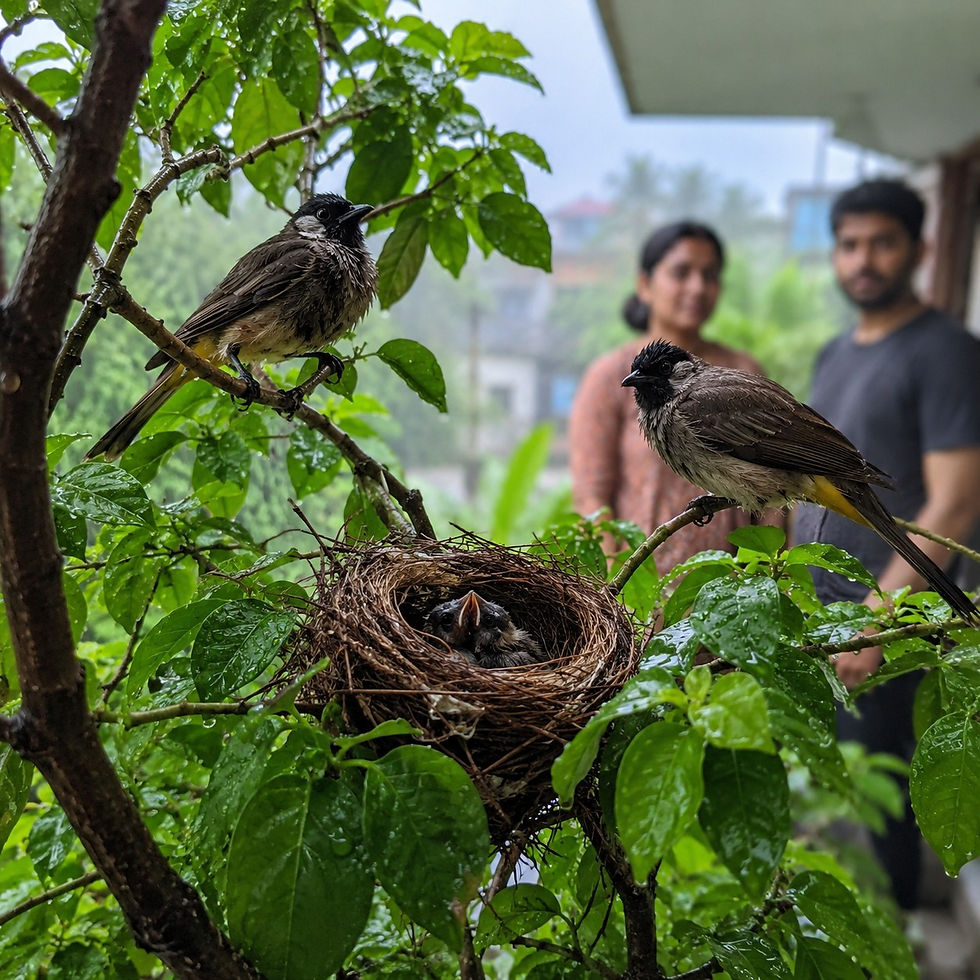
During rainy season and breeding season, many birds build nests around balconies, trees, rooftops, gardens, sheds, and buildings. Sometimes nests fall because of wind, rain, weak branches, or human disturbance.
Do not disturb active nests. Do not keep touching eggs or chicks. Do not remove nests just because they look messy. Keep cats and dogs away from nesting areas. If a nest is in a dangerous place, contact a rescue expert before moving it.
A good nesting season care habit is simple. Give birds space, keep the area safe, and avoid unnecessary interference.
Common Mistakes to Avoid
The biggest mistake is taking every baby bird home. Many fledglings do not need rescue. They need time, space, and parent care.
Another mistake is feeding immediately. People often offer milk, bread, rice, water, biscuits, or grains. These can be harmful. Even live insects should not be given blindly because every baby bird is not the same species or age.
Do not keep the baby bird in a decorative cage. Do not take photos and videos for too long. Do not let children play with it. Do not release an injured bird without treatment. Do not keep the bird overnight without trying to contact help.
Good rescue means less handling, correct action, and fast expert support.
Final Step-by-Step Summary

If you find a baby bird in rain, first observe from a distance. Check whether it is a nestling or fledgling. If it is a healthy fledgling, move it only if it is in danger and keep it close to the same location. If it is a nestling, return it to the nest if safe.
If the bird is wet, cold, weak, injured, or attacked, place it in a warm, dry, dark, ventilated box and contact a trained rescuer. Do not feed or give water unless experts guide you. If live insects are advised, small mealworms or small crickets are usually more suitable than large superworms or roaches for emergency baby bird situations, but only under expert guidance.
The best rescue is not always keeping the bird. The best rescue is helping it survive safely and return to nature.
Rescuing baby birds in rain is about making the right decision at the right time. A baby bird may need urgent help, but it may also be a normal fledgling learning to live outside the nest. That is why you should observe first, identify the bird, protect it from danger, avoid wrong feeding, and call experts when needed.
With careful handling, safe temporary care, and responsible release, you can truly help a baby bird without causing accidental harm. If you ever find a baby bird in rain, stay calm, follow safe steps, and contact a trusted wildlife rescue team for guidance.
At Promeal, we know how important it is to give your pets a healthy and varied diet. That’s why we create high-quality, natural pet food to keep them happy and healthy. Our speciality is premium live and dried insect-based feeds like mealworms, superworms, crickets, roaches, waxworms, and hornworms. These insects are grown on an organic diet, making them a nutritious and tasty treat for your pets.
Check out our "Shop" section to find the perfect food for your pets!


Comments