
Marmoset Monkeys in Humid Weather: Preventing Illness Through Clean Living Spaces


Marmoset monkeys in humid weather need extra care because moisture can quickly make their living space dirty, damp, and unsafe. A marmoset may look small and cute, but it is a wild primate with complex needs. It needs clean housing, fresh air, safe food, climbing space, social care, and regular health checks. In humid weather, even small mistakes like leaving old fruit, wet bedding, or dirty feeding bowls can increase the risk of illness.
Marmosets, especially the common marmoset or Callithrix jacchus, are active, social, and intelligent animals. They naturally spend time climbing, jumping, foraging, grooming, and moving through branches. In captivity, they need a carefully managed enclosure that supports these natural behaviours. They should not be treated like simple pets. Their care should always be handled with expert guidance, proper permissions, and veterinary support. While humidity creates its own challenges, hot weather can also affect activity levels and feeding habits. Read Marmoset Monkey Summer Care Guide: Heat Relief Aur Proper Nutrition to understand seasonal care requirements during warmer months.
Why Humid Weather Can Affect Marmoset Monkeys?

Humid weather does not directly mean a marmoset will become sick. The real problem starts when humidity is mixed with poor cleaning, stale food, weak airflow, and wet surfaces. Moist air can make food spoil faster. It can keep bedding damp for a longer time. It can also make smell, waste, and bacteria harder to control inside the enclosure.
A clean living space is one of the strongest ways to prevent illness in marmoset monkeys during humid weather. When the enclosure stays dry in the right places, well-ventilated, and clean, the animal has a safer environment. When the enclosure becomes wet, dirty, and closed, the risk of stomach problems, skin issues, stress, and breathing discomfort can increase.
Correct Humidity, Temperature, and Airflow

Marmosets come from warm regions, so they do not need a cold or dry environment. But this does not mean their enclosure should be wet or poorly ventilated. A good marmoset enclosure should have controlled warmth, balanced humidity, and steady airflow. The space should feel fresh, not damp and heavy.
Good humidity means healthy air moisture, not wet bedding, spoiled food, or dirty corners. The enclosure should have proper ventilation so stale air can move out and fresh air can come in. Closed rooms with poor airflow can trap bad smell, moisture, and waste particles. This can make the enclosure uncomfortable and unsafe, especially during monsoon or humid weather.
The sleeping area also needs special care. Nest boxes should be dry, warm, and breathable. If the nest box traps moisture, it can become uncomfortable and unhygienic. Wet bedding should be removed quickly. The animal should always have a dry resting area where it can feel safe.
Clean Living Space Without Over-Cleaning

Cleaning is very important, but marmoset enclosures should not be fully stripped every day. Marmosets use scent marking to understand their space and social group. If every smell is removed too often, they may become stressed. Stress can affect feeding, behaviour, immunity, and overall health.
The best cleaning method is regular hygiene without disturbing the whole enclosure at once. Old food, waste, wet bedding, and dirty feeding areas should be removed daily. But branches, ropes, nest boxes, and scent-marked areas can be cleaned in rotation. This keeps the enclosure safe without making the animal feel like its whole territory has changed suddenly.
Avoid strong-smelling chemicals unless approved by an exotic animal expert. Harsh smells can disturb marmosets and may be unsafe if not used correctly. Cleaning should be practical, gentle, and consistent. Proper enclosure hygiene is only one part of responsible ownership. Marmoset Monkey Ki Care Kese Karein? covers the broader aspects of daily marmoset care and management.
Daily Cleaning Routine in Humid Weather
A daily cleaning routine should begin with the feeding area. Remove leftover fruit, vegetables, insects, egg, or soft food before it becomes sour or spoiled. Feeding bowls and trays should be washed and dried properly. Food should never be placed below perches where urine or droppings can fall into it.
Water bowls or bottles should be checked every day. Fresh water must always be available. In humid weather, containers can become dirty faster, so they should be cleaned often. Wet corners, dirty substrate, insect remains, and waste should be removed before they create smell or attract pests.
Marmosets use vertical space, so cleaning only the floor is not enough. Shelves, ropes, branches, nest-box openings, and high resting areas should also be checked. A healthy enclosure must be clean from bottom to top because marmosets climb and rest at different levels.
Enclosure Setup for Humid Weather

A marmoset enclosure should be large, vertical, and full of safe climbing options. These animals need space to climb, leap, hide, rest, and explore. A plain cage with only one or two perches is not enough. The enclosure should include branches, ropes, shelves, nest boxes, feeding points, and enrichment areas.
During humid weather, the enclosure design should help control moisture. There should be dry resting platforms, good drainage, washable feeding areas, and proper airflow. Bedding should not stay wet. Food areas should be easy to clean. The nest box should not collect moisture.
A good humid-weather enclosure is clean, dry in resting areas, well-ventilated, and rich in enrichment. It should protect the marmoset from dampness while still allowing natural behaviour.
Feeding Marmoset Monkeys Safely in Humid Weather

Marmosets need a varied diet. They should not be fed only fruit or only insects. A balanced captive diet usually includes proper primate food, fruits, vegetables, gum-based foods, safe protein sources, and insects. Diet should always be planned with expert guidance because poor nutrition can lead to serious health problems.
Live insects can be useful because they support natural foraging and hunting behaviour. Live crickets and live mealworms are the best options to start with because they are commonly used for feeding enrichment and are easier to control when offered properly. Crickets encourage chasing and hunting behaviour, while mealworms are useful for controlled feeding, hidden-feeding activities, and enrichment boxes.
Live superworms and roaches can also be used in some feeding plans, but they should be given with more care. Superworms are larger and can be fattier, so they should not become a main food. Roaches can be nutritious, but size, hygiene, and sourcing are very important. All feeder insects should be clean, healthy, and raised in safe conditions.
Among live mealworms, superworms, crickets, and roaches, crickets are usually the best for active hunting enrichment, while mealworms are best for simple and controlled feeding. Superworms and roaches should be used more carefully and only as part of a balanced plan. No insect should replace a complete diet. Understanding natural feeding behavior helps create a healthier captive diet. Check out Marmoset Monkey Diet Guide: Wild Feeding Habits Aur Captivity Mein Unki Proper Diet for a detailed feeding overview.
Food Safety During Humid Weather

Food spoils faster in humid weather. Soft fruit, wet food, insects, eggs, and cooked items should not stay inside the enclosure for too long. If food looks sticky, wet, sour, or contaminated with waste, it should be removed immediately.
Feeding should be done in clean dishes or controlled feeding areas. Insects should not be allowed to hide in dirty corners or escape into drainage areas. Live insects used for enrichment should be offered in a planned way, such as in feeding trays, puzzle feeders, or safe foraging boxes.
Safe feeding in humid weather means fresh food, clean bowls, controlled insects, and quick removal of leftovers. This simple habit can reduce smell, pests, spoilage, and stomach-related risks.
Health Signs to Watch in Humid Weather
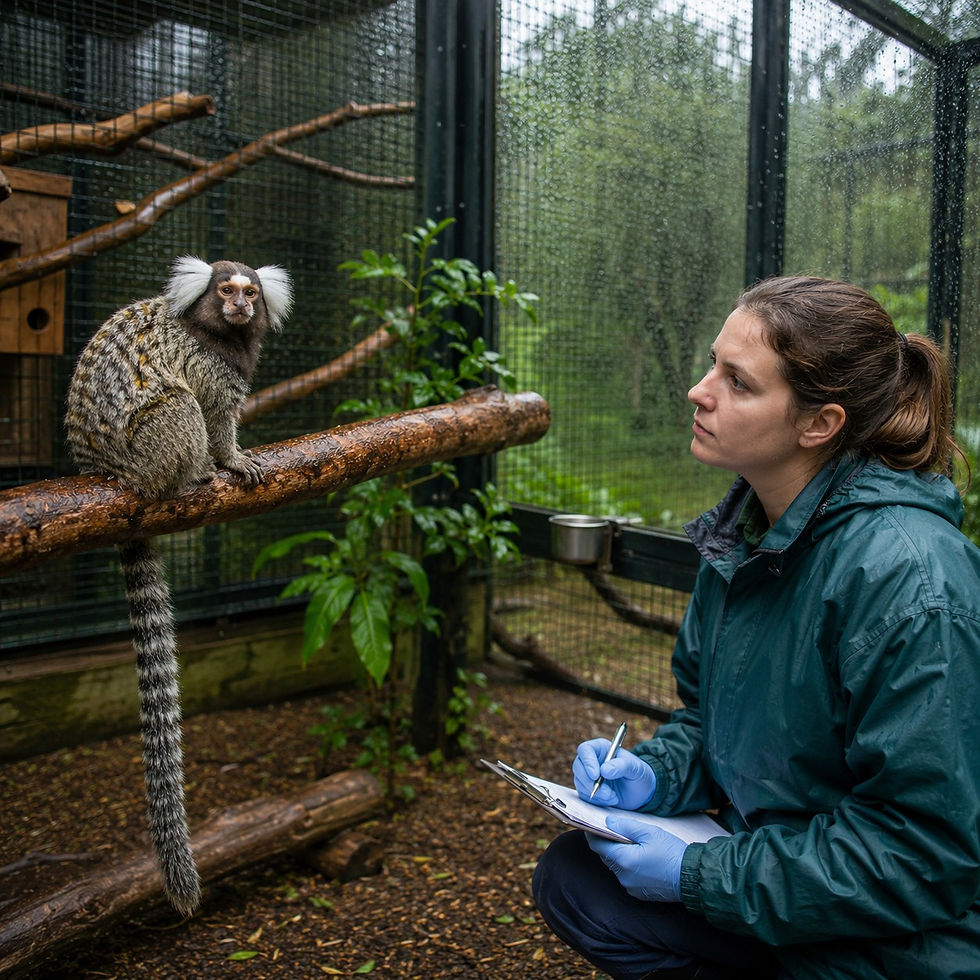
Daily observation is very important. Marmosets can become weak quickly if illness is ignored. Watch their appetite, stool, body weight, coat, movement, breathing, and activity level. A healthy marmoset should be alert, active, interested in food, and responsive to its group.
Warning signs include loose stool, repeated diarrhea, poor appetite, weight loss, dull behaviour, rough coat, weakness, swelling, wounds, bad mouth smell, breathing difficulty, or sitting alone for long periods. Any sudden change in eating, stool, breathing, or activity should be checked by an experienced exotic animal veterinarian.
Do not try home treatment without expert advice. Marmosets are sensitive animals, and wrong treatment can make the problem worse.
Common Health Problems in Captive Marmosets

Captive marmosets can face health problems such as digestive disease, diarrhea, poor body condition, obesity, dental problems, injury, and metabolic bone disease. Many of these problems can become worse when diet, hygiene, housing, or monitoring is poor.
Metabolic bone disease is an important concern in marmosets. It can be linked with poor calcium, poor vitamin D support, weak diet planning, or lack of proper light and care. This is why diet should not be random. A marmoset needs balanced nutrition, not just fruits and treats.
Clean housing prevents many risks, but it cannot replace proper diet, sunlight or UV planning, veterinary care, and expert management. Illness prevention works best when all care areas are managed together.
Enrichment Keeps Marmosets Active and Healthy
A clean enclosure should not be empty. Marmosets need enrichment every day. Enrichment means activities and objects that encourage natural behaviour. This can include climbing branches, ropes, puzzle feeders, hidden food, gum-feeding areas, safe leaves, moving perches, and live insect feeding.
In humid weather, enrichment items should also be checked for dampness and dirt. Ropes, wooden items, and hiding boxes can hold moisture. If they become wet or smelly, they should be cleaned, dried, or replaced. Enrichment should make life better, not create hidden hygiene problems.
Live insects are a good enrichment tool when used safely. Crickets can encourage active hunting. Mealworms can be hidden in safe feeding areas. This keeps the marmoset mentally active and physically engaged. Live insects are not only enrichment tools but also an important dietary component. The Role of Insects in a Marmoset Monkey’s Diet explains their nutritional and behavioral benefits in greater detail.
Breeding Precautions in Humid Weather

Marmoset breeding should only be handled by expert and licensed facilities. It is not something casual owners should try. Breeding animals need correct age, good body condition, safe housing, proper nutrition, and veterinary monitoring. Infant marmosets are delicate and should be raised naturally by their parents whenever possible.
Humid weather can make breeding care more difficult because the nest box must stay warm, dry, and clean. Parents need low stress, safe food, and stable surroundings. Infants need a healthy environment with no damp bedding, no spoiled food nearby, and no sudden disturbance.
Breeding care is specialist care. It should never be done only for interest, profit, or pet demand.
Legal and Ethical Care Note
Marmosets are wild primates, not normal pets. They have complex social, emotional, diet, and housing needs. In many places, keeping, selling, breeding, or transporting exotic primates may require legal permission or may be restricted. Always check local wildlife and exotic animal laws before keeping or handling any marmoset.
The safest and most ethical message is clear: marmosets need expert care, social housing, proper facilities, and veterinary support. They should not be promoted as easy pets. Anyone considering keeping a marmoset should first understand their complex needs and responsibilities. Pet Marmoset Monkey Care and Facts provides useful information about these intelligent primates.

Marmoset monkeys in humid weather stay healthier when their living space is clean, dry in resting areas, well-ventilated, and carefully managed every day. Humidity alone is not the main danger. The real risk comes from dirty bowls, spoiled food, wet bedding, poor airflow, weak cleaning routines, and missed health signs.
A safe humid-weather care plan should include daily cleaning, fresh food, clean water, dry sleeping areas, controlled live insect feeding, enrichment, and regular health checks. Live crickets and live mealworms are the best insect choices for simple feeding and natural enrichment, while superworms and roaches should be used more carefully.
For better exotic animal nutrition support, choose clean, high-quality live feeder insects and always use them as part of a balanced, expert-approved care plan.
At Promeal, we know how important it is to give your pets a healthy and varied diet. That’s why we create high-quality, natural pet food to keep them happy and healthy. Our speciality is premium live and dried insect-based feeds like mealworms, superworms, crickets, roaches, waxworms, and hornworms. These insects are grown on an organic diet, making them a nutritious and tasty treat for your pets.
Check out our "Shop" section to find the perfect food for your pets!


Comments